
Using Track Changes to Revise an Outline

By Elizabeth S. Craig, @elizabethscraigOutline with comments
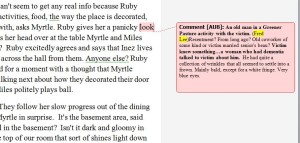
Over the last couple of years, I’ve transformed into a (very reluctant) outliner.  Long story short, I royally screwed up a couple of books really close to deadline when I’d pantsed them, and with the schedule I’m on, I decided I couldn’t afford mistakes anymore.  Or maybe it’s just that my heart couldn’t afford them since I’m sure my blood pressure shot through the roof.

So I outline.  My outlines are completely conversational, in paragraph form, and cover the whole story from start to finish.  More about my process of outlining in this post from last August.   More about what I feel the pros and cons are for outlining in this post from February.Continue reading


Twitterific Writing Links

by Elizabeth S. Craig, @elizabethscraigBlog

Twitterific links are fed into the Writer’s Knowledge Base search engine (developed by writer and software engineer Mike Fleming) which has over 23,000 free articles on writing related topics. It’s the search engine for writers.

Using Scrivener as a Blogging Tool:  http://ow.ly/yuELL @ninaamir

A critique of a story opening that needs work:  http://ow.ly/yuEwc @davidfarland

Find Dialogue Daunting? Expand Your Character-Talk: http://ow.ly/yuEea @LitCentralOC       Continue reading

Resources for Writers—Microsoft Word

By Elizabeth S. Craig, @elizabethscraigblog1

Microsoft Word is an incredibly useful tool for writers—and one that I think is easy to overlook because we use it all the time.

Features that I use on a regular basis:

Highlighter.  I highlight problem areas that really don’t require explanation as I write my first draft.  This may be the fact that one of my characters doesn’t have a last name, or that a scene has gotten awkward or bogged down.  Maybe I don’t really even know what the problem is, but I want to highlight the area to figure out later.

Find/Replace:  This is very handy when I change character names in the middle of a manuscript. Continue reading

Writing Real Characters Amid Horrible Violence: Tips from a True-Crime Writer

By Dan Morse, @morsedan, author of The Yoga Store Murder

Unknown

In 2011, as a reporter for The Washington Post, I covered the most violent of murders in the least likely of places. Someone had slashed, stabbed and struck Jayna Murray more than 331 times in the back of a high-end yoga store. The killer used more than six weapons, including a hammer, wrench, knives and a jagged steel bar used to display merchandise. That dichotomy – complete mayhem in a place of peace and Zen – got me thinking about writing a book about the case.

To pull readers along for 300-plus pages, though, I needed detailed scenes that not only advanced the plot, but also built out very real characters. After all, readers of non-fiction are like readers of mysteries; they want to get to know people as they turn each page.Continue reading

Twitterific Writing Links

by Elizabeth S. Craig, @elizabethscraigBlog

Twitterific links are fed into the Writer’s Knowledge Base search engine (developed by writer and software engineer Mike Fleming) which has over 23,000 free articles on writing related topics. It’s the search engine for writers.

5 Tips to Gain Confidence and Overcome Writer’s Doubt: http://ow.ly/y9kmW @adderworld

Real Life Diagnostics: Weaving in World Building Details. How Much is Too Much? http://ow.ly/y80VH @janice_hardy           Continue reading

Scroll to top