Story Signposts

By Elizabeth S. Craig, @elizabethscraigfile7071253236891

I find my daughter’s middle school English homework a lot more interesting than she does.

She had a page of notes regarding “signposts” she should be looking for as she reads through various books for school this year. I did some poking around online and found that this material comes from Notice and Note: Strategies for Close Reading by Kylene Beers and Robert E. Probst. The notes were interesting to me, as a writer.  For one thing, they pointed out areas that could be problematic for us as we write our books.  Here’s what I read in her notes, and my thoughts in italics.

6 signposts:

Contrast and contradictions: When you’re reading and a character says or does something that’s opposite of what they normally do.  Asking why the character is doing that action may help you understand character development, internal conflict, and theme. Or—it could be a plot manipulation, if done poorly. Or it could mean a distracted/hurried writer who isn’t maintaining character consistency.Continue reading
6 Steps Writers Need to Tame the Story Beast

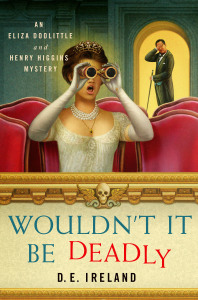
by D.E. Ireland, @DEIrelandAuthor WIBD orig size

If you’ve come with up a unique idea for a book, congratulations. But you may need advice on how to shepherd this idea from that first inspiration to typing the last line of your final draft. Here are six steps that can help you along the way.

  1. First you need a light bulb moment. An idea pops in your brain, you say, “what if…?” and off you go to develop the premise. It’s perhaps the most exciting part of writing. Then reality sets in. We came up with the novel idea of Eliza Doolittle solving mysteries with Henry Higgins. But we first had to ascertain whether Shaw’s characters were in the public domain (yes, thankfully) and steer clear of Lerner & Loewe’s film My Fair Lady, which isn’t.

Continue reading

Twitterific Writing Links

by Elizabeth S. Craig, @elizabethscraig

Blog

Twitterific links are fed into the Writer’s Knowledge Base search engine (developed by writer and software engineer Mike Fleming) which has over 23,000 free articles on writing related topics. It’s the search engine for writers.

Think big as you revise your manuscript with these 9 steps: http://ow.ly/Bruvm @onewildword

Bookstores live: Secrets of the stores saving the book world:  http://ow.ly/BrujX @salon

The importance of prewriting:  http://ow.ly/BI3YG

7 Ways to Expertly Edit Your Own Writing: http://ow.ly/Btfuz @KMWeiland               Continue reading

Prewriting

By Elizabeth S. Craig, @elizabethscraigDSCN4401

My entire family has suddenly become obsessed with pineapple.  I don’t know what came over them.  It’s like the pineapple fairy visited one night. And they want it fresh.  Not canned or frozen (does it even come frozen)?

So…I started out by buying those containers of chopped pineapple at the grocery store deli.  But I balked at paying $6 for a smidgeon of pineapple that the family consumed in less than a day.

Then I bought the formidable looking fruit whole.  I looked up “how to cut a pineapple” online and the internet immediately coughed up a wiki-How thing with helpful pictures.  However, this process involved a bit of brute strength on my part, a couple of very sharp knives (never smart for a clumsy person), and about thirty minutes since I still had to slice out the tough black “eyes” afterward.Continue reading

Why Do Women Read More Novels Than Men?

 by Warren Adler,  @Treadmill Cover (A10)

There is ample statistical evidence showing that adult women read more novels than men, attend more book clubs than men, use libraries more than men, buy more books than men, take more creative writing courses than men, and probably write more works of fiction than men. If, as a demographic, they suddenly stopped reading, the novel would nearly disappear.

A recent perusal of the New York Times fiction best seller list, scoring sales of print and e-books combined, showed that of the fifteen titles listed, eleven were written by women. Indeed, women are the bulwarks of the novel trade. Those statistics could lead one to also believe that the reason for such disparity is that stories told in novels, the characters, plots, insights, inner thoughts, experiences and wisdom offered are skewed to reflect a female point of view.Continue reading

Scroll to top