Resources for Writers—WKB and Ebook Services Professionals

By Elizabeth S. Craig, @elizabethscraig
I’ve gotten several emails from writers lately, pinging me for resources…which makes me think maybe I could do a better job spotlighting various resources on my blog.  So, as a summer series, I’ll be focusing on different sites that I use as a resource, myself.

Today will be slightly different—I’ll be focusing on two writer resources that I have a hand in.  I know I mention the Writer’s Knowledge Base here on Sundays…but if you’re a blog reader who doesn’t ordinarily read posts on weekends, then I’m not sure you’d be familiar with it.Continue reading
Creating a Business Philosophy

By Elizabeth S. Craig, @elizabethscraigfile0001495644511

Self-publishing means running a small business.  For me, it’s been a trial by fire.  Fortunately, as in many small businesses, I had a bit of a slow period, starting out.  This bought me a little time to figure out what the heck I’m doing.  After all, I was an English major, not a business major.

When the business started picking up, I made a few good calls.  One of them was to get an accountant. Another was the realization that I definitely needed to subcontract for skilled help with everything from website design to formatting to covers.Continue reading

Twitterific Writing Links

by Elizabeth S. Craig, @elizabethscraigBlog

Twitterific links are fed into the Writer’s Knowledge Base search engine (developed by writer and software engineer Mike Fleming) which has over 23,000 free articles on writing related topics. It’s the search engine for writers.

Facebook Ads: Should Indie Authors Buy Them?  http://ow.ly/xV9PZ  @CaballoFrances

Must Publishing Always Take Sides?  http://ow.ly/yhjBE @Porter_Anderson @RLLafevers @thoughtcatalog

How to Build A Contact List To Grow A Relationship With Your Readers:  http://ow.ly/xV8T3 @ebooksandkids

Exploring Story Worlds – How to get the most out of your research:  http://ow.ly/xV98J @writers_write               Continue reading

Fine-Tuning a Manuscript–Comma Usage

Guest Post by Jack SmithWrite and Revise for Publication

In fiction what is “correct” is what works—what creates strong characters, drives the story, and creates the appropriate tone.  This applies to grammar and mechanics as well.  I’ll have to admit, I do tend to be a bit schoolmarmy about the conventions of grammar and mechanics, but I also recognize when it’s important to depart from the standard handbook.  A bullet train of comma splices might be desirable if you’re attempting to capture run-on thought.   No punctuation at all might also be.  When I’m editing my own work, as well as the work of others in my role as Fiction Editor for The Green Hills Literary Lantern, I tend to notice the following kinds of grammatical issues: subject-verb agreement, pronoun reference, misplaced modifiers, and, of course, matters of punctuation, which includes commas, semi-colons, colons, apostrophes, parenthesis—and more.

I’ll limit my comments here to commas.  According to strict handbook rules and conventions, where should you use commas?Continue reading

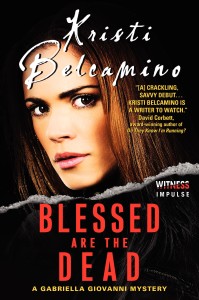
Embracing the Digital Revolution

By Kristi Belcamino, @hiresBADcover

Writers dream of the day when they walk into a bookstore, see a book they wrote on the shelf, and then hold that book in their own two hands!

But what if a debut author is offered a digital-only book deal? Even if it is with one of the Big Five? No print book. What then? What does she do about that offer?

Well, she takes it!

At least I did.

I was beside myself, thrilled that an editor at one of the “big houses” liked my book. loved it even. At the same time, I had to let go of my dreams— holding my book in my hands, signing a physical book, and going cross-country on a grassroots book tour.Continue reading

Scroll to top