Twitterific Writing Links

by Elizabeth S. Craig, @elizabethscraigBlog

Twitterific links are fed into the Writer’s Knowledge Base search engine (developed by writer and software engineer Mike Fleming) which has over 23,000 free articles on writing related topics. It’s the search engine for writers.

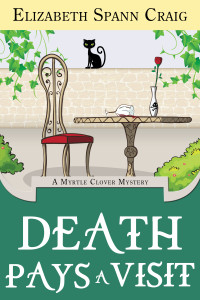
New release last week: Death Pays a Visit is now available. :)

A writer on being plagiarized and how to respond:  http://ow.ly/Bc5K5 @TheAubreyRose @passivevoiceblg

5 Cliche Endings:  http://ow.ly/Bc5AC  @grammarly

5 Ways to Get Book Reviews:  http://ow.ly/Bc5xK @SashaLeighS

How to Write a Horror Story:  http://ow.ly/Bc5Qz @harrington_jo              Continue reading

What is “Word of Mouth” in Today’s World?

By Elizabeth S. Craig, @elizabethscraighear

I read an interesting post on Sunday.  It was from author Pedro Barrento for Indies Unlimited and titled, “Word of Mouth—An Urban Myth?”  The post engendered lively comments from other writers.  Barrento states: “…word of mouth in literature is a fantasy. It simply doesn’t exist.”  He clarifies that he’s not including influencers, Amazon’s recommendation algorithm, etc. as word of mouth.  He’s defining it as an actual verbal recommendation.  Which, considering it’s called word of mouth, makes sense.  He believes that while consumers may be influenced by others’ recommendations for music, they don’t buy long-form products like books based on recommendations. Or, they’re so slow to act on recommendations (slow to purchase, slow to read, slow to pass on a recommendation to others) that word of mouth isn’t a contributing factor to the meteoric success of some of today’s most popular books.

There isn’t (naturally! This is publishing we’re talking about) hard data on how readers discovered the last book they read.  So instead, I thought I’d explore what word of mouth is today.  I’m thinking that, as times have changed, the way we recommend products to others and influence purchasing has changed.Continue reading

4 Tips for Writing About Unfamiliar Character Issues

by Julie Musil, @JulieMusilSoCL
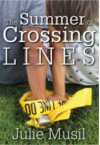
As I plotted my latest release, The Summer of Crossing Lines, I decided to give the main character a stutter. She’d be forced to do some dangerous and questionable things, and I wanted the character to have an extra layer of fear and frustration. My goal was to make this character believable, and to be respectful to people who stutter.
But…I had no experience with stuttering. Lots of research was in order.
If you’re writing about an unfamiliar issue, here are four steps you can take to get it right:
  1. Visit blogs or online diaries. Simply Google your “issue.” One of the most personal aspects of my research involved reading through personal blogs and online diaries of folks who stutter. It gave me profound respect for them and their bravery. It also gave me insight into their personal fears and frustrations. I was able to channel their turmoil when it came to inner dialog. I got a real feel for their view on life and their condition, and how they view the people and the world around them. It also gave me a peek at their lingo.
  2. Research the organizations dedicated to the issue. I spent a lot of time on The Stuttering Foundation web site. They had pages for parents, teens, adults, teachers, etc. This web site gave me a lot of helpful information, including when stuttering develops, what causes it, and ways to cope. It also lists famous people who stutter, including John Stossel, Carly Simon, and the late Marilyn Monroe. I learned that the stutter tends to disappear when the speaker talks quietly, or if they’re acting as a different character–which helped with dialog. Bits of this research made it into my novel.
  3. Read fiction with characters who have the same issue. I searched Amazon for YA stories with a protagonist who stutters. Surprisingly, there weren’t many, which made me realize there was an opening I could fill. I read Tending to Grace, which was a great story. It taught me how to expand on my research and handle technical issues, like how to write a stutter. When we read similar books, we learn how other authors have handled the same situation.
  4. Interview someone with experience. It’s amazing how personal stories can form our perspective. Whatever issue you’re writing about, chances are there’s someone out there who’s willing to share their experiences with you. These experiences can give a glimpse into their world, much like the blogs or online diaries. 
Whatever issue we write about, there are plenty of resources available for research. The folks who live with these issues deserve accuracy, respect, and empathy. It’s our job to get it right.
Have you stuttered, or do you know someone else who does? Have you ever written about an unfamiliar issue? What was it? How did you make sure you wrote with accuracy? Any tips you’d like to add?
BWLF sig
Julie Musil writes from her rural home in Southern California, where she lives with her husband and three sons. She’s an obsessive reader who loves stories that grab the heart and won’t let go. Her Young Adult novels, The Summer of Crossing Lines and The Boy Who Loved Fire, are available now. For more information, or to stop by an say Hi, please visit Julie on her blog, on Twitter, and on Facebook.

Twitterific Writing Links

by Elizabeth S. Craig, @elizabethscraigBlog

Twitterific links are fed into the Writer’s Knowledge Base search engine (developed by writer and software engineer Mike Fleming) which has over 23,000 free articles on writing related topics. It’s the search engine for writers.

Writing the Perfect Description for Your Book:  http://ow.ly/B0slv @shalvatzis

Agents Behaving Badly:  http://ow.ly/B0spj @jamesscottbell

No Excuse Writing:  http://ow.ly/B20Al @dibator @SouthrnWritrMag

Self-Publishing: The Scenic Route: http://ow.ly/B20fK @eileengoudge  Continue reading

Readers and Self-Pub

By Elizabeth S. Craig, @elizabethscraigDeathPaysaVisit_ebook_Final (1)

As a writer who is both traditionally-published and self-published, I have an admission to make.  I work very hard on my traditionally published books.  But I work even harder on my self-published stories.

I’m not saying my self-published stories are better.

But I want to make sure that each element of every book is as good as I can make it.  I don’t have a huge team behind me for my self-pub…I have a small one.  And I don’t want to let the readers down. I feel more accountable. I feel determined to make sure the quality is as good and that my readers won’t notice a difference between series.Continue reading

Scroll to top