Self-Publishing a Series after Its Traditional Start

By Elizabeth S. Craig, @elizabethscraigPretty is as Pretty Dies

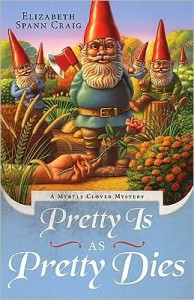
My self-published Myrtle Clover series started out as a traditional release through Midnight Ink.  They published the first book in that series before deciding against a second book in the series.  That’s when I got my rights back (well, the ones that I could get back), and self-published the rest.

Now I’ve got the Southern Quilting mysteries which will be dropped by Penguin after the upcoming June release of book five in the series.  I’ve gotten those rights back and will be embarking on the same process soon.

These were good decisions for me and for my series.  But there have definitely been some bumps in the road.Continue reading

10 ways to tell if your book is ready for publishing

by Sarah Juckes, @CompletelyNovelCompletelyNovel-Logo-2Lines-unique
Any writer nearing the end of the writing or editing process may be all-too familiar with the worrying prospect of sending their newly-fledged work out into the big, wide world. With questions like: ‘what if it flops?’ ringing in your ears, it’s easy enough to sink into what I like to call ‘publishing-procrastination’ – where you keep tinkering with your manuscript and changing the odd word, only to then change it back again. Sound familiar? Here are ten things you can do to prove to yourself that your manuscript is 100% finished. Do these, and your book is officially ready to fly.

  1. Check for chronological inconsistencies

It’s so easy to get dates mixed up – especially if you’re writing fiction with flashbacks or a memoir. Try plotting your events on a timeline and match the dates up with the dates you have written in the book. There are some great online timeline tools that can help, such as Office Timeline. Although it’s made for presentations, it’s pretty easy to use and will help you get a clear view of how your book works in real-time.

  1. Do a ‘find and replace’ for character names or references

Do you reference a name with an unusual spelling, or did you change a character’s name between drafts? Doing a ‘find and replace’ in Word is a really easy way to pick out those slip-ups without having to re-read your book – again. Just press ‘ctrl+’F’ (on Windows) or cmd+’F’ (on Mac) to search and correct.Continue reading

Twitterific Writing Links

by Elizabeth S. Craig, @elizabethscraig

Blog

Twitterific writing links are fed into the Writer’s Knowledge Base search engine (developed by writer and software engineer Mike Fleming) which has over 30,000 free articles on writing related topics. It’s the search engine for writers.

7 Keys to Building Relatable Characters:  http://ow.ly/LJu8t @MartinaABoone

How 7 Literary Authors Collaborated to Launch a Box Set: http://ow.ly/LJunC @Roz_Morris @Janefriedman

Review on Pronouns: http://ow.ly/LJu1D from Melissa Gilbert

Avoiding Melodrama in Your Story:  http://ow.ly/LJtpD @LaurieTomlinson Continue reading

Keywords for Visibility

By Elizabeth S. Craig, @elizabethscraigcapture 1

There’s an adage that states potential customers must see a marketing message seven times before deciding to purchase a product.

I’m someone who has to hear about a promo technique seven times before finally deciding to experiment with it.

Except in the case of Amazon keywords. I’ve read likely a couple of dozen blog posts on Amazon keywords.  Only now have I finally scraped up enough time to work on it.

Amazon, of course,  is a search engine.  There’s metadata involved, there’s SEO involved. We need to make our books visible to potential readers.Continue reading

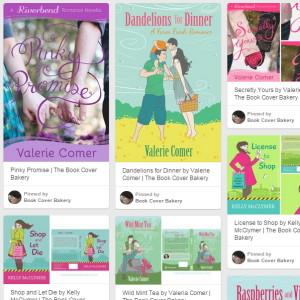
How to Use Pinterest to Communicate with Your Cover Designer

by Hanna Sandvig@hanasucovers (1)

I’m a big Pinterest user, and as a cover artist nothing makes me more happy than an author who also uses Pinterest.  Cover designers are, by our nature, very visual and Pinterest is a purely visual way of conveying ideas, making it the perfect way to work with your cover designer.  Designers often don’t have time to read your book before working on the cover (and often the book is still being written when I get started!) so communicating your story through images gives us a way to read your mind, which is a pretty handy trick. Here are a few ways you can use Pinterest to communicate with your cover designer:

Continue reading

Scroll to top