Twitterific

by Elizabeth S. Craig, @elizabethscraig
Twitterific
is a compilation of all the writing links I shared the previous week.
The
links are fed into the Writer’s Knowledge Base search engine (developed by
writer and software engineer Mike Fleming) which has over 18,000 free articles
on writing-related topics. Sign up for our free newsletter for monthly writing
tips and interviews with top contributors to the WKB or like us on Facebook.

Try “My WKB”–a way for you to list and sort articles, view your read
articles, and see your search history. Read more about it here:
http://bit.ly/S9thqS.
The free My WKB page is here:
http://bit.ly/PV8Ueb.


Nook’s entry into UK off to a
bad start: http://bit.ly/T1BFmg
@Porter_Anderson @eoinpurcell @mattwarman @philipdsjones

Would Hemingway Blog? http://bit.ly/S6jrn7 @kristenlambtx

Another Pitfall of Multi-POV
Stories: http://bit.ly/T1Q5CL @KMWeiland

Unexpected
murderers in crime fiction:
http://bit.ly/RcObD7 @mkinberg

How to Avoid Distractions and
Create a Career in Fiction: http://bit.ly/T1Q95B
@joebunting

A Checklist for
Self-Publishing: http://bit.ly/S6kt2q
@susankayequinn

7 Steps To Writing An Author
Business Plan: http://bit.ly/S6kFPc
@SusanSpann

Social media–don’t put all
your eggs in one basket: http://bit.ly/T1QGo3
@StinaLL

Back To Smashwords After KDP
Select: http://bit.ly/S6q8FJ @Derek_Haines

3 more
Twitter hashtags for writers:
http://bit.ly/QBsLy3 @writeangleblog

Are books the new business
cards? E-publishing makes it easier than ever to buy credibility: http://bit.ly/T1TQIm @popcultini

Why sidekicks are useful: http://bit.ly/T1U2Y0 @juliettewade

Science
Fiction Themes and Metal Music:
http://bit.ly/RcY1F8 @mithrilwisdom @AlexJCavanaugh

Demystifying Science Fictional
Terms: http://bit.ly/S6qNai @KirkusReviews
@sfsignal

No More Excuses—Write That
Novel: http://bit.ly/S6qVXa @noveleditor

On Being an Unpublished Writer:
Enjoy it While You Can: http://bit.ly/S6t7hv
@ava_jae

To NaNo or Not? NaNoWriMo
Decoded: http://bit.ly/S6tusm @EdieMelson
#nanoprep

Campbell, Vogler, the Hero’s
Journey, The Writer’s Journey and Narrative Structure Cheat Sheet: http://bit.ly/T1VSYZ @AlexSokoloff #nanoprep

How much Worldbuilding before
you write? (especially for NaNo folk): http://bit.ly/S6tSHf
@juliettewade #nanoprep

Ready Or Not, Here It Comes:
NaNoWriMo: http://bit.ly/T1W2zL @joebunting
#nanoprep

Make Your Own NaNoWriMo
Survival Kit: http://bit.ly/S6uddd
@LauraHoward78 @WriteNowCoach

NaNoWriMo 2012: Choosing Your
Story: http://bit.ly/T1Wxtv #nanoprep

A good scare for a good cause: http://bit.ly/U14lwR @joannelessner

NaNoWriMo: 5 Tips for Getting
Ready: http://bit.ly/S6utbU @woodwardkaren
#nanoprep

90+ Published Novels Began as
NaNoWriMo Projects: http://bit.ly/S6uvRk
@galleycat @jasonboog

How (Not) to Be a NaNoWriMo
Champ: http://bit.ly/S6uD3c @ava_jae

Hold your fire: reporters
sometimes overly-eager to bash Amazon: http://bit.ly/R1yxH2
@Porter_Anderson

Fear of NaNoWriMo: http://bit.ly/T1WDRT @cjtreggett #nanoprep

#Nanoprep: Novel Creation: http://bit.ly/T1WL3S @ivinviljoen

7 reasons to use writing prompts: http://bit.ly/Sc1x3p @DIYMFA

Nail NaNoWriMo –3 old hands
share their tips: http://bit.ly/S6uZqr
@dirtywhitecandy #nanoprep

4 Tips for Writing a Quick
First Draft: http://bit.ly/S6v4ug
@rachellegardner #nanoprep

NaNoWriMo – The Pitfalls and
How to Deftly Avoid Them: http://bit.ly/T1WVIp
@LisaCron

Nanowrimo Prep: What’s Your
Premise? http://bit.ly/T1WYE4 @alexsokoloff
#nanoprep

NaNoWriMo Cometh: A
Terribleminds Primer: http://bit.ly/T1X12N
@chuckwendig #nanoprep

How to outline your story for
National Novel-Writing Month – checklist: http://bit.ly/S6vsJ6
@dirtywhitecandy #nanoprep

Nanowrimo Prep: First, you need
an idea: http://bit.ly/S6vuB0 @alexokoloff
#nanoprep

Pre-Plot for NaNoWriMo: http://bit.ly/T1X9iG @plotwhisperer #nanoprep

Nanowrimo Prep: The Index Card
Method and Structure Grid: http://bit.ly/S6vG31
@alexsokoloff #nanoprep

What’s in your NaNo survival
kit? http://bit.ly/T1XaTN #nanoprep

#NaNoWriMo Comic Archives: http://bit.ly/S6vO2z @inkyelbows

NaNoWriMo Prep: Story Elements
Checklist: http://bit.ly/T1XcLF
@alexsokoloff #nanoprep

How to Fake Confidence for
Creatives: http://bit.ly/T1ZrhO
@denisedesigns @EmilyWenstrom

Horror and Thriller: Walking
the Fine Line Between Similar Genres: http://bit.ly/S6AwNK
@YAHighway

Write Or Die: http://bit.ly/T1Zw56 @marcykennedy

What You, J.K. Rowling And
George Lucas Have In Common: http://bit.ly/S6ADJ2
@fuelyourwriting

Tips N Tricks: Using HTML to
Guest Post: http://bit.ly/S30kZp
@susankayequinn

The Perils
and Pitfalls of Writing with a Partner;
http://bit.ly/SuvGZ7

Tips for self-pubbed
writers–giveaways: http://bit.ly/S31hkr

The Art of the Content Edit: 10
Ways To Make Sure You’re Doing It Right: http://bit.ly/OP9db0
@robwhart

How To Add Subtitles To Your
Book Trailer On YouTube: http://bit.ly/S31vb4
@galleycat

Self-Publishing:–4 Writers
Share Their Experiences: http://bit.ly/OP9AlX

“Strong Female”
Fallacies: http://bit.ly/OP9Ilp @sjaejones

How Writers Can Reach Readers
Without Self-Promotion: http://bit.ly/S380Lb

Self-Publishing And Marketing
Tips: http://bit.ly/OPcUxp @cathryanhoward
@thecreativepenn

Conflict and Suspense Belong in
Every Kind of Novel: http://bit.ly/S38jp9
@jamesscottbell

Enough with “Us vs.
Them”: http://bit.ly/OPd5sC
@AimeeLSalter

The Theology of Screenwriting:
Hell: http://bit.ly/S38Ebz @gointothestory

Ax Your Cliches: Why and How: http://bit.ly/OPddIH @margielawson

How to Get the Most Out of a
Writing Conference: http://bit.ly/QAF65s
@writersdigest

Leaving an Agent and Choosing
to Self-Publish: http://bit.ly/WXi1O2
@KendraHighley @goblinwriter

The Theology of Screenwriting:
Redemption: http://bit.ly/QAFa5b
@gointothestory

How to Mind Map in 3 Small
Steps: http://bit.ly/WXinnK @lifehackorg

Your Memoir Is Too Much About
You: http://bit.ly/QAFjFY @ethanfreak

Structure–Plot Problems: http://bit.ly/WXjsvO @kristenlambtx

2 common writing errors: http://bit.ly/QAHPvT @instntcheckmate
@nickthacker

Is KDP Select a Long-Term
Answer? http://bit.ly/ScH6lN

Prioritizing prepositions: http://bit.ly/QAK0iW @aliciarasley

Collective Nouns And
Impracticality (Word Choice Matters): http://bit.ly/ScHfpv
@BryanThomasS

10 of the Creepiest Ghosts in
Literature: http://bit.ly/QAK4za @flavorpill

5 Best Practices for Fresh
Freelancers: http://bit.ly/ScHhxH
@elanalancer

Great Character: Alex DeLarge
(“A Clockwork Orange”): http://bit.ly/QAKaa4
@gointothestory

Don’t Create a Cliché: http://bit.ly/ScHpgw @ava_jae

35 Synonyms for
“Look”: http://bit.ly/QAKnKg
@writing_tips

6 Clever Tricks for a Better
To-Do List: http://bit.ly/RV8OV8 @JWhite

Starting Off With a Bang: Is
This Opening Working? http://bit.ly/RV9QR4
@janice_hardy

Rebounding from Roadblocks: http://bit.ly/TKMj1M

Likable protagonists: http://bit.ly/RVabDc @wordforteens

Physical Attribute Thesaurus:
Hands: http://bit.ly/QBuvHB @beccapuglisi
@angelaackerman

Tips for more effective guest
posting: http://bit.ly/QBuzHo @problogger

4 ways to never outgrow poetry:
http://bit.ly/RcVhHS @Woozie_M

10 Inspirational Disabled
Characters From Sci-Fi And Fantasy: http://bit.ly/QULF1C
@sfxmagazine

Libraries and ebooks–do they
own them or license them? http://bit.ly/PSWxRL
@Porter_Anderson @naypinya @mmasnick

Characterization Tools: http://bit.ly/RcVr1Q

How Nonfiction Authors Can
Build Niche Authority through Content Marketing: http://bit.ly/RcVydE
@BookMarketer

Tips for long sentence
wrangling: http://bit.ly/QBx4JA
@theresastevens

Skip the Paris Cafés And Get a
Good Pen: http://on.wsj.com/Tgr6Ag @wsj

7 Things That Make the Chronic
Finisher Put Down a Book: http://bit.ly/SuwL2U
@roniloren

5 reasons to consider
audiobooks: http://bit.ly/Tgru1B
@rachellegardner

Getting Agented in Multiple
Categories: http://bit.ly/SuxDo9 @kid_lit

3 Reasons Why You Should Write
When You’re Tired: http://bit.ly/TgrzT5
@krissybrady

10 Queries in 10 Tweets recap: http://bit.ly/SuxT6B @literaticat

7 things 1 writer has learned
so far: http://bit.ly/TgrMWc @writersdigest

Brainstorm Somebody Else’s
Problems: http://bit.ly/TgrQ8s @kaitnolan

6 mysteries that could be
solved with time travel: http://bit.ly/SuyF3K
@i09

The Importance Of Sympathetic
Heroes: http://bit.ly/TgrZZn @woodwardkaren

The Role of Suspense in Stories
and Music: http://bit.ly/SuyYvf @SamMcNerney

7 Effective Steps to Taking
Action When You Don’t Know What to Do: http://bit.ly/Tgs9QF
@JWhite

Professional Resources for
Writers: http://bit.ly/Suzk50 @KMWeiland

12 Signs Your Blog Is a Social
Media Ghost Town (& Actionable Tips to Fix Them): http://bit.ly/SuzqK8 @heidicohen

Editors Support the Author’s
Voice: http://bit.ly/TgsoLx @IlieRuby

Why you shouldn’t rush your
writing: http://bit.ly/SuzSrP @juliettewade

How to Become a Writer: http://bit.ly/Tgswe3

How to create creepy
characters: http://bit.ly/T9kVJU @p2p_editor

Essential Characteristics of a
Thriller Hero: http://bit.ly/SuAKMS
@JodieRennerEd

An editor’s tips for writing
horror: http://bit.ly/R0E3tM @aliciarasley

The 10 Most Mentioned Songs in
Books: http://bit.ly/PRXpGl @publisherswkly

Tips for blogging more
consistently: http://bit.ly/R0EkwO
@michellerafter

A Proven Method That Helps
Writers to Research Their Books: http://bit.ly/PRXB8K
@bubblecow

17 tips for marketing your book
online: http://bit.ly/R0EDHN
@emergentpublish

Tips for self-pubbing your
poetry: http://bit.ly/PRXFFw @karencv
@magdalenaball

Writing Retreat Lessons: http://bit.ly/R0FaJX

The strength of female
characterization: http://bit.ly/R0FiZX
@Riduna

If the Muse is Late for Work,
Start Without Her: http://bit.ly/R0Wxdo
@AimeeLSalter

Rockin’ That Steampunk: http://bit.ly/PS47fq @TheKJA @tordotcom

Genres are artificial
distinctions: http://bit.ly/R0X4Mp
@johnottinger

Things that Scare Writers: http://bit.ly/R0XkLD @rileymagnus

Stay motivated after rejection:
http://bit.ly/PS4kze

Our characters shouldn’t live
in a void: http://bit.ly/R0XWkr
@dirtywhitecandy

Why Writers Disappear: http://bit.ly/R0Y1Vc @kristinerusch

Cowardice, Laziness and Irony:
How Science Fiction Lost the Future: http://bit.ly/R0Yre4
@RuthlessCult

3 Tests to Determine Readiness
for Publication: http://bit.ly/PS4AhO
@jodyhedlund

How to build your Sci-Fi world:
http://bit.ly/R0YM0k @louise_wise

9 Easily Preventable Mistakes
Writers Make with Dialogue: http://bit.ly/PS4GpR
@aliventure @thecreativepenn

Your Book Publicity Timeline: http://bit.ly/PS4HKb @SarahPinneo

5 Obnoxious Marketing
Techniques Writers Should Avoid: http://bit.ly/PS7O4Z
@jodyhedlund

Is Marketing the Writer’s
Enemy? http://bit.ly/R18znd

Self-pubbing mistake–not
understanding your target markets: http://bit.ly/PShvjQ
@BookMarketer

Mad, Glad, Sad? Show, Don’t
Tell. http://bit.ly/R1v23E @angelaackerman
@MarileeB

How Writing can Change the
World: http://bit.ly/PShFYu

Non-Writing Spouses: http://bit.ly/PShIDE @kaitlin_ward

A writer’s relationship to his
publisher or agent is not a marriage: http://bit.ly/PShRHb
@sarahahoyt

How To Compose A Steampunk
Musical: http://bit.ly/R1vKxG
@steampunkopera

Conquer the Synopsis Summit: http://bit.ly/R1vRJJ @juliemusil

Characters–it’s the motivation
that counts: http://bit.ly/PSifpa
@AimeeLSalter

Do you fit the Profile of a
Successful Self-Published Writer? http://bit.ly/R1wCm7
@bubblecow

Should publishers enhance
ebooks? http://bit.ly/R1xffc @philipjones
Consider breaking complex
sentences in two: http://bit.ly/PSiVuG
@aliciarasley

Why Publishers Don’t Like
Working With Start-ups: http://bit.ly/R1xRBw
@passivevoiceblg

7 Reasons to Use Writing Prompts–by Gabriela Pereira

by Gabriela Pereira, @DIYMFA

Some writers love doing prompts. They sit in writing classes, pencils poised to start writing the moment the teacher gives an assignment. And when time is up, they shoot their hands into the air, waving madly to get the teacher’s attention so they can read aloud what they wrote.

Other writers–like me, for instance–would rather tap-dance on an alligator’s nose.

Who needs prompts? They’re the writing equivalent of eating your vegetables, not so much fun but good for you. They also get in the way. Just like the veggies that fill you up and leave no room for dessert, prompts take up time you could be using to write something that really matters, like your novel.

The truth is, writing prompts might be about as appealing to you as soggy brussels sprouts but they do serve a purpose. Seven, in fact. Here a few good reasons why you should use prompts in your writing.

1) Lower Stakes, Higher Output

When we work on a project that we care about, the stakes are high. We want to produce something worthy of this amazing idea so we put all sorts of pressure on ourselves. This kind of pressure can actually decrease our ability to write, sometimes leading to full-blown writer’s block. Instead, if we warm up with an exercise, there’s little pressure and mistakes are expected so we’re less likely to get performance anxiety.

2) Boost Your Confidence

Most of the time when you write from a prompt, you go into it knowing that the writing will be awful. Then you reread what you wrote and discover a handful of gems buried in the garble. Suddenly your writing isn’t quite as hopeless as you thought. If you go into a writing session expecting the result to be truly horrible, then it’s a pleasant surprise when what you get is not so bad. Writing prompts can help you set those first-draft expectations extra-low.

3) Less Attachment, More Room for Improvement

Prompts are usually “throw-away” writing. You’re just warming up, you’re not writing for real. This means that whatever you produce is not going to be as dear to your heart as that turn of phrase in your work-in-progress that you agonized over for the last two hours. The more darling something is to you, the harder it will be for you to kill it. If, on the other hand, you’re revising something you just tossed on the page during a ten-minute exercise, you’ll be much more open to making broad, sweeping changes. Who cares if you have to rewrite it? It’s just an exercise.

4) Learn to Think “On the Fly”

Want to learn how to write on demand? Here’s a secret no one tells you: creativity has nothing to do with being a “creative person,” it’s all about practice. Forget being inspired by the muse, if you want to be creative you have to build discipline. The more you train your brain to produce ideas and throw them on the page, the better at it you will get. And the best way to practice is by doing prompts.

5) Hone Your Craft

Is there a particular writing technique that has you stumped? Rather than trying to learn it as you work on your novel, do a practice run (or two, or ten) using writing prompts. Is point of view confusing ? Write the same prompt using different points of view until you get it straight. Need practice writing dialogue? Choose a couple of prompts and write all of them with nothing but dialogue. Use a prompt as a low-pressure testing ground, where you can try out techniques without fear of failure.

6) Try Something Wild

Prompts are a great way to get the crazies out of your system. You can use prompts as a forum for trying ideas that might seem out of place in your work-in-progress. I’ve done this many times with my own characters, letting them go nuts in a writing prompt, then dialing it back and channeling that prompt into something I can actually use in my novel or short story. Use prompts to try ideas on for size or to let your characters do something that might seem wildly out-of-character.

Use prompts to write freely and see where it leads. In the end, you’ll probably find something of value buried amid the crazy and you’ll be able to extract it and mold it into something that you can use. This is a great way to test your characters’ boundaries and see how far you can push them until they break, and it can be less intimidating to try something wild in the low-pressure environment of an exercise than to try it in your novel or story.

7) Think on Paper

The other day I was scribbling in my notebook when someone asked me what I was writing. I replied with: “I’m not writing, I’m thinking.” Thinking on paper can be far more effective than thinking in your head. For starters, thinking on paper engages more senses: you see the words and doodles on the page, feel your hand holding the pen and forming the words, even hear the words in your mind as you write them.

Why is sensory input important? First, associating these sensory stimuli with writing will help you be more productive and make you better able to get creative on demand. Also the more senses you use to process your ideas, the more likely you will be to come up with creative new ideas or solutions. By engaging as many senses as possible in your creative process, you can increase your creative output. Thinking on paper is a great way to do this.

And guess what? Writing prompts are a great way to learn how to think on paper.

Build prompts into your writing routine.

Not sure where to find them? Don’t worry, there’s a app for that. Check out the Writer Igniter at DIY MFA for a nearly endless supply of story prompts and ideas.

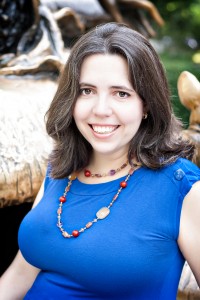
Gabriela Pereira is the Creative Director at DIY MFA, the do-it-yourself alternative to a master’s degree in writing. She develops tools and techniques for the serious writer, to help you get the knowledge without the college. With an MFA in creative writing, Gabriela is also a freelance writing teacher, and has led workshops throughout New York City via writing programs like: 826NYC, East Harlem Tutorial Program and Everybody Wins. When she’s not working on DIY MFA, she loves writing middle grade and teen fiction, with a few short stories for “grown-ups” thrown in for good measure.

A Good Scare for a Great Cause

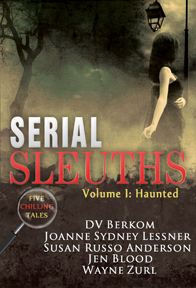
Earlier this month, SerialSleuths, Volume 1: Haunted
hit the Kindle shelves. The brainchild of Jen Blood, author of the Erin Solomon
mysteries, this short story collection features five indie writers and their
series detectives, myself included:


“Death of a Sad Face” by SusanRusso Anderson

Nineteenth-century Sicilian midwife
Serafina Florio defies the local inspector by setting out to prove a connection
between a missing orphan haunted by a hideous specter and the murder of an
affluent family’s butler.


“Let Sleeping Dogs Lie” by DVBerkom

In northern Arizona’s Navajo
country, on-the-run heroine Kate Jones lands in trouble once again when she
stumbles into the world of mysterious sorcerers called Skinwalkers.

“The Stone House” by Jen Blood

Reporter Daniel Diggins finds
himself stranded overnight with nineteen-year-old protégé Erin Solomon while
investigating a two hundred-year-old mass murder in a haunted mansion in Maine.


“The Ghosts’ High Noon” by JoanneSydney Lessner

Enterprising actress Isobel Spice
faces down a theater ghost to learn the truth behind an actor’s mysterious
death during a performance of Gilbert & Sullivan’s gothic operetta Ruddigore.

“Ode to Willie Joe” by Wayne Zurl

When multiple UFO sightings are
reported around town, it’s up to wry and ever-reasonable Tennessee police chief
Sam Jenkins to get to the bottom of the mystery.


Instead of battling a calculator to split the royalties
five ways, Jen suggested we donate the proceeds from the $1.99 e-book to
charity. We enthusiastically agreed and selected Doctors Without Borders
as our beneficiary. On the eve of publication, I sat down (virtually) with my
colleagues to discuss the genesis of our collaboration and its charitable bent.

What gave you the
idea for the anthology?

Jen: I started
thinking about all these authors out there with characters I love, and how much
fun it would be to see those characters in a shorter form that might reach
beyond the pure mystery/thriller structure. Once I started thinking about the
possibilities—ghost stories, romance, holiday themes—I realized it could be
something truly fun to play around with. I didn’t see anyone else doing
anything like it, so I decided to make it happen myself.  

How did you solicit
stories for Haunted?

Jen: I
hand-picked the contributors for this one based on books I’d read by the
authors and interviews I’d done with them on my website, BloodWrites. I’ve been so
impressed with their professionalism, and this is a wonderful way to showcase
their work in a new venue. To me, these short stories exemplify not only the
tremendous writing talent of everyone involved, but also the fabulous
characters who carry their respective series.


What did you find
challenging, different, fun or tedious about working in a short form?


Wayne: The challenge for me came with the paranormal
“haunted” theme. I’ve written fifteen Sam Jenkins mystery novelettes, so
presenting a short police story is nothing new. But I spent a fair amount of
time thinking about how I could take a problem generally referred to the police
and give it an “otherworldly” tint. I’m not much of a sci-fi or horror guy, so
I asked my wife for help. She gave me the basic idea for that potentially
unexplained, spooky ingredient.

Susan: I try to
limit the mystery to one murder, but also have my characters grow. Serafina’s
got to grow along her trajectory, which is pretty easy because (don’t tell her
I said this) she’s got issues, but the other characters need to grow, too. I
had a plot in mind, a first and a last scene pretty well thought out, and the
characters just worked mighty hard and wrote the in-between stuff for me: it
was their growth that created the plot.

Joanne: I had
to decide which of my secondary characters to include. Isobel is an office temp
as well as an actress, but there’s no reason for James, her temp agent and my
other POV character, to accompany her on a theater gig. Since she’s doing an
operetta, it made the most sense for her tenor friend Sunil to go, so that’s
who packed his suitcase.

DV: I love
writing a series character (I must, since I’m deep into a second series J).
Getting to know their foibles and strengths, knowing their personalities so
well, their stories practically write themselves.

Jen: The hardest
part was figuring out at which point in the series the story should take place
to make it interesting for both the readers who know Erin’s story and those
just being introduced to the characters. Initially, I wrote the short as having
taken place after the second novel in the series, but realized that was just
completely the wrong way to bring people into Erin’s life. The most fun part by
far was exploring different facets of the characters’ relationship and playing
with a new writing form. 


How did you get the
idea for your story?

DV: A few years
back while on a lone cross-country trip, I stopped on the side of the road in
Monument Valley intending to sleep in my car so I could wake up before sunrise
and shoot some photos (I was an itinerant photographer back then). I had an
intense experience that night, involving what I learned later was a Skinwalker,
and have never forgotten how frightening and deliciously intriguing the whole
thing was.

Wayne: When you work as a cop for twenty years in an
overcrowded and always busy area, you encounter plenty of weird people and
strange incidents. I knew a real character like Willie Joe Ballantyne. And getting
complaints that sounded like an episode of the Twilight Zone happened all the
time. In this case, I coupled three real incidents together and added an
element native to the Smoky Mountains—and voilà.

Jen: The story is based on a mass murder that happened in Maine in
1806, so a lot of the details are true: a father went after his family one
night and murdered seven of his eight children and his wife, then killed
himself with a straight razor. I know—gruesome. From there I looked at ways to
make the story resonate more with Erin, who is still coming to terms with an
alleged cult suicide. I altered the details of the true crime a bit and changed
the setting to include Freeport Maine’s Stone House, a gorgeous estate where
the University of Southern Maine holds its workshops and readings for their
Creative Writing MFA. I love that place, so it was great fun imagining being
back there in this very creepy situation.

Joanne: I was
already planning to use the famous ghost scene in Ruddigore as a springboard for the fourth book in my series, but I
couldn’t resist trotting it out when Jen asked. I’m not sure whether I’ll let
it stand or spin out the idea into a novel—with a different ending, of course.

Susan: I had my characters in mind, especially Teo
who is new to the series. He is haunted for many different reasons and needs to
work out his pain. I happened to be thinking about Mahler, and how a circus
sound runs through much of his music—I love the image of life as a circus.

Have you ever had a
ghostly/paranormal experience?

Joanne: The
experience Isobel has seeing a person sitting on the edge of the stage actually
happened to me. I was singing a solo in a Sondheim revue Off Broadway at the
Harold Clurman Theater, and there was a man watching me. I couldn’t bring
myself to look at him head on, but I was really annoyed when I came offstage.
There was no one there, of course, but later the theater manager asked, without
my having mentioned it, “Was he wearing a brown plaid shirt?” When I said yes,
he told me it was the ghost of a director who’d worked there a lot, who had
been sighted by other actors before me. I just hope he liked my singing!

Jen: My family
has a long history of close encounters, particularly at my grandparents’ old
house. Rocking chairs would spontaneously start rocking in the night, household
items would mysteriously migrate from one place to another, and occasionally
you’d even see a shadowy figure holding a candle roaming the halls. Lots of
creepiness.

Susan: I
believe those who have gone before us walk the earth, and most of the time
we’re just too stupid to see them. But there have been desolate moments in my
life where they’ve reached out and revealed themselves, and it has been a
phenomenally healing moment. One of my favorite places is New York’s Lower East
Side. The streets and the tenements are totally haunted. I love to think of the
people who lived there, the overcrowding, their general feeling of dislocation,
but also their guts, all of them still giving to us with their striving and
their energy and their wisdom.

DV: The
aforementioned experience in Monument Valley. Totally freaky.

Wayne: I’ve met quite a few people who I thought
might have come from outer space, but, no, not in the traditional sense.

What are your thoughts
about donating the proceeds to charity?

Susan: To make
a story and, in a sense, to give it to people so that it goes to work for
them—it’s far more personal than just sending money.


DV: I’ve always
been as much of a philanthropist as my pocketbook would allow. This is a
fantastic way to draw attention to and support a valuable resource, with the
added benefit of introducing new readers to my work and the work of the other
authors. I think the idea is brilliant and may be a trend in indie publishing—thanks
to Jen.

Wayne: I’m happy to let my ego reap the figurative
proceeds by seeing another Sam Jenkins mystery in print and sending the cash to
a good charity. After I had a few novelettes under my belt and before my first
novel was published, I donated one quarter’s royalty check to The National Law
Enforcement Officers Memorial Fund when they were building a monument in
Washington DC to police officers and federal agents killed in the line of duty.
I’ve got a few pension checks coming in each month; I can afford to give
something to someone who needs a little help.


Joanne: I perform
with an amazing theater group, the Blue Hill Troupe,
which has an 89-year history of donating its net proceeds to New York City
charities. We produce a musical and a Gilbert & Sullivan operetta every
year, so for me, making art to make a difference is a happily familiar
experience.

Jen: I love the
fact that all of these authors have come together to donate to a good cause,
and Doctors Without Borders is such an amazing organization that I’m thrilled
to do whatever I can to chip in.


How has it been
collaborating with other writers in your genre?


Jen: The
collaboration aspect of this was such a lot of fun. Writing is generally such a
solitary practice that it was nice to connect with these authors in a new way
and make the process more of a group effort for a change.

Joanne:
Everybody has been very generous and open, and really, there’s no better vote
of confidence than being welcomed into a project by your peers.

DV: I enjoyed the
process immensely and am looking forward to submitting work to be considered
for the next anthology. It was great fun, and everyone’s input helped make the
project better.

Susan: It’s
really wonderful, and working on a single theme is close to writing a story
together. I think the amazing grace of social networking is the ability to meet
my colleagues from all over the world. This project takes networking into new
territory.

Wayne: I’m in the company of four beautiful women,
what’s not to like? And they all write extremely well. So I’m looking forward
to reading their contributions to this anthology. But since this is an e-book,
I’d better get out there and buy a Kindle.

What’s next for
Serial Sleuths?

Jen: I’m already
accepting submissions for the next volume, a collection of romantic shorts for
the Valentine’s Day season due out in February. Right now I’m working to
determine which non-profit will benefit from sales. 100% of net proceeds from every
volume of Serial Sleuths will be
donated to a different organization. Those interested in submitting a story can
find guidelines at http://erinsolomon.com/serial-sleuths/.
The deadline is December 15, 2012. 


The Perils and Pitfalls of Writing with a Partner

By Peggy Williams & Mary Joy Johnson

Ever want to kill your partner? Life partner? Business partner? Bridge
partner? 

Instead of wanting to kill each other, the writing partnership M. J.
Williams regularly kills off other people–three last year, three more this
year! We are mystery writing partners.

Mary Joy brought to the relationship years of teaching writing on the
college level. She’s written several long technical tomes, but this was her
first attempt at novel writing. She’s also an avid reader of mysteries.  Peggy’s background includes freelance
writing–everything from video scriptwriting to feature articles in magazines
to online content.  She reads mysteries
among other genres, but what she brings to partnership is her knowledge of
story structure as developed through screenwriting.

Most writers, when we tell them we work as a team, are astonished.  They say they could never write with someone
else, and they wouldn’t want to.  We
admit collaborative writing is not for everyone. There are some disadvantages,
but there are advantages as well. And there are some things writing teams can
do to keep the experience from turning into a murderous affair.

Advantages of
Writing with a Partner

·        
We
build on one another’s strengths.  

·        
We
bounce ideas off one another and brainstorm together.  

·        
We help
one another through blocks or slumps–that is, if one of us can’t think of
anything to write about a scene, the other usually can, and then the first
develops and expands on that.

·        
We push each other by assigning deadlines and
holding each other accountable.

·        
We share the marketing and utilize each other’s
strengths.  For instance Peggy enjoys
working social media outlets.  Mary Joy
prefers person-to-person selling.  When
something is tough or onerous, such as approaching a bookstore to take books on
consignment, we can ho and hum together and then finally go together to get the
job done.

·        
When we do book/author events, we have a traveling
partner who gets what we’re going through and how we are feeling (both positive
and negative).

·        
When one of us is feeling insecure, either writing
the story or marketing, we can turn to the other to bolster us up.

·        
We have someone to share bragging rights with,
someone to turn to when our egos have been stomped on.

Disadvantages
of Writing with a Partner

·        
We have to defer to one another’s vision for
the story, characters, or details; this requires constant negotiating and
compromise.

·        
We have to work around another person’s
personal schedule (what do you mean she’s too busy quilting this week to get
her chapter done?).

·        
The biggest disadvantage?  We have to share the royalties!

Tips for
Successful Writing Partnerships

·        
Be
humble.  Sometimes that bit of prose you think was brilliant,  your partner hates–and she’s probably right.

·        
Communicate
often, either meeting in person, on the phone, or by e-mail.

·        
Outline the book thoroughly. 
This will be the road map and the working agreement for the story.
However, be flexible and be willing to change the outline as need dictates.

·        
Establish
deadlines for one another.

·        
Revise
lots because that’s where your voices blend and become one.  Sit together, read the story chapter by
chapter together, and negotiate changes to story, dialogue, and details.

·        
Recognized
individual strengths and utilize them.  Peggy always defers to Mary Joy when it comes
to plotting a mystery; Mary Joy trusts Peggy’s need for logic and sense of story
pacing.  Peggy loves writing and shaping
dialogue. Mary Joy loves describing people and settings (including home
interiors!).

·        
Laugh a
lot! Have fun with the experience.


 Peggy Williams and Mary Joy Johnson write under the penname M. J.
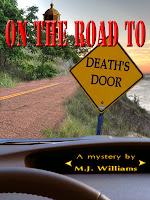
Williams. Their On the Road mystery series features Emily and Stan Remington
who travel in a used RV and encounter murder and mayhem wherever they go.  Their first novel, On the Road to Death’s Door, takes the couple to Wisconsin’s Door County, a popular vacation spot surrounded
on three sides by Lake Michigan.

Passion, Lucidity, and Tenacity: Keys to Being a Writer

Passion, lucidity and tenacity: keys to being a writer
 
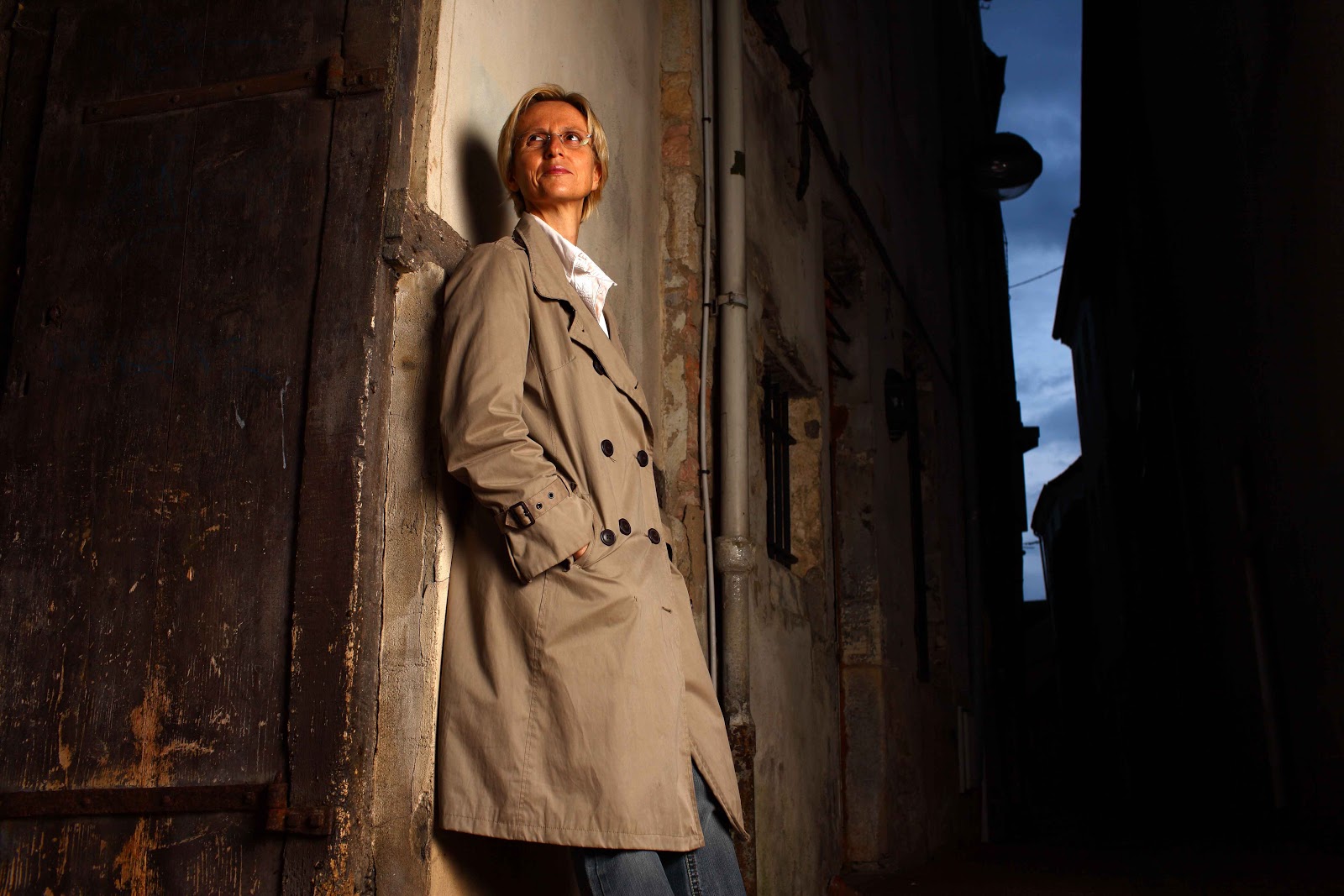
Anne Trager, founder of Le French Books, talks with international bestselling author Frédérique Molay
 
Imagine writing a book in your spare hours, between work in politics and home life. Imagine keeping it in your drawer until your friends say you have to submit it for a prize. Imagine then that you win France’s most prestigious crime fiction award, that your book rockets to the top of the bestseller list and is named Best Crime Fiction Novel of the Year, that you leave your day job and dedicate your life to writing. No, this is no fairy tale. It is the story of Frédérique Molay, the author of the international blockbuster The 7th Woman, which is now available in English. She’s been called “the French Michael Connelly,” and I was lucky enough to translate this book. She and I talked about writing and here I share some of her secrets.
 
Can you describe what motivated you to become a writer?
When I was a rookie journalist, by luck and stubbornness, I had the opportunity to do an exclusive interview of Mary Higgins Clark and spent several hours with her face to face on May 14, 1992. It was an unforgettable moment. I found her so professional, so kind. The picture of the two of us together still hangs above my desk. I remember one scene that day in particular. We were in a limousine that had just stopped at a red light in the middle of Paris, and Mary Higgins Clark began to talk. It was like she was building the scene for a new novel. She whispered, ‘Imagine, a man you don’t know approaches and opens the unlocked door and, there the story starts!’ I still can’t get over the opportunity it was for me, a rookie writer, to meet one of the greats. It was necessarily motivating. I would write at night, while holding down a job with responsibilities and raising three kids. When I won Quai des Orfèvres prize andThe 7th Woman was so well received, I took the leap and I dedicated my life to writing.
 
Where do your stories come from?
 
I set The 7th Woman in Paris, a city I know well, as I was born there. Often, when I see a building or a stairwell I think to myself, “Now that’s a good address for a victim.” Each story stems from encounters, articles I’ve read in the papers or heard about. I like to start with human reality in what it has that is darkest, stepping in the real settings and then building a story from it. But beware, you need to have a Cartesian approach, because each piece of evidence must have a consequence in the story. It’s like a Rubik’s cube. You can’t take anything for granted.
 
What are you trying to do with your writing?
 
More than anything, I want my readers to keep turning the pages. Weaving suspense over the pages in a mystery plot right through the resolution is a fine game between the author and the reader. In no other genre do you get this kind of interaction as in crime fiction. Ultimately, you can only write what you have inside. I am an eclectic reader, and as an author I have a taste for criminal investigations, and more generally for thrillers and suspense. Some people claim that crime fiction writers are constantly looking for the truth, that they pinpoint what is lurking in the shadows, they love to raise people’s awareness. This is certainly true, without forgetting that the goal, simple, is to give readers a good time and some chills!
 
What does it take to write?
 
A book is like a child you bring into the world. You keep it inside of you for months, and then it’s born and takes on a life of its own. It’s a curious feeling. You need to be a bit of a solitary wolf when you write. You find yourself alone in front of the page or your computer screen, along with just your imaginary characters. Very few people can actually have this kind of intimacy, I think. I need to have someone I can trust, to whom I read my chapters, with whom I work things out when I’m feeling doubts, someone who encourages me in my passion.
 
Writing requires regular work. The more you do it, the easier it becomes. Writing is a passion, a necessity. You have to be modest, self-critical, and be able to get people to help you. After your imagination has worked full out, and the last word has been put on a manuscript, corrections take time. Writing, like so many things in life has something to do with talent, but it is mostly about work. It takes passion (obviously), lucidity (a minimum that grows over time), and tenacity (limitless).
 
Le French Book is having a special promotion of The 7th Woman starting on October 23. This edge-of-your-seat police procedural has all the suspense of Seven, with CSI-like details, set in Paris. It won France’s most prestigious crime fiction award, was named Best Crime Fiction Novel of the Year, and is already an international bestseller. For the launch, Le French Book giving away a trip to France, French wine and lots of other gifts. They also dropped the usual list price for a limited time. Check it out: http://www.the7thwoman.com

About the author

She’s been called “the French Michael Connelly.” After The 7th Woman took France by storm, former politician Frédérique Molay dedicated her life to writing and raising her three children. She has five books to her name, with three in the Nico Sirsky series, with a fourth in the writing.

About the translator

The translator, Anne Trager has lived in France for over 26 years, working in translation, publishing and communications. In 2011, she woke up one morning and said, “I just can’t stand it anymore. There are way too many good books being written in France not reaching a broader audience.” That’s when she founded Le French Book to translate some of those books into English. The company’s motto is “If we love it, we translate it,” and Anne loves crime fiction.http://www.the7thwoman.com/
Scroll to top