Shorter Novels in the Digital Age?

by Elizabeth S. Craig, @elizabethscraig
rulerThe key to discoverability, at this point, seems to be either writing a blockbuster of a book (which we’d all clearly be doing, if it were such an easy endeavor), or owning a lot of real estate on Amazon.  In other words, having a lot of books available for sale at Amazon.

Readers seem to like series. And readers are impatient for the next book…evidenced by semi-joking notes I’ll get on Facebook from readers: “Can’t you write faster?”

And I’m thinking, “Okay….but I’m writing four books a year. Isn’t that fast enough?”  No, I’d never respond to a reader that way.  I’ll usually answer back on Facebook by thanking them and encouraging them to read one of my other series.  And I take their question as a compliment—although it stings a little, too.

I read a post last week by D.D. Scott on “The Writer’s Guide to e-Publishing” blog, entitled: Indie Epublished Authors: Build Your Backlist Quicker with Shorter-Length Novels.
In it, D.D. (who’s had a very successful e-publishing career) took an informal reader poll and found that:

1. Ideally, they would love to wait no longer than two months between new releases from their fave authors. (That keeps an author fresh in their minds.)
2. Because of their tight schedules as working moms and dads and/or grandmas and grandpas, and in today’s multi-media world, they love quick reads that they can (a) read or listen to during their commute or at lunch, (b) read while waiting on the kids at soccer practice, cheerleading practice, music lessons, dance lessons, etc., (c) read while in a doctor’s waiting room, and (d) read knowing that the characters they’ve come to love will be back very soon with a new adventure.
3. Their attention spans are getting shorter and shorter so they like something they can invest a relatively short time in. Get great laughs and move on.
4. They have no clue how long a book “should” be. As long as the story is great, they don’t care either. Except that, again, they do have short attention spans that are getting even shorter. 

**********************

I’m not going to put a book out every two months, no matter how much readers might like it. :)  But at a shorter length…sure, I could write more books in a year.

My thoughts on this:

Readers don’t seem to mind short books.  My shorter self-pubbed books have enjoyed a good reception from readers…several of whom even commented (in reviews and directly to me on Facebook, Twitter, and email) that they enjoyed the “quick reads.” One of mine is about 160 pages (according to Amazon), one is equivalent to 170 pages…and one is just listed as 366 kb.  :)  I know that book is roughly 59,000 words.

Shorter books mean that you can write more books in a shorter period of time. (Sometimes. If you’re a writer who naturally writes long, then it might be tough/time consuming for you to edit down to short length.)

For my genre (cozy/traditional mystery) my publisher expects a 75,000+ word book.  No problem.  I deliver those books, with that length, to them on a regular basis.  But my first draft for those books was probably 55,000 words.  That’s the basic story.  That’s with no chapter breaks,  little description, shorter hook time (if I’m incorporating food, quilting, etc. in a series…which I do for my two Penguin series), very little character description, sparse setting, and limited subplots.

If these books are poor quality, we’re going to end up in hot water.  It doesn’t matter how much space you occupy on Amazon if readers hate your books.  And readers remember.  I think we all put out a book every once in a while that isn’t up to par.  If every book we put out is a stinker, though, we’re cooking our own goose.

What I’m doing for now:

Continuing to write longer for my traditionally published books (as required by my contracts.)
Writing shorter books (but still, full-length novels) for my self-pubbed Myrtle Clover series (which started out as a traditional series).

I’m aiming for two traditionally published titles in a year and over two for my self-published titles (that’s two finished books and maybe be half-finished with a third.  Or even have a finished third self-pub title ready for formatting.)

Keeping it in check:

I’ll watch out for burn-out and stale writing.  I’ll ask my beta readers and freelance editors to tell me if my writing doesn’t seem fresh (I know my traditional editors will definitely let me know if it doesn’t.)

In the last couple of years, however, I’ve noticed that the more I write, the more I want to write.  The more excited I get. The more confident I feel.  The more I miss it when I have an odd day when it doesn’t get done (which means I squeeze it in at the end of the day, just to get that satisfied feeling. A writing addiction?)

The nice thing is that I think writing shorter books for my self-published series is giving me a creative shot in the arm.  I’m thinking about new ways to explore writing the series—maybe holiday novellas.  Traditional publishers can be leery about putting out holiday titles (short shelf life), but it’s something that’s always been interesting to me. 

Do you write short?  What are your thoughts about what the boom in digital publishing means for book length?  As a reader, how frequently would you like to see titles release in your favorite series?
 
Image: Flickr: Biking Nikon

Twitterific

by
Elizabeth S. Craig, @elizabethscraig

Twitterific
is a compilation of all the writing links I shared the previous week.

The
links are fed into the Writer’s Knowledge Base search engine (developed by
writer and software engineer Mike Fleming) which has over 18,000 free articles
on writing-related topics. Sign up for our free newsletter for monthly writing
tips and interviews with top contributors to the WKB or like us on Facebook.

Try “My WKB”–a way for you to list and sort articles, view your read
articles, and see your search history. Read more about it here:
http://bit.ly/S9thqS.
The free My WKB page is here:
http://bit.ly/PV8Ueb. And check out Hiveword to help you organize your story.


Instances that might require
writing a longer scene: http://bit.ly/PSjaG5
@LynnetteLabelle

Beginnings: Action and Change: http://bit.ly/PSjfJZ @jodimeadows

Pros and cons of 1st person POV and 3rd person close: http://bit.ly/SeF03f
@JudgeHopkins
Write Fiction that Grabs
Readers from Page 1: http://bit.ly/R1ynPY
@writersdigest

5 observations from the big marketing world: http://bit.ly/Y1SzHr
@junglereds
Where were all the publishers
at #WDCW12? http://bit.ly/R2Ygz0
@Porter_Anderson @jamesscottbell @jpfine

Using diaries as clues in crime fiction: http://bit.ly/VhGrTs
@mkinberg
 
The fifteen professions that drink the most coffee. Yes, writers made the list. http://bit.ly/R1xFSP @i09

 
Tips for writers approaching a
transmedia future: http://bit.ly/PSWK7u
@Porter_Anderson @Jeff_Gomez

Tips for setting up a novel
series: http://bit.ly/R32CWR

Knowing when your script is
finished: http://bit.ly/PSYAWa
@gointothestory

10 ways to use a writer’s
conference to market your work: http://bit.ly/R32NkW
@michellerafter

3 Ways To Create Incredible
Characters: http://bit.ly/PSYFcf
@woodwardkaren @thecreativepenn

How to Mind Map in 3 Small
Steps: http://bit.ly/WXinnK @lifehackorg

Make Your Own NaNoWriMo
Survival Kit: http://bit.ly/S6uddd
@LauraHoward78 @WriteNowCoach

Demystifying Science Fictional
Terms: http://bit.ly/S6qNai @KirkusReviews
@sfsignal

The 15-Minute Writer: Building
Your Platform: http://bit.ly/PT6f6F

The Fundamentals of Verbs: http://bit.ly/R3i5X3 @writing_tips

Making an emotional connection:
http://bit.ly/R3ig4x

Tips for
writers approaching a transmedia future: http://bit.ly/PSWK7u
@Porter_Anderson @Jeff_Gomez
Kitchen Sink That First Draft: http://bit.ly/PT6vmk @janefriedman

Create Key Moments with
Secondary Characters: http://bit.ly/PT6ChB
@livewritethrive

Is It Worth Converting an Old
Book Into an eBook? http://bit.ly/R3iHvF
@jfbookman

Are you world building or world
recycling? http://bit.ly/PT6NcR @WriterLor

Thoughts on Narrative Framing
Devices: http://bit.ly/R3j5Kz
@KgElfland2ndCuz

25 Ways To Get Your Creative
Groove Back As A Writer: http://bit.ly/R3jjS5
{lang}

12 Signs Your Blog Is a Social
Media Ghost Town (& Actionable Tips to Fix Them): http://bit.ly/SuzqK8 @heidicohen

Empathizing With Literary
Agents: http://bit.ly/U1d1TM
@passivevoiceblg

How Professional Writers Avoid
Distractions: http://bit.ly/U1d81O
@thecreativepenn

6 Ways to Make Researching
Easier: http://bit.ly/SceslM @janice_hardy
@AmieKaufman

Writing Historical Romance, Not
History Lessons: http://bit.ly/U1dlCb
@TexasDruids

Why Evernote is Great for
Writers: http://bit.ly/SceNoF @ava_jae

Tips for uncluttered prose: http://bit.ly/SceVV0 @JodieRennerEd
@angelaackerman

Weak words: http://bit.ly/U1dAgx

Tips for email mailing lists: http://bit.ly/Scf8rv+|+Duolit%29&utm_content=Google+Reader
@duolit

Using Life’s Disasters to Add
Authenticity to Your Writing: http://bit.ly/ScffmH
@CMKaufman

Neil Gaiman’s 8 Rules of
Writing: http://bit.ly/ScfkHa @brainpicker

Promote your writing business
through your email signature: http://bit.ly/Scfqyx
@michellerafter

Scoring the Book Review, Guest
Post or Interview: http://bit.ly/ScfvSW
@KristenLambTX

The Importance of Undisciplined
Thinking: http://bit.ly/ScfIpc
@creativitypost

How to Fascinate Others…and
Why Authors Should Take Note: http://bit.ly/U1e9qG
@jeanniecampbell

When Not to Show the Action: http://bit.ly/U1ekC5 @KMWeiland

9 Point Checklist for Book
Manuscripts: http://bit.ly/U1epWF
@AdriennedeWolfe

Creating story flow: the secret
power of cause and effect: http://bit.ly/U1eARz
@karenschrav

E-books in Libraries: They
Still Don’t Get It: http://bit.ly/U1f6iA
@JAKonrath

Screenwriting–Why “The
Princess Bride” should not work as a movie: http://bit.ly/SchF50
http://bit.ly/U1fdL1 @gointothestory

10 Tips for Launching your
Steampunk Project on Kickstarter: http://bit.ly/U1fpdp
@Julia_Brannon

Want to benefit from criticism?
Approach it like a scientist: http://bit.ly/U1fE8f
@AlexLickerman

The Balance Between
Authenticity and Creativity: http://bit.ly/Sciniw
@PatrickRwrites

The Future is Bright for
Writers: http://bit.ly/Scjj6H

10 frequently-confused words: http://bit.ly/Scjte4 @writerscramp1

Learning to Improve Your
Writing: http://bit.ly/ScjEGr @4YALit

Tips for getting exposure for
your book: http://bit.ly/ScjLl9
@LauraHoward78

Ebooks as native apps vs. web
apps: http://oreil.ly/RToMMU @jwikert

Don’t Stop Writing in the Ugly
Middle: http://bit.ly/VP4mKW @joebunting

A No Stress Guide to World
Building: http://bit.ly/RTp9Hj
@howtowriteshop

Stuck for a word? http://bit.ly/VP4v13 @emergentpublish

Co-Authoring: The Good, the
Bad, and the Ugly: http://bit.ly/RTpFVV
@rachellegardner

Why You Need an Author Platform
– and How to Get One: http://bit.ly/VP4SJ3

Chapter One Analysis: The
Casual Vacancy: http://bit.ly/TM55pa
@mooderino

How To Write Every Day: Jerry
Seinfeld And The Chain Method: http://bit.ly/SoyVDd
@woodwardkaren

3 Steps to Living an Authentic
Life Online: http://bit.ly/TM5g3M
@geofftalbot

Testing Your Idea–Is it Strong
Enough to Make an Interesting Novel? http://bit.ly/SozaxY
@KristenLambTX

40 Tips to Boost Your Writing
Skills to Master Level: http://bit.ly/TM5kQY
@lifehackorg

How to Conquer Self Doubt And
Just Write: http://bit.ly/SozhJY
@writersdigest

An agent makes a case for the
importance of agents: http://bit.ly/TM6lIR
@passivevoiceblg

Analyst
less optimistic that publishers will adapt to changing industry: http://bit.ly/Txd2m2 @brianoleary @kevin2kelly
@Porter_Anderson

 
Why 1 writer is proud of her
chick-lit novel: http://slate.me/SoApxg
@salon

Can Posting Stories on Wattpad
Help You Sell Books? http://bit.ly/TM6ufl
@goblinwriter @cj_archer

Startups and Publishers: It
Ain’t Easy: http://oreil.ly/SoAvoG
@hughmcguire

Screenwriting: Why “The
Princess Bride” should not work as a movie: Part 3: http://bit.ly/SoAwsE @gointothestory

Priming your Creativity: http://bit.ly/TM6BYo @MichaelMichalko

A beat sheet for a popular
song: http://bit.ly/TM6FaB

Why You Need an Author Platform
– and How to Get One: http://bit.ly/VP4SJ3

The strength of female
characterization: http://bit.ly/R0FiZX
@Riduna

What It Really Takes to Get
Published: http://bit.ly/Tgxcfp @jeffgoins
@MichaelHyatt

15 Familial Terms and Their
Other Meanings: http://bit.ly/VRC96r
@writing_tips

How to Make Writing More Like a
Real Job: http://bit.ly/TgxfYE

Physical Attributes Entry:
Knees: http://bit.ly/VRF2Em @angelaackerman

7 Completely Insane Golden and
Silver Age Superhero Origins: http://bit.ly/TgyV4s
@ToplessRobot

The One Thing Holding You Back
From Becoming a Successful Writer: http://bit.ly/VRFmmz
@krissybrady

How to speak publisher: F is
for Facebook: http://bit.ly/Tgz47Z
@annerooney

Jim Butcher On Writing: http://bit.ly/VRFClg @woodwardkaren

Fantasy in the short form: http://bit.ly/VRGWEZ @VickyThinks

How to Beat 7 Common
Self-Publishing Fears: http://bit.ly/TgzZ8q
@aliventure

Writing, Creativity, And The
Empowerment Of The Author In Publishing: http://bit.ly/VRHafk
@thecreativepenn

In praise of bad boys’ books: http://bit.ly/TgA3oP @guardianbooks

How Writers Should Die: http://bit.ly/VRHASU @jamesscottbell

3 Types of Accidental Writing
to Avoid: http://bit.ly/S3s14C @writing_tips

A No Stress Guide to World
Building: http://bit.ly/RTp9Hj
@howtowriteshop

3 Obstacles to Writing an
Ebook: Too Overwhelming, Lacking Motivation, and Too Technical: http://bit.ly/S3YNT9 @KarenCV

Are Self-Published Books the
New Query Letter? http://bit.ly/PeUo1x
@LauraHoward78

Writers’ Conference Tips: http://bit.ly/S3ZCeI

A Smart 8-Point Content
Marketing Strategy From a Failed TV Writer: http://bit.ly/PeUwy0
@copyblogger

Build Your Readership by
Simplifying Your Menu: http://bit.ly/PeUxC4
@writeitsideways

World Building Techniques —
Keep Your Reader Grounded In Your Story: http://bit.ly/S40fow
@FaeRowen

The Only 2 Things Authors Ought
to be Doing: http://bit.ly/S40TSU @JFBookman

Build Your Backlist Quicker
with Shorter-Length Novels: http://bit.ly/PeVf2e

Tips for writing sexual
tension: http://bit.ly/S41FiQ @laurahoward78

Freelancers–everything you
wanted to know about word counts: http://bit.ly/S46IzD
@michellerafter

How to Ask for a Blurb (Even
When You’re Intimidated): http://bit.ly/S47v3F
@SarahPinneo

Great reasons to self-publish:
7 case histories: http://bit.ly/PeXNgR

Keeping Focused & Nailing
the Pitch–Understand Your “Seed Idea”: http://bit.ly/S47SeC
@kristenlambTX

7 Things You Should Never Do
After Getting Revision Notes From An Editor: http://bit.ly/PeXVgy
@BryanThomasS

About Alliteration: http://bit.ly/PeY2sp @WriterSherry

Screenwriters: Set Pieces: Spin
the plot: http://bit.ly/S48zo9
@gointothestory

Indie publishing on the cheap: http://bit.ly/PeYeIf @sarahahoyt

4 Out Of 5 Publishers Now
Produce eBooks: Infographic: http://bit.ly/SorfSc
@galleycat

One Reason to Write Fantasy: http://bit.ly/YeLWkq

Read the Way You Write:
Classify It, Deconstruct It, Play with It: http://bit.ly/YeM03A
@susanjmorris

Apostrophe Placement in Proper
Names: http://bit.ly/SorxbL @writing_tips

3 Unexpected Ways to Quickly
Find Your Next Blog Post Idea: http://bit.ly/YeMgQ0

Why 1 reader enjoys reading YA:
http://bit.ly/YeMoPF @janine_ballard

6 Tests of a Solid Story
Premise and 8 Ways to Write One: http://bit.ly/SorVXX
@4YALit

12 tips for mastering the press
release: http://bit.ly/YeMMxq
@NatalieHartford

Different types of writer
platforms: http://bit.ly/YeNbjs
@woodwardkaren

7 Tips to Selling to a Stranger
at a Book Event: http://bit.ly/YeRFqf
@SouthrnWritrMag

When Should I Launch My Author
Website? http://bit.ly/SoT8d3 @authormedia
Analyst less optimistic that publishers will adapt to changing industry: http://bit.ly/Txd2m2@brianoleary @kevin2kelly @Porter_Anderson

Is Blogging a Time-Suck for
Writers? http://bit.ly/YfiDhz @jodyhedlund

10 Productivity Tips for
Writers: http://bit.ly/ScJ3Nu
@thecreativepenn @b3n3llis

The New World of Publishing:
Promotion: http://bit.ly/PiBOpe
@deanwesleysmith

Plots ~ Bigger Is Better: http://bit.ly/PiBSp9 @livewritethrive

Quick Tips for Promo Contests
& Giveaways: http://bit.ly/ScJG9X
@jfbookman

Why horror should be its own
genre: http://bit.ly/ScJZBG @AnnieNeugebauer

What
motives are behind the Penguin-Random House merger? What does it mean for
writers? http://bit.ly/Ul8T18 @dansabbagh
@Porter_Anderson @jwikert
How to get published? Finish
the story: http://bit.ly/ScKHik @chuckwendig

Writing lesson learned from
“A Lesson Before Dying”: http://bit.ly/ScL1NV
@juliemusil

The importance of file backup: http://bit.ly/ScLcZI @behlerpublish

Bring on the digital overthrow
of publishing: http://bit.ly/PiCIlV
@passivevoiceblg

12 Gmail Plugins to Boost
Productivity: http://bit.ly/PiD0ZZ
@lifehackorg

Raise vs. Rise: http://bit.ly/ScMBiP @writersdigest

The Social Media ‘Train Wreck’
That All Authors Must Avoid: http://bit.ly/ScNcRy
@jonathangunson

Creating momentum in writing: http://bit.ly/ScNp7s

Working with publishers is “soul-crushingly tough
and terminally slow”:
http://bit.ly/TxcHQg @gunzalis @Porter_Anderson
An agent with submission
suggestions: http://bit.ly/ScNGqZ
@SaraMegibow

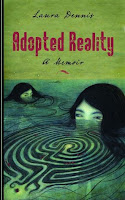
Adoption in Fiction: Guest Post by Laura Dennis

Available here

by Laura Dennis, @LauraDennisCA

Christian Grey is “fifty
shades of f—ed up” according to EL James … because he’s adopted. Popular fiction
(eh hem, Twilight) uses adoption as a
cop-out to explain vampires living among humans.

If we desire to inspire, surprise,
and even educate our audience, why not learn
more about adoption
, and flesh out adopted characters’ inner life?


Why care about adoption in fiction?

Nearly six of every ten Americans have had “personal
experience” with adoption (
Adoption
Institute
). These potential readers have a close friend or a family member who adopted a child,
was adopted, or placed a child for adoption.


This 6-in-10 figure
doesn’t even include co-workers, friends, and the extended family of adoption.


Guess what? I’m
adopted
. So congratulations! By meeting
me, reading this blog (drumroll please)—y
ou, however
peripherally, are connected to adoption.


Understanding adoption = dynamic characterization

Elizabeth Craig recently
posted great advice on
how not to
be boring
, listing of “ingredients
that can help spice up a story.” Out of eleven items, at least seven relate to
characterization.


Brainstorming an adopted character? Whew, here we have a vibrant, conflicted personality with
a secret past, who changes as the story progresses. Throw in a biological
family reunion for an instant subplot.


Need a complex antagonist?
Try a loving adoptive mom, conflicted about her daughters’ biological reunion. Our
protagonist feels guilty, wondering how to reunite without seeming ungrateful
to the woman who raised her.


Or a birth father who
wants nothing to do with the adoptee. Facing rejection, how will our
protagonist cope?


With these subplots as
fodder, an imaginative fiction writer can up the stakes, adding drama to the
adopted protagonist’s adventures.

Brief history of adopted characters

Does all this adoptee family
conflict sound a lot like women’s fiction, or even memoir? You got me; those ideas
above are true stories.


“Upping
the stakes”
in my memoir was fairly straight-forward.
After I reunited with my birth mom, I entered a paranoid delusion that I was a bionic spy
responsible for 9/11. No joke.


Memoir aside, exploring the political, emotional and social issues connected to
adoption can work in any genre. For
historical fiction, look to Roman and medieval aristocrats who used adoption to
solidify political ties and enable smooth transitions of power.


The 19th century Catholic
Church developed institutionalized foster homes and orphanages. Think Oliver Twist, Little Men, and the orphaned Jane Eyre living with her cruel aunt
and cousins.


In the last forty years, we’ve seen a shift from closed adoptions
like mine—clouded in secrecy and shame, to reality TV teen moms participating
in open adoptions.


Then there’s the ever-fashionable
Jolie-Pitt transracial adopted/non-adopted family. Add in zombie paparazzi, and you’ve got your next
best-selling YA fantasy!


Seriously, though, the
“mystery” and secrecy that surrounds adoption in media could also be re-told in
today’s fiction. Writer and adoption activist
Amanda
Woolston
points out that this
portrayal “has contributed to the cultural atmosphere that says mystery is ‘normal’
in adoption. It’s not normal, nor should
it be
.”


Food for thought? I hope
so. In Part II on Tuesday, November 6, I’ll discuss solutions for using adoption as a literary device in fiction.


*  * 
*  *  *

I’m so happy to be guest
posting, as November is National Adoption Awareness Month. If you have a question
about adoption, please comment below.


To learn more about my adoption
reunion and brief bout with insanity, read Adopted
Reality, A Memoir
, available in paperback and ebook on
Amazon. Or check
out my blog,
The Anxious Expat Mommy.

My Favorite Points of View–Guest Post by Bill Hopkins

by Bill Hopkins, @JudgeHopkins

Favorite Points of View:  

FIRST
PERSON

  • First person: This is a story that
    is usually narrated by the protagonist. If you use this, then your first
    sentence–or certainly your first paragraph–should make it clear.
    “Sally whirled around and slapped me in the face.” You know that
    someone (the narrator) has incurred Sally’s wrath and he’s going to tell the
    reader about it.

  • Advantages: First person allows the
    narrator to develop a distinctive voice that no one else in the story has
    (or should have). The reader will learn to like or at least understand why
    the narrator acts the way he does. He can ramble on about relevant points
    inside his own head without anyone else but the reader knowing what he’s
    thinking. The reader also witnesses the stress placed on the narrator and
    how that causes him to act in a certain way. The reader learns about the
    world of the narrator quickly.

  • Disadvantages: The narrator must
    be in every scene or he and the reader will be subjected to a lot of
    retelling by other characters what happened off-stage. But even that may
    be skillfully handled so that the narrator doesn’t appear to be just a
    listening post where different folks come to tell their tales. Also, other
    characters and not the narrator must describe him or the narrator must
    slip in hints at his appearance. “Sally slapped me so hard that I
    thought my scrawny mustache had been knocked off my face.” And,
    please, avoid the cliché of having the narrator look in a mirror and
    telling the reader what he sees. Finally, avoid as many “I’s” as
    you can. “I went to the store. I bought some eggs. I took the eggs to
    Sally.” That soon becomes boring.

THIRD
PERSON CLOSE

  • Third Person: An unknown narrator
    is telling the story. Generally, the narrator is never identified. Writers
    and readers have an unspoken agreement that this is one of those
    “willing suspension of disbelief” that someone witnessed and is
    able to tell the story. There are different kinds of third person. What
    makes my favorite version of third person “close” (other people
    have different terms for it) is that the narrator is in only one
    character’s head at a time. “Sally slapped him.” That would be
    the first line of a book written in third person (close or otherwise). Further
    on in the story, the reader realizes that the narrator can see into only
    one person’s mind. “He felt the stinging blow and didn’t like the
    look on Sally’s face.” In fact, third person close is almost a first
    person viewpoint using different pronouns.

  • Advantages: You can describe your
    character in the narration. As a reader of fiction, I rarely remember what
    a person looks like while reading the story. As a writer, my descriptions
    of people tend to emphasize oddities of their appearance or perhaps one or
    two nods to a physical description. Another advantage that draws me to
    this point of view is that you can still show the direct thoughts of the
    person. “Sally slapped him. That’s
    the second time she’s done that to me!
    ” or “Sally slapped
    him. That’s the second time, he thought, that she’s done that to me.”

  • Disadvantages: You must be
    especially careful not to get into anyone else’s head. You must show us
    what the other person is doing to determine his reaction to what is going
    on or, of course, have the other person say something that presents his
    state of mind. This sounds easy, but it’s tricky. In one story, I had
    written about the protagonist and two companions doing something like
    “trudging dispiritedly” (it wasn’t really that bad). My most
    heartless editor (my wife, Sharon Woods Hopkins) pointed out that I was
    expressing the thoughts of the other two people as well as the
    protagonist. Which, of course, I was.

Play around with different points of view. See
what fits your protagonist the best. You’d be amazed how a character changes
when you change that character’s point of view!

For more information, read these two articles:

Fiction: Point of View (Writer’s Digest)


Point of View in Fiction (Fiction Writers’ Mentor)

 
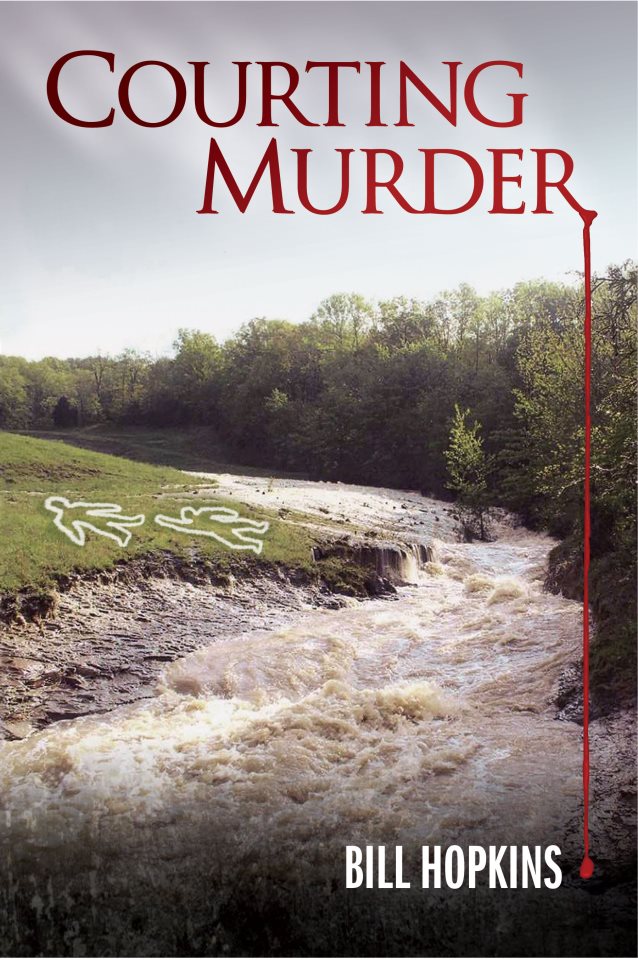
Courting Murder by Bill Hopkins

A Judge Rosswell Carew Mystery

Available October 2012

ISBN 978-0-9830504-38

Southeast Missouri University
Press

When Judge Rosswell Carew makes the gruesome discovery of
two corpses on a riverbank in the Missouri Ozarks, he’s plunged into a storm of
deadly secrets that threaten both him and his fiancée, Tina Parkmore.
Unsatisfied with the way the authorities are conducting the investigation,
Rosswell, who’s always nurtured a secret desire to be a detective, teams up
with an ex-con, Ollie Groton, to solve the case before the killer can murder
again. Rosswell uncovers a maze of crimes so tangled that he must fight his way
to a solution or die trying.
 
 
Bill Hopkins is retired after beginning his legal career in
1971 and serving as a private attorney, prosecuting attorney, an administrative
law judge, and a trial court judge, all in Missouri. His poems, short stories,
and non-fiction have appeared in many different publications. He’s had several
short plays produced. A book of collected poetry, Moving Into Forever, is available on Amazon. Bill is a member of
Mystery Writers of America, Dramatists Guild, Horror Writers Association,
Missouri Writers Guild, and Sisters In Crime. Bill is also a photographer who
has sold work in the United States, Canada, and Europe. He and his wife, Sharon
(a mortgage banker who is also a published writer), live in Marble Hill,
Missouri, with their dogs and cat. Besides writing, Bill and Sharon are
involved in collecting and restoring Camaros. Courting Murder is his first mystery novel.


Getting the Hang of the Business End of Things

by Elizabeth S. Craig,
@elizabethscraig

I’m not going to say that all writers are a
little foggy when it comes to the business side of writing. But I will say that
many writers are tentative when it comes to business.

I’m one of those writers. I read a lot (a lot) of
articles on the business end of publishing. If there’s a post on taxes and
writers, I’m reading it. A series on decoding contracts and royalty
statements? I’m all over it.

Still…it’s tough. One reason it’s tough is because I have an
agent that handles the business end. And that’s a poor excuse for me not to
follow what’s going on, so I’ve been trying to bring myself up to
speed.

Every few months, I’ve gotten notices from my agent about
different things that have happened with editions of my books—last week I heard
that one of my books was selected for a book-of-the month club. I hear about
audio editions being made, about large-print editions, and foreign editions of
some titles.

What do I have to do with any of these deals? Absolutely
nothing. I did have to approve of the book-of-the-month club arrangement (not
sure why my okay was needed). I wasn’t even aware these deals were in the works
until they were all arranged.

Now I’m branching off and doing self-publishing as well as
traditional, and I’m realizing I need to pay more attention. I started
by asking myself some questions:

Why haven’t I arranged any print editions for my self-published
books?

Why haven’t I checked into creating audio books?

Why do I have one of my books available solely on Nook and
Kindle?

What can I do to broaden my exposure on Amazon UK and into other
overseas markets? Why haven’t I addressed this so far?

The answer to most of the questions is: because
I don’t have any time. :) This is compounded by the fact that I’m not sure
what I’m doing—and it will take a little time to figure out how to approach
these different areas.

I think if I put this stuff down on my to-do list, break it down
into manageable steps, and lump it in with my promo time each day I can start
branching out a little bit more.

And there are resources available to learn more. (And
you can find many more by searching on the
Writer’s Knowledge
Base
.)

Audio book info:

On “The Writing Bomb” blog: “Creating Audio Books is Easy Peasy Lemon Squeezy”

On “Writer’s Fun Zone” : Making Audio Books From Your Novels

On “The Writer’s Guide to E-Publishing”: How Does Audio Book Narration Work?

Multiple Sources of Writing Income (Expanding our
Markets)

Dean Wesley Smith’s blog: Killing the Sacred
Cows of Publishing: You Can’t Make Money Writing Fiction

The Tribal Writer blog: How a writer (or other creative) can develop multiple sources of revenue,
part two

Print On Demand (Print Copies of Our Ebooks):

Dean Wesley Smith’s blog: The New World of
Publishing: Reasons for a Trade Paper Edition

Bob Mayer’s blog: Why is Cool Gus Publishing switching from Lightning Source to
CreateSpace?

Let’s Get Digital: Making Money From Paperbacks

Blood Red Pencil: Which is Right for You – Lightning Source, CreateSpace, or
Both?

What’s on your to-do list that isn’t particularly creative or is
completely business-related? How do you make time to knock them out?

Image—MorgueFile—mconnors

Scroll to top