
Planning the Trilogy–Guest Post by Paul Anthony Shortt

by Paul Anthony Shortt, @PAShortt


Thank you for having me, Elizabeth. Your blog is a constant source of wisdom which I try to apply to my work.

I’ve always loved trilogies. They just seem like the perfect storytelling format. You’ve got your opening, establishing the heroes and their challenges. Then the twisty middle where the villains retaliate and it seems like all may be lost. Finally, the big finish, the final showdown where we see if the heroes really can defeat the villains.

Like many kids of my generation, the first real trilogy I was exposed to was Star Wars. With The Empire Strikes Back I first saw the villains appear to win at the end of a story. This concept blew my mind and made me desperate to see what happened next. I felt for the heroes. I had suffered as the heroes had. I wanted to see them fight back. That’s a powerful feeling.

It’s a feeling I hope to capture with the story of Nathan Shepherd. While I’ve been promoting the release of Locked Within, I’ve also been working on the sequel, Forgotten Cause. Originally I had planned to write a 6-book series, feeling I needed that many books to properly tell the story.

But speaking with my publisher made me realise how turning the series into a trilogy could tighten up my storytelling and keep the emotions and stakes at their peak. I could introduce important characters sooner, reveal secrets of my setting, and keep the focus on Nathan Shepherd’s struggle against not only his enemies in this life, but the emotional demons of his past lives.

Changing from a 6-book series (a hexalogy) to a trilogy has dramatically changed how I need to plan the overall story. Instead of whole books of character development and angst, I have plans for concise, tense adventures where the characters must face their inner conflicts while facing high stakes. The fate of the world will hang in the balance, and it’s important that the characters’ internal challenges are of an appropriate level.

With Locked Within I introduce Nathan Shepherd, my hero, and the supernatural world he learns that he’s already a part of. He faces a monster connected to his past lives, which threatens innocent people all over New York.

In Forgotten Cause, I will explore more of this dark, sinister New York. Nathan will encounter people from past lives who may be friends or enemies, and he must confront decisions in a previous lifetime which have dire consequences for his current incarnation. This will likely be quite a dire story, appropriately dark for the middle point in the trilogy.

The final part in the story is tentatively titled Memory War, and will feature Nathan’s final battle against his enemies, bringing together allies from incarnations past and present. Nathan will have to call on all his skills and memories to figure out how to stop his nemesis, a reincarnated warrior named Athamar who bears an insatiable hatred of Nathan, from enacting a plan that will threaten the entire world.

All trilogies need to raise the stakes as the series goes on. The potential rewards, as well as the cost of failure, must increase to keep the reader focused.

What are some of your favourite trilogies? Personally, I think the best trilogy in film is the Back to the Future series. It fits the format perfectly, each installment building on the last.
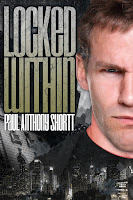
About Locked Within: The supernatural realm and the mundane world have existed side by side since the dawn of time. Predators walk the streets, hidden by our own ignorance. Once, the city of New York was protected, but that was another age.

Now a creature emerges from the city’s past to kill again, with no one to hear the screams of its victims. The lost and the weak, crushed under the heels of the city’s supernatural masters, have given up hope.

But one man finds himself drawn to these deaths. Plagued by dreams of past lives, his obsession may cost him friends, loved ones, even his life. To stop this monster, he must unlock the strength he once had. He must remember the warrior he was, to become the hero he was born to be.

His name is Nathan Shepherd, and he remembers.
Buy for Kindle
Paperback


Bio:
A child at heart who turned to writing and roleplaying games when there simply weren’t enough action figures to play out the stories he wanted, Paul Anthony Shortt has been writing all his life.

Growing up surrounded by music, film and theatre gave him a deep love of all forms of storytelling, each teaching him something new he could use. When not playing with the people in his head, he enjoys cooking and regular meet-ups with his gaming group.

He lives in Ireland with his wife Jen and their dogs, Pepper and Jasper. Their first child, Conor William Henry Shortt, was born on July 11th, 2011. He passed away three days later, but brought love and joy into their lives and those of their friends. Jen is pregnant again and is expecting twins.

Website:
http://paulanthonyshortt.blogspot.com

Twitterific

by Elizabeth S. Craig,
@elizabethscraig
Twitterific is a compilation of all
the writing links I shared the previous week.

The links are fed into the Writer’sKnowledge Base search engine (developed by writer and software engineer Mike
Fleming) which has over 19,000 free articles on writing-related topics.

Sign up for our free newsletter for
monthly writing tips and interviews with top contributors to the WKB or like us
on Facebook.

Try “My WKB”–a way
for you to list and sort articles, view your read articles, and see your search
history. Read more about it here:
http://bit.ly/S9thqS. The free My WKB page
is here:
http://bit.ly/PV8Ueb. And check out Hiveword to help you organize your story.

I’m also on the Wordpreneur blog today, talking about how I started self-publishing and became a hybrid writer.  Hope you’ll pop by.

The secret to writing fiction–emotional manipulation: http://bit.ly/ROYQnY
@authorterryo @WHammondAuthor

Plot Motivates, Character Complicates: http://bit.ly/Uk6dka
@CockeyedCaravan

Publishing has never been an agile industry. And book
products are not MVPs:
http://bit.ly/TLxDkq @Porter_Anderson @bsandusky

The Value of QR Codes for Authors: http://bit.ly/RPweL6
@wherewriterswin

Defining sexual tension and 4 areas to consider when
creating it in our stories:
http://bit.ly/SSr12M @authorterryo @SavvyAuthors

Crime fiction–a look at country house mysteries: http://bit.ly/UG8J4v
@mkinberg

Keeping Your Name in Readers’ Minds with a Newsletter: http://bit.ly/TL0Agm
@carol_kilgore @mpax1

Secondary branding in publishing? http://bit.ly/TLvViZ
@Porter_Anderson @MikeShatzkin

Collaboration & Lessons Learned From Improv: http://bit.ly/U3VCJL

What are Best Practices for KDP Select? http://bit.ly/PxJGDD @passivevoiceblg

Publishing Short Stories: http://bit.ly/U3VOZw

Too Smart?: Intelligence in Romance Novels: http://bit.ly/PxJNz5 @heroesnhearts

Literature as Societal Reflection: http://bit.ly/U3W1fl @sarahahoyt

4 Ways to Revise as You Write: http://bit.ly/PxK4C7 @writersdigest

Writing lessons learned from “Unending Devotion”: http://bit.ly/U3W6ji @juliemusil @jodyhedlund

4 steps to using mind mapping for story ideas, blog topics: http://bit.ly/WBjyvG @michellerafter

Publishing’s “open” future: http://oreil.ly/TwlCzf @jwikert

Malapropisms: the Pineapple of Linguistic Errors: http://slate.me/WBjV9s @salon

A Typeface Just for Dyslexics? http://bit.ly/TwlOP5 @jfbookman

Little Fixes: http://bit.ly/TwlUGj @maryannwrites

10 Things You Don’t Know About Sherlock Holmes: http://bit.ly/WBkwIe @junglereds @bakerstbabes

1 romance editor’s pet peeves: http://bit.ly/TwmmnR

How Do Your Characters Fight? http://bit.ly/WBlEvG @bookemdonna

25 Things Writers Should Know About Conferences And Conventions:
http://bit.ly/TwmEuX {lang.}

10 Strategies to Keep You Afloat in the Treacherous Social Media
Waters:
http://bit.ly/TwmLXx @JanalynVoigt

What does a book edit look like? http://bit.ly/WBn0Xb @rachellegardner

A look at Amazon Author Rank: http://bit.ly/TwmRyf @woodwardkaren

How to Hustle Your Readers in 3 Easy Steps: http://bit.ly/Twn6to

Balancing Beauty, Language, and Story: http://bit.ly/WBoDEf @KgElfland2ndCuz

13 Steps to Getting an Agent: http://bit.ly/SwbOnQ @4YALit

Avoiding Digital Eye Strain: 7 Easy Tips: http://bit.ly/SwbUvJ

Emotion Behind Story: http://bit.ly/SOP2dq @StinaLL

Is Your Author Website Doing Its Job? 6 Things to Check: http://bit.ly/SOP70C @laurapepwu

Blog tour basics: http://bit.ly/SwcfhP

Using Twitter to (Effectively) Market Your Book: http://bit.ly/SwcQ2W @duolit

Networking for Writers: Conference Etiquette: http://bit.ly/SwcUzI @adriennedewolfe

Grammar refresher–possessives: http://bit.ly/Swd2zd

6 Tips for Creating and Selling Your First ebook: http://bit.ly/Swdpdf @alexisgrant

Wikis for Writers: http://bit.ly/SOPZ5t

How to Kill Characters With Impact: http://bit.ly/SwdQnU @avajae

Critique Groups…a Blessing and a Curse: http://bit.ly/SOQfkS @howtowriteshop

Setting Boundaries in a World with No Borders: http://bit.ly/Swe2Uf @KristenLambTX

Plurals and Apostrophes (Mostly) Don’t Mix: http://bit.ly/SOQoVt @writing_tips

Check Your Writing For Adverbs And Other Problem Words: MS Word
Macros:
http://bit.ly/SOQrAB @woodwardkaren

Subtext in your screenplay: http://bit.ly/WL8NqQ @UnkScreenwriter

Licensing for Authors: http://bit.ly/VIpqxb @beth_barany

Common Writing Mistakes: http://bit.ly/ScboTt @noveleditor

When Should You Launch Your Author Website? http://bit.ly/SoT8d3 @authormedia

Writing, Creativity, And The Empowerment Of The Author In
Publishing:
http://bit.ly/VRHafk @thecreativepenn

The Only 2 Things Authors Ought to be Doing: http://bit.ly/S40TSU @JFBookman

Subtext in Your Screenplay’s Dialogue: http://bit.ly/WLblFg and http://bit.ly/ZdpPLB @UnkScreenwriter

How to create a 25-word pitch: http://bit.ly/WLctc1 @nicolamorgan @victoriastrauss

The Dangling Carrot and Character Development: http://bit.ly/Zdsox8 @behlerpublish

Indie Authors & Amazon Author Page: http://bit.ly/WLcUD3

17 Phrases That Crush Creativity Every Time: http://bit.ly/Zdu75I @lifehackorg

Dialogue Spacing: http://bit.ly/WLeTaI @kid_lit

Transportation in SF: http://bit.ly/Zdw16s @sfsignal

Flexible eBook Price Advice for Authors: http://bit.ly/ZdwtBF @jasonboog @jasonashlock

1 writer’s experience with using music for inspiration: http://bit.ly/WLfZTU @guineapig66 @byrozmorris

Bookshout: Managing Bookshelves, Not Books: http://bit.ly/WLg8Xs @publisherswkly

How Long Should a Paragraph Be? http://bit.ly/WLgg9n @writing_tips

Freelancers–5 Simple Questions To Ask Before Choosing a Writing
Mentor:
http://bit.ly/Zdy6z8 @museinks

What’s The Itch Your Character Can’t Scratch? http://bit.ly/WLgL35 @jacobkrueger

A site that lists book reviewing blogs: http://bit.ly/TArTKm @blog_nation

5 Essential Elements of Getting from Blog to Book Deal: http://bit.ly/TRDerJ

Why writers disappear (part 3): http://bit.ly/TAs5Js @kristinerusch

Fill The Shelves – A New Initiative To Help Underfunded School
Libraries:
http://bit.ly/TRDqHw @DavidGaughran

How to Write a Han Solo Hero in 6 Easy Steps: http://bit.ly/TAsbka @tiffanyreisz @janice_hardy

Does Your Dialogue Deserve to Exist? http://bit.ly/TRDyqq @marcykennedy

Character reactions: http://bit.ly/SYey0E @angelaackerman @davidfarland

Refresher on semicolons: http://bit.ly/SYeA8S @fictionnotes

31 Blog Design Tips: http://bit.ly/TCqbIj @HeidiCohen

Creating Your Literary Foundation: http://litreactor.com/columns/creating-your-literary-foundation @TheLitCoach

How To Prevent Carpal Tunnel Syndrome in Writers: http://bit.ly/TCqlzu

Why We Need To Write With A Purpose In Mind: http://bit.ly/SYeOwS @fuelyourwriting

The Hidden Powers of Book Marketers: http://bit.ly/SYeRc5 @threeguys1book

Frightening Fantasy? http://bit.ly/TCqG4Z @rmriegel

When You Feel Like the Worst Writer in the World: http://bit.ly/SYeWwq @jodyhedlund

Is “literary citizenship” just a nice way of saying
“hype?”
http://bit.ly/TCqP8P @daycathy

5 Tips for Using Google+ to Boost Your Marketing: http://bit.ly/SYf5Qi @smexaminer

Writer Igniter: The Story Behind the Web App: http://bit.ly/TCqRNT @diymfa

Expanding your story’s setting into a larger container: http://bit.ly/SYfaDx

Conflicting Your Reader: http://bit.ly/SYffan

3 More Protocol Tips for Attending a Writing Conference: http://bit.ly/SYfjac

5 Ways to Silence Your Internal Editor: http://bit.ly/SYfp1F @jeanoram

Emotion in The Three Acts: http://bit.ly/TCrdUK @aliciarasley

What writers can learn from Barry Eisler: http://bit.ly/SYfu5t

Two Tips That Will Make Plotting Easier: http://bit.ly/TCrhnj @janice_hardy

Writing a Romance Novel? Try this Exercise & Develop Your
Characters:
http://bit.ly/S48fG2 @writersdigest

Writing a Romance Novel? Try this Exercise & Develop Your
Characters:
http://bit.ly/S48fG2 @writersdigest

How to Hustle Your Readers in 3 Easy Steps: http://bit.ly/Twn6to

Revealing your novel’s theme: http://bit.ly/UjrCdf

Are You Hiding Your Contact Information From Your Readers? http://bit.ly/ROR6ST @selfpubreview

Struggling with a story? Test its architecture: http://bit.ly/RORiRY @storyfix

How to write a book in 30 days: http://bit.ly/UjtLp3 @guardianbooks

Recapture Your Creative Groove: http://bit.ly/RORQaz

Unsolicited Evaluation Is the Enemy of Creativity: http://bit.ly/ROS1Te

Book Review Blogs That Accept Self-Published Work: http://bit.ly/RP1x93 @woodwardkaren

Writers’ most common submission mistakes — and how to avoid
them:
http://bit.ly/RP1AS1 @midgeraymond

Online Thesaurus Gives Shorter Alternatives To Big Words: http://bit.ly/UjGd8r @chris_shultz81

Exploding the Perfect Writer Myth: http://bit.ly/UjGisL @Anna_Elliott

In Medias Res: An Ancient Secret for Beginning Your Novel: http://bit.ly/UjGmJ6 @glencstrathy

Reorganize Files to Get Yourself Back on Track for Big Projects:
http://bit.ly/UjGBne @lifehacker

The Hero’s Goals Can’t Be A Mystery: http://bit.ly/RPohFQ @CockeyedCaravan

Setting Up Your Author Central Page: http://bit.ly/RPu9im @WhereWritersWin

Don’t be afraid of telling your story: http://bit.ly/UkcImO @kcraftwriter

Tips for writing middle-grade: http://bit.ly/RPuxxk @theheraldryang

Should Authors Use Different Names for Different Genres? http://bit.ly/QADngo @annerallen

Intimate POV and show v. tell: http://bit.ly/RPuOjZ @BryanThomasS

5 Ways to Make Your Novel Inescapable: http://bit.ly/Ukdnoy @victoriamixon

How to Tell if Your Book Is a Success: http://bit.ly/RPuUrM @KMWeiland

Baloney Advice Writers Should Ignore: http://bit.ly/Ukdr7L @jamesscottbell

How to Avoid Wet Blanket Phenomena In Creative Collaborations: http://bit.ly/RPv2Yf @thinkjar_

Think Like A Writer Every Day, Even If You Can’t Write Every
Day:
http://bit.ly/UkdOPv @thecreativepenn @midgeraymond

3 Types of Humor ~ Getting Them On The Page: http://bit.ly/RPvohD

Hooking the Reader With a Quieter Beginning: http://bit.ly/Uke40R @janice_hardy

An agent on whether authors should blog: http://bit.ly/RPvypd @rachellegardner

Reach New Readers with New Genres, Story Elements and
Categories:
http://bit.ly/UkeuV9 @ddscottromcom

The Upside of Writing Fast: http://bit.ly/RPvUw7 @RuthHarrisBooks

The Click Moment. Embracing Randomness For Authors: http://bit.ly/UkeC76 @thecreativepenn @Frans_Johansson

Should writers change their story to suit an editor? http://bit.ly/UkeXqd

5 Podcast Sites for Authors: http://bit.ly/Ukfadh @wherewriterswin

Advice From Authors on Avoiding Online Distractions: http://nyti.ms/RPwwln @nickbilton

Working With World Building Backstory: http://bit.ly/UkflFd @janice_hardy

Understanding Metadata for Authors: http://bit.ly/RPB1fM @badredheadmedia @LauraHoward78

6 Ways to Shake Up Your Storytelling Style: http://bit.ly/UkkWLJ @write_practice

3 Steps for Using Prompts to Write Better & Get Published: http://bit.ly/RPBxdC @diymfa

Mindfulness for the Writer: http://bit.ly/Uklb9P @CherylRWrites

The New Path to Writing Success: http://bit.ly/RPBKxh @CBIClubhouse

7 tips to advertise your book: http://bit.ly/Uklstg @badreadheadmedia

Consumers may pay more for DRM-free products they can use
as they please:
http://bit.ly/TLyqSn @Porter_Anderson @joshgans @jwikert

Putting free bonus material in our ebooks: http://bit.ly/UGhCko @duolit @NealAbbott

Your Publishing Journey—An Obstacle Course: http://bit.ly/UklK3r @livewritethrive

A list of spooky words: http://bit.ly/RPCe6O @SharlaWrites

10 top romances in Stephen King books: http://bit.ly/Ukm3Lr @heroesnhearts

A book launch marketing plan: http://bit.ly/SSFT1g @socialmouths

Hooks: Fly-Fishing for Writers: http://bit.ly/W0Xh9r @writersherry

The future is bright for ebook prices and formats: http://oreil.ly/SSG1Og @jwikert

Bring Your Blogging Muse Back to Life: http://bit.ly/SSG6Bq @blogussion

Writing Life: Turn Your Dreams into Reality: http://bit.ly/SSGboJ

Always Write Terrible First Drafts: http://bit.ly/SSGeB7 @CMKaufman

Agents Share Conference Tips: http://bit.ly/W13ylo @diymfa

Secondary branding in publishing? http://bit.ly/TLvViZ
@Porter_Anderson @MikeShatzkin

How I Fell Into My Genre–Guest Post by Mike Martin

by Mike Martin

A funny thing happened to me on the way to becoming a
fiction writer. I ended up in mystery. I’m not really sure how I got here or
why. But, after being here for a little while I think I like it.

I have been a freelance writer, ghost writer, content
article churner, SEO and keyword specialist, editor, associate publisher,
social policy developer, and family Christmas chronicler since forever. But my
fiction works could fit into one school exercise book. And mystery was not one
of my major areas of interest.

Actually that is a bit of a lie because when I discovered
all of the various sub-genres of mystery and crime I found that I already liked
many of them. That includes some old-time stuff like Agatha Christie’s Miss
Marple and Poirot. And a ton of the British series like A Touch of Frost and
Midsomer Murders.

When I dug a little further I realized that I also liked
detectives, police procedurals, cozies, hard-boiled, locked-room, true crime,
amateur and professional sleuth, legal, medical, suspense, and historical mystery
series and books. There really wasn’t much mystery that I didn’t like.

What appealed to me about mystery was that with the
exception of true crime, and that might even be included if you think about the
ingenuity of the criminals, all of these genres and subdivisions relied on one
basic premise: telling a good story that was pure fiction and imagination. That
drew me in and kept me prisoner every time.

It was the love of a good story that brought me into mystery
writing. First, the reading and enjoying of it. And now the creation of my own.
But I actually think it is the people inside this genre who will keep me here.
That starts with my fellow writers, the famous and the soon to be, who have
almost to a person invited me into the fraternity/sorority of mystery writers
with helpful hints, advice, reviews and guidance along the way. They have
encouraged me to write well, write better, and write more.


And it is the mystery lovers who sustain me. Every single one
who stops by when I’m sitting alone, probably feeling sorry for myself, at a
book signing, and they say hello and ask about my book. They don’t have to buy
it, although that’s nice. They have already given me a gift by acknowledging
the fact that I am a mystery writer. I am one of them.

I have one book out and another in editing and the third
rolling around from back to forth in my head, sometimes waking me up in the
middle of the night to look for a pad and paper. I have never been happier in
my life. It may have taken me a long time to get here but I plan on staying.
That is if you kind folks will still allow me the privilege of hanging around
this genre.

 
Mike Martin is the author of The Walker on the Cape, the first in the Windflower mystery series. For more information visit www.walkeronthecape.com

Observations from Running a Free Book Sale

by Elizabeth S. Craig, @elizabethscraig
Free--Klabusta's Photostream--Flickr
I finally got around to experimenting with doing a free promo.  Naturally, I was interested in seeing if running this kind of a promo would boost sales of my other books…and also, I was just curious.  I’ve seen a ton of free book promotions and hadn’t tried doing one myself.

So far I’ve run two…a very short one, and one that’s turning out to be longer than I anticipated. 
 
What I’ve noticed:

You get a ton of reviews and a real look at who’s reading your books.  They talk about what they like and don’t like.  I like getting a snapshot of my readers and feel like I was casting the net wider to really get a better picture of my demographic.

You get a lot of visibility.  As unbelievable as this sounds, I heard from two different people that I’d worked with, two different summers while I was in college.  I hadn’t heard from these coworkers in twenty years…and they both happened to find me through the free book promo.

The sale does impact your other books’ sales.  But don’t get too excited.  This seems to vary.  I know that my sales for the other books did show a slight uptick. One comment from a reviewer on Amazon for Progressive Dinner Deadly: Found this browsing around. I usually hesitate to buy self-pubbed vanity releases for obvious reasons but took a chance with the good reviews and free price. I sooooo enjoyed this. Good marketing because now I’m willing to pay for the rest!

So there we have proof of actual sales resulting from the promo….if she did indeed follow through with the purchases.  :) (And please forgive the inclusion of a good review to make a point.)

You may not have as much control over how long your book is free as you’d like. Maybe you know something that I don’t, but the length of the sale might be somewhat out of your hands.  The first time I tried this, I successfully ran a free promo for a couple of days by making the book free on Smashwords.  I almost immediately took raised the price back up again on Smashwords.  Amazon made the book free within 24 hours and then raised the price after 48 hours.

This time…the book is still free.  I’ve raised the price on Smashwords (it’s been over a week now), and Amazon has not reflected the change.  I’m guessing that somebody out there…Kobo, Apple, etc….hasn’t raised the price up yet and Amazon is still matching the free listing.

Update 11-16–This morning I see that the free ebook is now full price again.  So Amazon finally either realized the book was no longer free at the online bookstore that prompted the sale, or else that bookstore (Kobo?) finally raised the price (although the price had changed at Smashwords long ago.)

Might be a better strategy if you have a couple of other books up for sale.  Otherwise, you could be missing out on income.  Jane Friedman touched on this during an interesting Reddit conversation:

It also helps if you have more than 1 book to sell—if you have, in fact, a series to sell. That way, you can use the first book as a loss leader (free or 99 cents), then charge more for the later books. But that only works if you prove yourself with readers on the first book. 

What I haven’t noticed:

Others have noted that they saw particularly harsh reviews during free promotions—a common conclusion is that readers have little respect for a product they receive for free.

I haven’t seen this.  Yes, I’ve gotten some harsh reviews during the free promos, but I’ve gotten some harsh reviews on a $6.99 Penguin ebook, too!  I can’t say that I’ve noticed a difference.  Either way….just build up your thick skin.  I take anything helpful from a bad review that I can.

Have you ever run a free book promotion?  How did it go?  As a reader, have you ever downloaded free ebooks? What was the quality of the books you downloaded?

Image: Flickr—Klabusta’s Photostream

Spacing Releases—to Keep Readers Hooked

by Elizabeth S. Craig, @elizabethscraig

libri4In my last post, I talked about production time for self-publishing and traditional publishing and how much shorter the lead-time for self-publishing is.  Basically, you have the ability to publish a book quickly once you’ve got a finished product.

But how often should we release books in our series?  How far apart is too far?  Can books be released too close together?

Paul Anthony Shortt commented on a post recently that he thought the studio behind the  Lord of the Rings trilogy had done an especially good job pacing releases.  Even though they might have had a film ready to go earlier, they released a movie every year at about the same time.  Paul remarked that this seemed to increase filmgoers’ anticipation for the next movie.

I think a book a year, per series, can definitely work.  That’s what my publisher seems to prefer for releases.  My Southern Quilting mystery series is set for a yearly release from 2012 through 2014.  But—there’s also the need for longer production time that plays into this decision.

But I will note that for my other traditionally published series, (the Memphis Barbeque series) the strongest seller seems to have been the book that released five months after the previous release.  I think all the characters and the setting were fresh in readers’ minds and they saw there was a new release…and they bought it.

So there’s something to be said for a release in a series every 6 months, too.  But can too many releases get too overwhelming or lessen the anticipation for the next book?  Can readers get fatigued with our series?  Can we glut the market with our books?

So these are my pros and cons for a book every 6 months:

Pros:
The previous book is still fresh in readers’ minds.
Your name/the series name is still fresh in readers’ minds.
If you’re writing a continuing series (a real serial, instead of each book in the series acting as a standalone), then readers will be excited to see where the story picked up.
Seems to spike sales for the previous books in the sales.

Cons:
Deadline pressure for writers (unless they already have backlist books or trunk books)
Readers might lose interest if the books seem to come out all the time…decreases the “specialness” of each book.
Possible difficulty sustaining series quality
Might have to juggle your promo and writing at one time.

Yearly releases:

Pros: 
Less deadline pressure for writers
Potential for developing additional anticipation from readers/hype
Easier to maintain series quality
Easier to write books for more than one series in a year

Cons:
Could a yearly release make it easier for readers to forget us? 

Of course, I’m thinking all these things through in a rational way and realizing how organized this type of regular production schedule for self-publishing can be—and then I do exactly the opposite.  :)  Right now, I’m having to squeeze in my own projects in between my traditionally published projects (and, obviously, the traditional projects have got to come first…I’ve already been paid in advance for those.) So my self-pub schedule has been very erratic so far.  I launched two books in 2011 a few months apart—one was backlist, one was written for a publisher but they didn’t buy it.  Then I was finally able to write another book in the series in July/August and released it last month.

In retrospect, I’m thinking it would have been smart to sit on one of those books that I released three months after the previous one.  To build it up a little more steadily.  So instead of releasing the book in November following the previous book’s August release, maybe I should have waited until February.   Then I had a traditionally published June release and would have had my late-October release.  That probably would have been perfect.

So far, the biggest spike in my self-pub sales has been after either a traditional novel or a self-pub novel releases.  So that makes me think that regular releases, whether traditional or self-pub, can be important to drive sales.

We might also want to consider the time of year we’re planning to release our book.  Before Christmas (October, November,  early December) is clearly a good shopping time.  But what about January?  What about all the people who got Kindles in their stockings? Summer can be dead…but people also buy beach books in the summer.

What are your thoughts on spacing book releases and the best time of year to launch a book?

Image:  Morguefile: Rezdora70

Scroll to top