Twitterific

by Elizabeth S. Craig, @elizabethscraig


Twitterific links are fed into the
Writer’s Knowledge Base search engine (developed by writer and software
engineer Mike Fleming) which has over 19,000 free articles on writing related
topics. It’s the search engine for writers.

Sign up for our free newsletter for monthly writing tips and interviews with top contributors to the WKB or like us on Facebook

Mike Fleming is working with author and writing coach James Scott Bell to offer an online, interactive, writing program to help make your next novel great. It’s called “Knockout Novel” and you can learn more about it at KnockoutNovel.com. Plus, all the data is stored in your Hiveword account for easy access.

A free directory of cover designers, formatters, freelance editors, and more: http://bit.ly/nolbXq

3 Ways to Add Tension During Revisions: http://bit.ly/ZEwWAx @janice_hardy

What it Means When Someone Tries to Tell You THE Rules of Good Writing: http://bit.ly/XyUsM8 @io9

Stitching Your Scenes Together with Transitions: http://bit.ly/XXUObp @howtowriteshop

Shout Your Author Message… With a Whisper: http://bit.ly/XyUBPG @thehrgoddess

Options for Dilemmas in a Sequel: http://bit.ly/XXUUQm @kmweiland

3 ways your novel might carry unwanted junk: http://bit.ly/XXUYzG @dirtywhitecandy

The State of a Genre Title, 2013: http://bit.ly/XXV5er @scalzi

Digital Comics Are Getting Cheaper: http://bit.ly/XXVbCJ @PublishersWkly

How EBook Readers Shop And The Importance Of Sampling: http://bit.ly/XyVjMV @thecreativepenn

Plot Grids: http://bit.ly/XXVnC5 @KarenMusings

Yes, Past Tense Narrators Can Still Die: http://bit.ly/XyW0FZ @chihuahuazero

The Rules of Writing: http://bit.ly/XXVUEf

Stand-alones vs. series: http://bit.ly/XyWfkm @mistymassey

Improve Your Focus by Fidgeting: http://bit.ly/XXWdyT @lifehacker

Rethink Cover Design for a Small, Small World: http://bit.ly/XyWM5P @ElleLothlorien

Extensive vs. Minimal: What is Your World Building Coming To? http://bit.ly/XXWr99 @The_Drill99

Think Like a Publisher: Production and Scheduling: http://bit.ly/XyWWKz @deanwesleysmith

Simplifying the Story Question: http://bit.ly/XYD0Nu @SHalvatzis

The Table Theory of Characterization: http://bit.ly/XYD67C @RyanHowse

The case of the celibate detectives: http://bit.ly/XzYcNq @salon

What agents are doing these days: http://bit.ly/XYDtyY @rachellegardner

The 10 Worst Types of Critique Partnershttp://bit.ly/XYDIKt @donnacooner

Every Author Needs a Copyright Page: http://bit.ly/XYDRh5 @MyBookShepherd

5 Ways To Take Your Writing Farther: http://bit.ly/XzZ9pc @thecreativepenn

Penguin Art Director Giuseppe Castellano on his relationship with editorial: http://bit.ly/XzZp7t @pinocastellano

On writers’ power to move readers: http://bit.ly/XYEkjn @BeccaPuglisi

A homonym review: http://bit.ly/XzZYyf

Tips for correcting stilted dialogue: http://bit.ly/XA08Ws @LynDeeWalker

Challenges and choices facing self-pubbed authors: http://bit.ly/XA0hcj @livewritethrive

What 1 publisher looks for in translation projects and translation challenges in the US: http://bit.ly/XA0CvL @pubperspectives

Closing the Gap: Moving from Notebook to Story: http://bit.ly/XYJYSp @SJacksonRodgers

6 Ways to Evoke Emotion in Poetry and Prose: http://bit.ly/YgLj75 @AJWagoner

Description tips: http://bit.ly/VwtIhl @cockeyedcaravan

7 Tips for creating a PowerPoint Presentation: http://bit.ly/YgLsrf @nicolebasaraba

How SF Can Highlight Our Historical Bias: http://bit.ly/134Uijn @MattMitrovich

Improve Your Writing By Eliminating Redundancies: http://bit.ly/Xb2fjP @melissadonovan

Verbal Deprivation: http://bit.ly/YXRw8W @pprmint777

Scrivener and yWriter: why 1 writer uses neither: http://bit.ly/Xb2FXj @janelebak

10 tips for marketing your book release: http://bit.ly/YXRNsp+|+Duolit%29 @danasitar

When the Writing Life Finds You: http://bit.ly/YXRTQY

What’s Your Character Aiming For? http://bit.ly/Xb2YBs @AimeeLSalter

5 Edits to Strengthen Your Writing, Right Now: http://bit.ly/YXS2nl @janice_hardy

Bleak stories can be as consoling as self-help: http://bit.ly/YXXJlp @guardianbooks

Upside of Distraction: http://nyti.ms/Xb8qVd @nytimes

Who’s on your team? http://bit.ly/YXY8UH @JaelMchenry

English literature’s 50 key moments from Marlowe to JK Rowling: http://bit.ly/Xb8ELR @guardianbooks

Screenwriters’ roundtable: http://bit.ly/XIS2HM @gointothestory

10 mistakes 1 writer has made with his writing career: http://bit.ly/XFbSa0 @ajackwriting

How to Style Profanity: http://bit.ly/XISkhT @writing_tips

How To Use MailChimp–From Sign-Up To “Send”: http://bit.ly/XFcdtw @JeriWB @mollygreene

Tips for better dialogue: http://bit.ly/XISDcI @americanediting

The Peril of the Contemporary: http://bit.ly/XFcBrM @MykeCole

Intelligent Science Fiction: http://bit.ly/XIUbDv @PeterCawdron @SciInMyFi

Keep the Plot Taut: http://bit.ly/XFecOj @Lindasclare

When we defend romance reading as escapism, the critics win: http://bit.ly/XFesNl @dearauthor

Marketing Idea: Developing a Song Playlist for Your Novel: http://bit.ly/XIUOgr @KathyLynnHarris

Considerations for worldbuilding: http://bit.ly/XFeWTz @Figures

How To Write Perfect Press Releases: http://bit.ly/XIVsKO @thecreativepenn @rule17

When should you look for another agent? http://bit.ly/XIVCBN @breeogden

5 Things That Should Be On Every Writer’s Bucket List: http://bit.ly/XFfJDY @danasitar

Crossroads: Romance – More Powerful than You Could Possibly Imagine: http://bit.ly/WvKEza @KgElfland2ndCuz

Forcing readers to like characters–admiration: http://bit.ly/13tgXGB @mooderino

A writer shares revision examples from her own work: http://bit.ly/Y4vJeU @rebeccaberto

Screenwriter roundtable: http://bit.ly/13uGqzC @gointothestory

Top 10 Mythical Creatures: http://bit.ly/Y4vOzj @smashinglists

The Way Publishers Create Marketing Copy is Stranger Than Fiction: http://bit.ly/13uGEXs @digibookworld

A sf/f writer experiments in literary thinking: http://bit.ly/Y4w01x @juliettewade

What to Do When You’re Hit With Heavy Editing: http://bit.ly/13uGNtV @TiceWrites

A look at a classic horror novel: Shirley Jackson’s The Haunting of Hill House: http://bit.ly/Y4w8Oo

The Real Cost of Ebooks for Libraries: http://bit.ly/13uH6oy @digibookworld

Good Writing: Using The Senses: http://bit.ly/Y4wk0g @woodwardkaren

Tips for writing loglines: http://bit.ly/13uHfsb @Julie_Gray

4 Reasons Not to Compare Yourself with Other Writers: http://bit.ly/Y4xf0F @LyndaRYoung

Brainstorming: scenes: http://bit.ly/13uIR5d

Organizations Building Diversity in Science Fiction and Fantasy: http://bit.ly/13uJ1JD @DeborahJRoss

Forcing Readers To Like Characters: Admiration: http://bit.ly/13tgXGB @mooderino

Tips for talking to book clubs: http://bit.ly/13uJkUU @Lit_Gal

Tips for exploring and exploiting your relationship with your characters: http://bit.ly/Y4xCbv @donmaass

Building Character – The Art of Genuine Interactions: http://bit.ly/13uJz2h @Fictorians

How 1 writer multi-tasks her projects: http://bit.ly/Y4xI2Q @jillkemerer

Tips for finding music to write by: http://bit.ly/13uJITr @JulieEshbaugh

Storytelling in the graphic form: http://bit.ly/Y4xPvl @ghostfinder

6 Ways to connect with other writers: http://bit.ly/13uJYSg @charmaineclancy

Writing Tip: Maximize Your Excitement: http://bit.ly/XjVU5B @ava_jae

7 Little-Known Strategies To Get Your Deadbeat Blog Working For You: http://bit.ly/ZeCvB2 @problogger

Staying Motivated: The Accountability Factor: http://bit.ly/XjW0Kw @howtowriteshop

Awaiting judgment: http://bit.ly/ZeCNrD @mikemartinez72

Identify Your Novel’s Plot Points: http://bit.ly/XjWbWc @Lindasclare

The Football of Story: http://bit.ly/ZeD1yU @storyfix

For the busy writer: 10 Essential Email Habits: http://bit.ly/13AkOlk @leobabauta

Is anyone still querying? http://bit.ly/15rXYu8 @CreepyQueryGirl

An editor urges writers to dig deeper: http://bit.ly/13Al03Y @behlerpublish

5 tips for writing humor: http://bit.ly/15rYad4 @fictionnotes

5 Cases of Premature Reference: http://bit.ly/13All6J @writing_tips

One Million Words Of Crap And Other Wisdom: http://bit.ly/15rYxEh @YAHighway

On the Interbook Indecision: http://bit.ly/13Als2b @KgElfland2ndCuz

Critiquing loglines: http://bit.ly/15rYHvC @thestorydepartment

Being Social Can Bring Extra Promotion: http://bit.ly/13AlC9T @rltheauthor

Tips for improving dialogue: http://bit.ly/15rYOXT @americanediting

Essential Characteristics of a Thriller Hero: http://bit.ly/13AlOWx @JodieRennerEd

Writers–get up and move: http://bit.ly/15rZ2OH @InkyBites

Drawing the Reader in through Character Emotion: http://bit.ly/13Am08q @BeccaPuglisi

Orphan Works: Science Fiction and Fantasy Writers of America Weighs In: http://bit.ly/15rZfS2 @victoriastrauss

Why Do Authors Choose Traditional Publishing or Self-Publishing? http://bit.ly/13AmgUR @digibookworld

Romance in Urban Fantasy – Keeping it Real: http://bit.ly/15rZoVE @sfsignal

Collaborative Writing: http://bit.ly/13AmAmD @bluemaven

Script To Screen: “The Insider”: http://bit.ly/15rZA7h @gointothestory

31 Simple Ways for Writers to Maximize Efficiency in a Home Office: http://bit.ly/U06r5f @lifehackorg

Words that aren’t actually approved words: http://bit.ly/YmORc6 @writing_tips

Worldbuilding and Plot: http://bit.ly/WmAZuR @davidbcoe

How to Find Your Creative Sweet Spot: http://bit.ly/WmCf0X @emilywenstrom

What it Means When Someone Tries to Tell You THE Rules of Good Writing: http://bit.ly/XyUsM8 @io9

How to Write Non-Fiction & Keep Your Friends: http://bit.ly/Z3JK0T @write_practice

Self-Publishing: Prioritizing Fast, Cheap, and Good: http://bit.ly/Zjeetr @jamigold

Ideas about the future of bookselling: http://bit.ly/Z4gMOl @MikeShatzkin

The Business of Screenwriting: Bidding War: http://bit.ly/Zjew3E @gointothestory

Traditional Publishing by the Numbers: http://bit.ly/Z4hiM4 @passivevoiceblg

What writers need to know about the business of writing: http://bit.ly/Z4hwmz @kristinerusch

Writing a realistic plea bargain scene: http://bit.ly/Z4i9fK @DADiaries

How To Use Stereotypes In Writing Fiction: http://bit.ly/Z4itv0 @VeronicaSicoe

9 Essential Apps for Writers: http://bit.ly/Z4iWNO

The Opening Hook of a Book: Is It Important or Not? http://bit.ly/ZjgvVw @jodyhedlund

Why Children Hold The Key To Your Future As An Author: http://bit.ly/ZjgG39 @jonathangunson

Types of conflict in fiction: http://bit.ly/Zjh9CD @SarahAveryBooks

Promoting for the reluctant promoter: http://bit.ly/Z4oB6H+|+Duolit%29 @duolit

12 tenets that guide 1 pro writer: http://bit.ly/ZjkKjV @katrinschumann

Eliminate Deadline Stress: http://bit.ly/Z4oZlC @RealLifeE

10 Ways Readers Can Help Authors: http://bit.ly/ZjkRvS @scottmarlowe

100 stock photo and art websites: http://bit.ly/Zecxxx

Data points for the NYT Review of books–which pubs got full reviews this week and in which genres: http://bit.ly/VtT65Z

Online journalism today–pay issues and controversies: http://bit.ly/W81CXi @JaneFriedman @nate_thayer @alexismadrigal @Porter_Anderson

5 Tips for Handling Details in Our Stories: http://bit.ly/Vu38UG @authorterryo

Did Amazon Just Kill a Golden Goose? http://bit.ly/VvrkWM @geoburke

A preview of the AWP con, #AWP13, beginning Thursday: http://bit.ly/Z4uz7A @Porter_Anderson

What Barnes & Noble’s Tra­vails May Mean. Or not. http://bit.ly/WGtZJt @Porter_Anderson @eoinpurcell
Women Writers’ issues well-covered at upcoming AWP con: http://bit.ly/W7HsNl @Porter_Anderson

5 Steps to a Great Product Description: http://bit.ly/W8P9mt @annerallen @mredwards

Missing person themes in crime fiction: http://bit.ly/13KwW3d @mkinberg

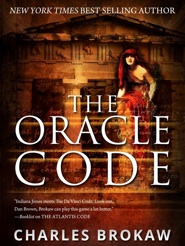
Writing the Historically Accurate Novel

Guest Post by Charles Brokaw

Re-writing History: Uncovering The Oracle Code

Writing an adventure novel based on ancient mysteries is a great way to bring together historical realities with exciting characters and a thrilling plot. The newest addition to the Thomas Lourdes series, The Oracle Code, required a great deal of research exploring some history’s most mysterious myths regarding Alexander the Great and the truths, questions and the skepticisms, all of which have been battled over by historians for years.

Using primary and secondary sources, I wanted to explore these myths even more and take what is known to be true and build on it.

Beginning With The Atlantis Code

Every book in the Thomas Lourdes series begins with some real-life event or bit of historical information. For example, The Atlantis Code, the first in the Thomas Lourdes series, was based on historical information about the lost city of Atlantis. In the summer of 2004, satellite photography showed artificial formations of land that displayed a near identical description of Atlantis. The formations were discovered in one of Spain’s great national parks, in the city of Cadiz. The odds of excavating the finds were pretty small although the inability to dig and the uncertainty of the pieced-together information only fueled our fire. We wanted to know more. We wanted to uncover the lost city of Atlantis.

In researching and documenting all of the information that we discovered, our research team began to imagine what it would be like if the satellite imagery did in fact turn out to be Atlantis. We also thought the idea of hidden ancient code was fascinating—inevitably leading to the first addition to the Thomas Lourdes series, The Atlantis Code.

An Archaeological Journey Continued…

The disappearance of the tomb of Alexander the Great is one of the greatest archaeological mysteries to date and is a subject that piques my interest to no end. As a writer and academic fascinated by history, Alexander’s accomplishments in such a short-lived time have far surpassed any man to follow, leading me to question the very existence of the oracle and what role she played in Alexander’s divine existence and bitter end

Reading and reviewing each historical document pronouncing the mishaps of his early death has led archaeologists and historians alike to question the disappearance of his tomb that stood for centuries, untouched, in a sacred area of ancient Greece. This automatically begs the question, “Does the tomb of Alexander the Great and the oracle of Delphi’s secret still survive?”

An ancient scroll holding its location was said to materialize in Afghanistan. In writing The Oracle Code, a friend of mine along with a crew of researchers followed me on my journey to gain a deeper understanding of the Afghan culture—the food, clothing, trade routes and location where each scene took place.


Herat, Afghanistan—the location of the dig and one of the main cities in which the book takes place has an extensive history, dating back to the ancient times. Its location on the ancient trade routes of the Middle East, and Central and South Asia made Herat a vital city to research, especially when looking into the disappearance of Alexander the Great.

Without giving the story away, I welcome you to read The Oracle Code and to allow your mind to travel to a land that is not often associated with buried treasure and yet holds endless mysteries under the sand. By piecing historical data with conjectures, will you be able to discover what might have happened to the tomb of Alexander the Great and the Oracle of Delphi.
Charles Brokaw is a pseudonym for an author, academic, and college educator living in the Midwest. He’s had a rich and varied life, and is fascinated by history, human accomplishment, and archeology.

Should Writers Query Publishers or Self-Publish?

by Elizabeth S. Craig, @elizabethscraig

I’ve gotten quite a few emails and direct messages on Twitter lately, asking whether I’d advise writers to query publishers or self-publish.

I’ve not offered much opinion on this question. For one thing, the issue has gotten (sadly) contentious and I’m cautious about entering online frays. For another, I don’t like telling people what they should do. I can’t possibly know what’s going on in their lives, with their story, with their mindset, in order to give them good advice.

But I’ve noticed that my being wishy-washy and reluctant to comment hasn’t won me any fans, either. One frustrated writer DMed me back on Twitter, asking me to just please give them an opinion. That’s what I’ll do–give an opinion. So here it is, with a proviso: this may not be the right thing for you to do. I’ll tell you what I would do.

Although it’s hard to tell you what I’d do as a brand-new writer with my first manuscript in my hand facing this type of choice…because I’m just imagining that. I’m not in the same situation. Right now, I’m positioned pretty well–I’m not making gobs of cash, but I make a tidy monthly income with very little promotion. I have a fairly large online platform. I have a couple of different traditionally published series and a standalone with large publishers. This would not be the same situation for a new writer.

Knowing me, I would want to try being traditionally published with a book (not necessarily more books than that.) This may tie into my age and the fact that when I grew up, book choices were either hardback, paperback, or a book included with a vinyl record. I wanted to be an author who had a physical book on a physical shelf. If I were twenty years old instead of nearly forty-two and didn’t have that much of a past with paper books…I might feel differently. In fact–I’m sure I’d feel differently.

Digital Book World recently published results of an author survey. They asked which factors influenced the writers’ decisions to publish traditionally or to self-publish. Looking at the results, I disagree with the writers surveyed. They cited distribution as a major reason for choosing a traditional publisher. I think that distribution is quickly becoming unimportant, because of digital availability. It will become even less important as readers lose their local bookstores. Barnes and Noble, a major bookseller here in the States, recently stated they expected to close 200 stores in the next ten years. More on the issues that may cause in the post, “More thoughts about the future of bookstores, triggered by Barnes & Noble’s own predictions for itself” by industry expert Mike Shatzkin on his blog.

As far as the surveyed writers’ other listed factors that would make them consider traditional publishing, I can agree with “editorial help” (which can be absolutely amazing and provide an incredible education…if you’re hooked up with a good editor). I do think that you can find an absolutely fantastic freelance editor to work with and receive a similar education…so this shouldn’t be your primary reason to traditionally publish. I can also agree with “publisher prestige,” except that I don’t think of it that way–I think of it as giving the writer a boost of possibly greatly-needed confidence….if they need it.

If you choose that route, should you go through an agent or go on your own? My answer to that is changing. I don’t think it’s necessary to go through an agent. Be careful which agent you choose and what you agree to, if you choose to sign with an agent. If you do get an agent, you might want to get one to only help you with that one book, instead of getting signed on as a regular client. If you try to find an agent, don’t spend too long looking. I spent far too long and it distracted me from my primary aim–finding a publisher. I’d consider querying publishers directly.  I do have an agent.  She’s helped me find additional work via her contacts with editors.  But times are changing.  Publishers appear to be more open to working directly with unagented authors.  And, when you sign with an agent, you need to be sure that you know what you’re agreeing to.  There are times, for sure, when an agent can be useful, even for self-published authors: foreign rights, audio deals,  etc.

How long should you spend trying to get a traditional publisher, if you choose that route?  How many books do you have? If you only have the one book, work on another book as you query. And…if you’re not getting any bites in six months, I’d consider assembling my team for self-publishing. Please–make sure the book is professionally edited. If you need help with your editor search, I do maintain a free database of freelance editors and other ebook professionals here.

I wouldn’t put all my eggs in one basket. If my book were accepted by a publisher…great. But I’d be thinking ahead to my next project and seriously consider having that one be self-published.

The reason behind that is primarily financial. Advances from publishers are decreasing and I don’t see them going up anytime soon. The production schedule takes about a year. Royalties are usually paid quarterly and are frequently not impressive. Your royalty percentage will obviously  be a lot lower than going directly through an online retailer like Amazon or Barnes and Noble or Smashwords.

I’m well-positioned to make decent income by self-publishing…and I do. But let’s say you’re a debut author and are selling a book that’s not exactly a commercial product. Maybe you sell only a few books a month.

You might consider that book a flop. But the difference is that it will remain available to readers. If that book were traditionally published and was a flop (obviously, it would sell more copies than a few a month, even doing poorly), then that could effectively be the end of your traditionally published career. Your book would be sent back as returns from the bookstore, the publisher would eventually destroy the excess copies (likely after asking you if you wanted to buy them back at a discount), and no publisher upon looking up your Nielsen BookScan numbers would be thrilled at the prospect of taking on your next book.

But with your self-published book,  let’s just call it a slow starter, not a flop. You write another book. And another book. You start developing a reader base (if you write well and have a professionally packaged product) and that base begins buying your earlier books–which are still available for sale and are not pulp in Manhattan somewhere.

 
Last year my traditionally published income included royalties on several older books, an advance payment-on-publication for one title, and acceptance advance income on two titles releasing this year. But I made more on my two self-published titles (much of the year it was only two, since my third was released in October)…one of which was intermittently free.

This advice also goes for traditionally published authors–increase revenue through self-publishing. Is there anything you’ve gotten your rights back to that you could self-publish? Do you have something you could write on the side…maybe an idea that had been rejected in the past? Could you write short stories just to at least experiment?

So there you go…my two cents, today, on this subject. Not everyone will agree, and there may not be a standard right answer to this question…each writer is different. Ultimately, you’re the one who knows what’s right for you. My two cents on this subject might change as the industry changes (probably will). I’m a hybrid writer. I’m currently writing a book that I won’t pitch, but will self-publish. Looking into the future, it will be very important to stay current with industry news and changes. It’s a great time to be a writer because we have choices. And we have the opportunity to do well while doing something we love.

What are your thoughts on the benefits of traditional or self-publishing, or both? Has your opinion changed over the years?


Avoid Reader Confusion

by Elizabeth S. Craig, @elizabethscraig
GuilaneNachez_TestTubeI’m the kind of person who likes to know everything about an event before I attend. 

Where should I park? What should I wear? How many people will be there?  Should I bring money?  Should I bring my own chair?  What about bottled water or a lunch? How early should I arrive?  Should I stay until the end or may I leave early? Do you have any helpful tips at all to help me navigate this event?

This is because I really dislike being confused.  And, naturally, the gods conspire to make me as addled as possible.  I’ll pore over websites and email event organizers and remain as clueless as ever.

The last couple of weekends I’ve been way out of my depth at two events for my daughter.  A week ago it was a piano competition and this past weekend it was a science competition.  Both times I accidentally violated the rules (Yes….me!  A rule violator!) by going into areas where adults weren’t allowed.  I know: you’d think I’d notice there were no other adults around, but—I’m a writer.  I can be foggy.  Apparently, they’re worried about parents cheating by providing help to their kids during the competitions.  (If they only knew how very little I know about music and science, this wouldn’t have been a problem….)

So I was fussed at by event organizers a couple of times and embarrassed my daughter. Of course, I embarrass my children by just existing, much of the time.  The irritating thing is that the event organizers hadn’t listed this important bit of information on any of their flyers or on their website. They were probably just so accustomed to organizing and attending the yearly events that they forgot what it’s like to be a newcomer to them. 

This feeling of utter confusion is the last thing I want my readers to go through.

I do want to give them unanswered questions to keep them reading. I do want to give them something to think about and puzzle over.  I do want to give them a mystery to solve.  But there’s a lot they could be confused about, if I’m not careful.

Potential areas where we could confuse readers:

Character motivation.  Why is Harry suddenly acting so different? 

Character identity.  Who’s this character again?  He hasn’t been onstage for a while…

Plot.  It’s fine to have a twisty plot, but are you making it too hard for the reader to follow along? 

Setting.  Where are we now?  Check your transitions to make sure you’ve eased the reader into the new location.

Character identity in a different way.  If we’ve got Molly and Sally and Len and Ian, maybe we need to rethink our names.

As an addendum to this story—I was feeling strung-out after my earlier confusion, when I finally felt like I belonged at one of these events. At the science competition, a group was about to go into a testing room—and had no pencils. For this event, if you’re not prepared, you’re out.  There was great panic among the team of middle schoolers—until I reached in my purse and pulled out six or seven Ticonderogas and two pens.  :)  How often do you get to save the day as a writer?  Not very often. There’s never anyone who calls out, “Is there a writer in the house?”  But finally—I was part of the group!

How do you keep readers in the loop?

Image: MorgueFile: Guilane Nachez

Twitterific

by Elizabeth S. Craig, @elizabethscraig
Twitterific is a compilation of all the writing links I shared the previous week.
 
The links are fed into the Writer’s Knowledge Base search engine (developed by writer and software engineer Mike Fleming) which has over 19,000 free articles on writing-related topics. It’s the search engine for writers.
Sign up for our free newsletter for monthly writing tips and interviews with top contributors to the WKB or like us on Facebook.
Mike Fleming is working with author and writing coach James Scott Bell to offer an online, interactive, writing program to help make your next novel great. It’s called “Knockout Novel” and you can learn more about it at KnockoutNovel.com. Plus, all the data is stored in your Hiveword account for easy access.
A free directory of cover designers, formatters, freelance editors, and more: http://bit.ly/nolbXq

The 5 Least Promising Scenes for a Superhero Story: http://bit.ly/W4bs9D

10 things writers should know about knives and knife fighting: http://bit.ly/15nS26A @ajackwriting

11 ways to support a writer’s new book: http://bit.ly/W4bKxg @ChuckSambuchino

Are Unrealistic Expectations Killing Your Writing Career? http://bit.ly/15nSiCy @cerebralgrump

How 1 writer has dramatically increased her word count: http://bit.ly/W4bWfV @KatieGanshert

How to Correct an Awkward Interruptive Phrase: http://bit.ly/15nSstx @writing_tips

How to Get Your LCCN (Library of Congress #): http://bit.ly/15pb6Br @MyBookShepherd

2 Ways to Hook and Keep Your Reader: http://bit.ly/W5jxLg

Why We Should Try Writing in Second Person: http://bit.ly/W5jCP8 @write_practice

The Case Against Blogging: http://bit.ly/W5jHCu @SarahPinneo

Using stock photos for your self-pub covers? Remember, other authors can use the same image: http://bit.ly/15pciof

Book Design, Internet Marketing and the Nature of Human Consciousness: http://bit.ly/15pczHL @jfbookman

How to Write Better Dialogue: http://bit.ly/W5kZNA @SHalvatzis

Self-Pubbed Authors Share 5 Things They Learned in 2012: http://bit.ly/W5l3gw @livewritethrive

Tips for showing, not telling: http://bit.ly/15pcOmg @beccapuglisi

Character Development: Lack and Compensation: http://bit.ly/W5laIT @AimeeLSalter

Don’t Worry About Other Writers Stealing Your Ideas: http://bit.ly/15pcYda @ava_jae

The central question of our plot: http://bit.ly/W5lhEe @Diana_Hurwitz

Tracking Time in Your Novel: http://bit.ly/W5lmYw @PBRWriter

7 tips for staying motivated by self-created deadlines: http://bit.ly/W5lrLT @JennaAvery

An introduction to kid lit: http://bit.ly/15prv8M @DIYMFA

How to Deal with Crushing Feedback on Your Creative Work: http://bit.ly/15prJgh @markmcguinness

Think Like a Publisher 2013: Projected Income:

3 Warning Signs When Bringing Your Own Emotions into Fiction Writing: http://bit.ly/YwP4r7 @cateartios

To Space or Not To Space and Other Typewriter Formatting Throwbacks: http://bit.ly/YwPeif @howtowriteshop

Options for Reactions in a Sequel: http://bit.ly/YgKJGz @KMWeiland

The Difference Between Book Wholesalers and Distributors: http://bit.ly/YwPZHX @BookMarketer

Sympathetic Characters: Betrayal: http://bit.ly/VttNQb @mooderino

Writing Without Expectation: http://bit.ly/YwQYrJ @aswinn

Should Overseas Publishers Americanize Their Authors’ Names for US Distribution? http://bit.ly/Vtuby7 @EdNawotka

Ian McEwan: “My Uneasy Relationship with Fiction”: http://on.tnr.com/VtuPf3# @TNR

What Makes a Writer Want to Rock Out? http://nyti.ms/YwSEBj @jrobertlennon

11 Reasons Your Blog is on a Road to Nowhere (And What to Do About It): http://bit.ly/YjAamw @problogger

5 lessons 1 writer has learned along the way: http://bit.ly/VtvT2J @jmstro

Serious Fiction and #LegitLit: Creating a Hybrid Home: http://bit.ly/YwUjqC @JennieCoughlin

A writer reports how her
sales translate to Amazon rankings: http://bit.ly/Wod8Ao
@_ChristineBell

Water as a metaphor: http://bit.ly/YwUwds @charmaineclancy

he Internet Trap and What To Do About It: http://bit.ly/VtwwJp @juliettewade @DeborahJRoss

How will shrinking shelf space impact publishing? http://bit.ly/YwVg27 @danielsm1

A Book Marketing Pro With 3 Epiphanies About Social Media Marketing for Books: http://bit.ly/YwVwON @Sparkabook

Tips for better imagery in our stories: http://bit.ly/134SeId

Where are the older women in SF/F? http://bit.ly/XMZ1if @hawkwing_lb @tordotcom

The book deal–comparing different publishing options: http://bit.ly/XMZ6Cw @behlerpublish

Stories need conflict: http://bit.ly/XMZf8Y @VickyThinks

How to Promote Your Books on Pinterest: http://bit.ly/134SOWu @goblinwriter

Four Techniques to Show Rather than Tell: http://bit.ly/XMZkJI @MarcyKennedy

7 Keys to Book Architecture: http://bit.ly/134TbjR @Book_Arch

Building an Audience in the Literary Novel Genre: http://bit.ly/134TnPX

What B Movies Can Teach Us: http://bit.ly/XMZCAt @julie_gray

10 Greatest Prison Breaks in Science Fiction and Fantasy: http://bit.ly/134TLxW @io9

How SF Can Highlight Our Historical Bias: http://bit.ly/134Uijn @MattMitrovich

Pride & Prejudice 200 Years Later: http://bit.ly/XMZXTL @Myretta

More Answers to Questions About Commas: http://bit.ly/134UwHn @writing_tips

Why You Should Work From a Coffee Shop, Even When You Have an Office: http://bit.ly/XN04yw @wesleyverhoeve

Conflict: Finding the Correct Balance: http://bit.ly/134UTS7 @americanediting

Freelancers–a query checklist: http://bit.ly/15xRjjb @karencv

What if You Don’t Feel Like Writing? http://bit.ly/YduQm8 @authornordin

How realistic does a created world have to be? http://bit.ly/Ydv2lA @juliettewade

Why Apple is the stumbling block in Amazon’s ebook transition: http://bit.ly/15xRA5C @laurahazardowen

Formatting Your Ebook, The iTunes Way: http://bit.ly/WgZ33G @susankayequinn

Hilary Mantel’s rules for writers: http://bit.ly/15xS1Nw @fcmalby

What and How to Revise: http://bit.ly/YdvH6z @fictionnotes

Self-Publishing and Traditional Publishing: Enjoy the Best of Both Worlds: http://bit.ly/15xS9fI @cjlyonswriter @janefriedman

Timelines in the Author Business Plan: http://bit.ly/YdvRL8 @SusanSpann

In Defense of Complexity: http://bit.ly/Ydw15h @KgElfland2ndCuz

Avoid modifiers: http://bit.ly/YdwhRA @litreactor

How to Raise the Stakes in the First 50 Pages of Your Novel: http://bit.ly/15xSGOW @BrianKlems

Signs You’ve Chosen the Wrong Protagonist: http://bit.ly/15xSK0U @KMWeiland

Tax Prep–Is Your Writing a Hobby or a Business? http://bit.ly/15xSSgX @ashkrafton

Writing in the morning for night owls: http://bit.ly/YdwBQp @criticalmargins

The Character’s Freedom: http://bit.ly/15xT003 @ShellyFrome

Smashwords: All Function and No Form: http://bit.ly/YdwPqD @scottmarlowe

5 Parallelism Problems in In-Line Lists: http://bit.ly/15xTbbE @writing_tips

Writing the High ROI Screenplay: http://bit.ly/Ydxh8g @storydepth

How Feedback Can Make you a Better Author: http://bit.ly/Ydxrwt @ollyrhodes

Using adverbs wisely: http://bit.ly/15xTGCF @melissadonovan

How To Promote Your Book on Social Media – Without Shouting: http://bit.ly/YdxKaN @jonathangunson

Reminders vs. Repetition: http://bit.ly/15xTUJO @MaryVeeWriter

10 Dos and Don’ts of Writing a Query Letter: http://bit.ly/12ReV2m @brianklems

How much does an author’s appearance matter? http://bit.ly/XGcewS @passivevoiceblg

Songwriting–how do you sell your songs? You *don’t* sell your songs: http://bit.ly/XbScHt @usasongs

The Power of a Reader’s Word of Mouth: http://bit.ly/X4B6Lu @jodyhedlund

Avoiding the Convenient Plot Point: http://bit.ly/Xm2h7B @davidbcoe

Beware the Under-Cooked Story Concept: http://bit.ly/YjAH7X @storyfix

Listservs and Forums for Book Marketing: http://bit.ly/Y1AW94 @fictionnotes

Fleshing Out Your Protagonist: Creating An Awesome Character: http://bit.ly/U0b4w8 @woodwardkaren

Creating Sympathetic Characters: http://bit.ly/U07lyB @Lindasclare

1 writer reflects on her 2-year self-pub anniversary: http://bit.ly/U0ciaS @goblinwriter

31 Simple Ways for Writers to Maximize Efficiency in a Home Office: http://bit.ly/U06r5f @lifehackorg

Why You Need to Embrace the Conflict in Your Story: http://bit.ly/14KjXfB @joebunting

Business advice roundup for writers–accounting, marketing, branding: http://bit.ly/YDDUBx @kristinerusch

Have we planned for success? http://bit.ly/TFxq60 @behlerpublish

Quick marketing tips: http://bit.ly/11KNhiS @melissabreau

Writing Your Tragedy: http://bit.ly/14KplQO @janelebak

Top 10 fantasy mash-ups: http://bit.ly/X2MLyd @guardianbooks @danabnettclub

Can’t hit send? http://bit.ly/X2MMSO @rachellegardner

Surviving The Ups and Downs of Being a Writer: http://bit.ly/YKRulZ

The Financial Reality of a Genre Novelist: http://bit.ly/X2NyPU @galleycat

Authors, Stay Off the Page: http://bit.ly/13yj8Ef @authorterryo

The 10 Most Notorious Parts of Famous Books: http://bit.ly/X2R2lq @gabehabash @publisherswkly

Tips for Hiring Editors: http://bit.ly/X2R50k @kristinerusch

Storyboarding For Success: Plotters vs. Pantsers: http://bit.ly/X2R9gK @ChuckSambuchino

How to Survive Rejection 101: http://bit.ly/YmLdir

Why Pinterest contests are easier than Facebook contests: http://bit.ly/WhXKA3 @PublicityHound

Write Like You Mean It: http://bit.ly/YmLMIR @KeithCronin

What To Do When Writing Gets You Down: http://bit.ly/WhY1mw @bluemaven

3 Things You Need To Know Before Writing A Female Protagonist: http://bit.ly/YmMPsj @VeronicaSicoe

On Writing Full-Time: http://bit.ly/WhYIfB @BrianKeene

Today’s vampire – a needy, neurotic wimp: http://ind.pn/WhZCcf @Arifa_Akbar

Words that aren’t actually approved words: http://bit.ly/YmORc6 @writing_tips

Using Physical Activity to Banish Writer’s Block: http://bit.ly/WhZSYL

9 books on reading and writing: http://bit.ly/ZDTYqZ @fcmalby

How Much Will it Cost to Publish Your Book? http://bit.ly/ZDU16j @wherewriterswin

Plot is a Four-Letter Word: http://bit.ly/ZDUfdH

Yes, Narrators Can Still Die: http://bit.ly/Wm8L3t @chihuahuazero

The Business of Screenwriting: Sometimes you just have to say “Yes”… even to crap projects: http://bit.ly/ZDUllr @gointothestory

How to Know When You Are Killing Your Scenes: http://bit.ly/WmAsJt @JeanOram

Tips for choosing a narrator for your audio book: http://bit.ly/ZEhfsZ @karenrosesmith

Worldbuilding and Plot: http://bit.ly/WmAZuR @davidbcoe

Sympathetic Characters: Unfairness: http://bit.ly/ZEhEM5 @mooderino

Don’t read your reviews: http://bit.ly/ZEhXX6 @Michelle_Gagnon

How to Find Your Creative Sweet Spot: http://bit.ly/WmCf0X @emilywenstrom

How to Find Your Creative Sweet Spot: http://bit.ly/WmCf0X @emilywenstrom

Using spreadsheets for writers’ business deductions: http://bit.ly/ZEj7C4

Eliminating Redundancy in Your Writing: http://bit.ly/ZEvdLr @writerscramp1

The Top 10 Mistakes Writers Make When Self-Publishing a Book: http://bit.ly/WmOOcQ @guykawasaki

Stories do not need a Nemesis character: http://bit.ly/WmONFz @gointothestory

Tips for sticking with a habit: http://bit.ly/ZEvvSz @leobabauta

Top 10 DAW (Digital Audio Workstation) For Songwriting: http://bit.ly/ZEvCgU @usasong

John Cleese on the 5 Factors to Make Your Life More Creative: http://bit.ly/ZEvIVV @brainpicker

10 Elements of a Successful Writing Career: http://bit.ly/WmPnmT @buddhapuss

Author vs. Characters: Can Our Morals Be Different? http://bit.ly/ZEvXA5 @jamigold

Getting Started With Microsoft Word Styles for Book Layout: http://bit.ly/WmPz5x @JFBookman

How to Survive the Waiting Game: http://bit.ly/ZEwfqK @ava_jae

Great Character: Lt. Aldo Raine (“Inglourious Basterds”): http://bit.ly/WmPTkS @gointothestory

The Power of a Storytelling Model: http://bit.ly/WmPY7Z @storyfix

So You Want To Quit Writing? http://bit.ly/WmQmDq @museinks

The Writer as Inventor: http://bit.ly/ZEwJgG @SarahrCallender


Mystery writing–the butler did it? http://tinyurl.com/a7jy62e @kbowenwriter

 
Come in late and leave early for an effectively written
scene:
http://bit.ly/ZEioka @jeanoram
Points of view: an overview: http://bit.ly/XX3qiv
@p2p_editor

 
Buying your way into the bestseller lists: http://bit.ly/XYFtas
@Porter_Anderson @mitchjoel @JeffreyT1

 
Literary agencies experience mergers: http://bit.ly/Ww4BWB
@Porter_Anderson @jonnygeller @jasonashlock
A look at characters who evolve throughout crime fiction
series:
http://bit.ly/Xakh5N @mkinberg
10 steps to blogging success: http://bit.ly/YXAhVe
@mollygreene
The desire for respectability as a theme, and motive, in
crime fiction:
http://bit.ly/XEx5B4 @mkinberg
LibraryThing and Goodreads: Meeting Readers, Book
Giveaways and Finding Reviewers:
http://bit.ly/XETCNW @fcmalby
Advice to a post-Nook Barnes and Noble: http://bit.ly/XFPxJy
@Porter_Anderson @jwikert @laurahazardowen
6
Pitching Tactics You Can Learn From Blake Snyder:
http://bit.ly/Y4wq81
@goodinaroom


Scroll to top