Stressed-Out Characters – Just the Way We Want Them–Guest Post by Diane Krause

 
by Diane Krause,@DianeKrause2
In addition to writing and editing, one of my other
interests is human behavior and personality types. I’m fascinated by the way
we’re each uniquely wired, and what it takes for us all to work and play nicely
together.

For a number of years, I’ve worked with a personality
assessment called The Birkman Method™. This particular assessment stands out
among others, such as the Myers-Briggs Type Indicator, because Birkman measures
more aspects of an individual’s personality than other assessments. One of
those aspects is Stress Behavior, a
concept that can be quite useful for fiction writers.

Stress
Behavior,
according to The Birkman Method™, is the behavior we exhibit
when our needs aren’t met. That seems logical, right? When all is right
with the world — the bills are paid, the laundry’s done, the children are
behaving, and we’re exceeding our word count quota – our behaviors are usually
pretty positive and we’re a joy to be around. Yet when all is not
right with the world, well, it’s not a pretty sight, is it?

The Birkman assessment takes that concept and breaks it down
by the four primary personality types, with each type possessing its own set of
positive behaviors, basic needs, and stress behavior. An understanding of the
four types and some common stress behaviors can help us add a bit more
dimension, or complexity, to our fictional characters. After all, we do want
our characters to be stressed, right? Stress creates conflict, which is
critical to creating great fiction.

The following is a crash course in the four basic
personality types, and some common stress behaviors that are likely to pop up
in each when all is not right with his or her world.

The
Doer Personality.
This is the classic Type A personality. He’s
quick to make decisions, likes to be in charge, and lives to see results. This
is the Ready-Fire-Aim guy. He’s most
comfortable with people who think and act like him, and he tends to have little
patience with creative types who prefer to explore options and think before
acting. He prefers to deal with people in a frank, direct and straightforward
manner with a minimal amount of emotion and sentimentality.

The
Doer’s Stress Behavior.
When his needs aren’t met – say he’s stuck
working with a bunch of free spirits ­­– he will tend to become insensitive,
bossy, dogmatic, impulsive, edgy, and impatient. He’ll be overly factual and
abrupt, and will tend to have difficulty responding to the personal needs of
others.

The
Influencer Personality.
This is your killer saleswoman. She loves
being around people and can work a room like nobody’s business. The Influencer
likes novelty, change, a minimal amount of structure, and the freedom to do her
own thing. She tends to get along well with most people, but doesn’t care for
people who are overly insistent on rules and procedures.

The
Influencer’s Stress Behavior.
When the Influencer is stressed
– say her personal freedom is limited and she’s stuck following rigid rules –
she’ll tend to become defensive, argumentative, resistant to rules, easily
side-tracked, and may be overly concerned with saving face.

The
Rules and Regs Personality.
This is your class process
person. To him, Heaven – not the devil – is in the details. He loves working
with rules, definitions, processes, and systematic procedures. He’s not much of
a people person and is typically content working quietly by himself. He’s
orderly, consistent and cautious, and likes all the lines clearly drawn. He
wants to know what’s expected of him, and what he can expect of others
(preferably that they’re following the rules).

The
Rules and Regs’s Stress Behavior.
When order is lost or
abandoned, the rules guy will be stressed. In reaction, his fear of the
unexpected will cause him to become over-controlling, too factual, opinionated,
and resistant to change. Personal interactions with others will be even more
challenging than usual.

The
Thinker Personality.
She’s the best idea person around – creative,
innovative, and almost always able to see things from a new angle (a good
quality in a sleuth). She’s insightful and typically easy-going. She longs for
freedom from social demands, values strong personal relationships, and needs
plenty of time to make decisions. 

The
Thinker’s Stress Behavior.
If the Thinker’s world gets too loud or
busy, she’s easily overwhelmed. Extended social demands, pressure to make quick
decisions, heavy doses of criticism, and bossy people will all cause the
Thinker to become stressed. When that happens, she’ll become oversensitive,
easily hurt, idealistic, withdrawn, and even more hesitant to make decisions.
She’ll also tend to second-guess almost everything she does.

As writers, of course we want to create fictional characters
as complex and unique as real people – a formidable challenge. Borrowing traits
from the living and breathing can often give us a jump-start on creating the
characters that will bring our stories to life.

Are there any interesting stress behaviors you would add to
this list? What are some characteristics you’ve given to your characters to
increase the conflict in your stories?

Diane
Krause is a freelance editor, writer, and author of
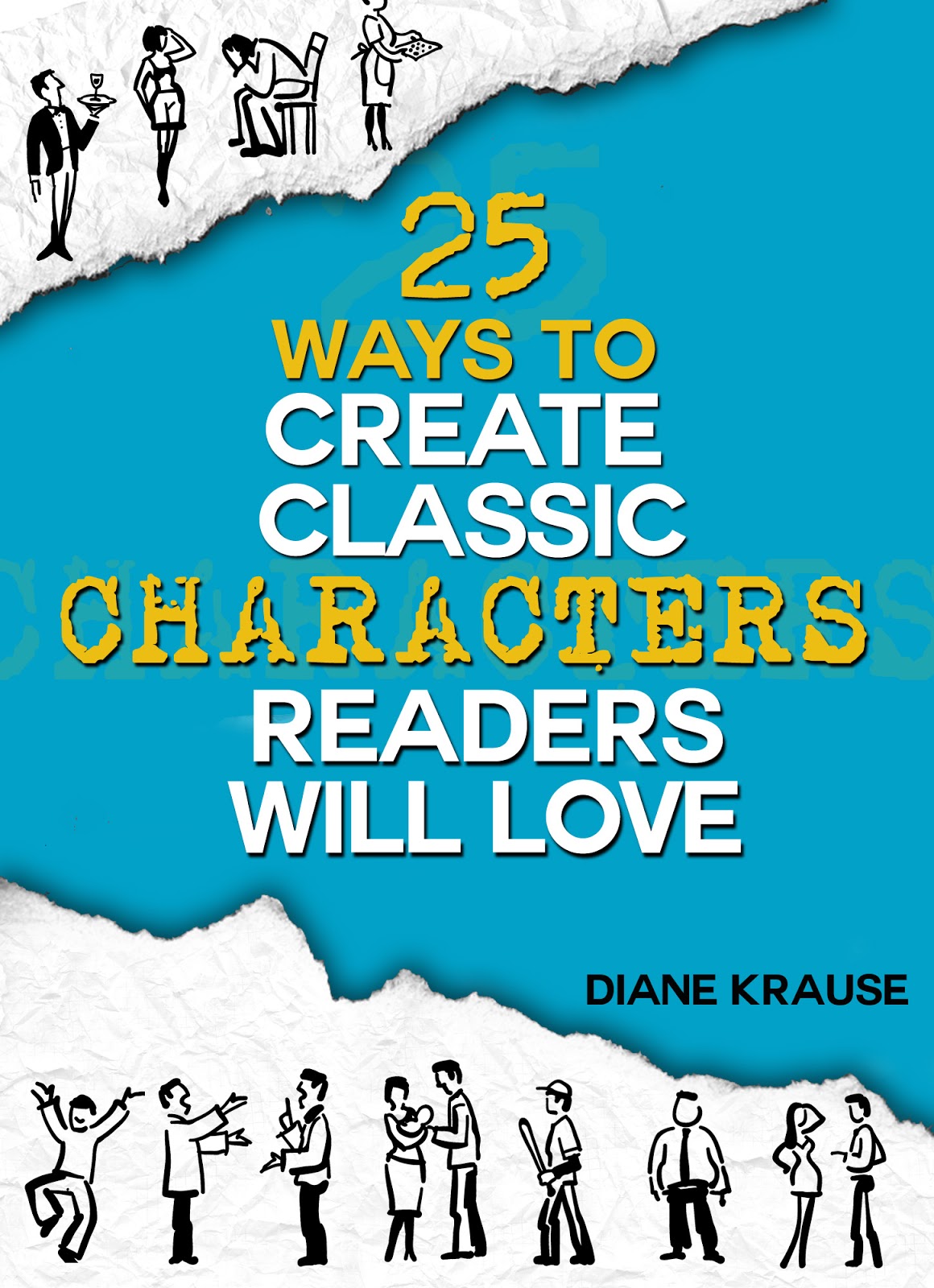
25 Ways
to Create Classic Characters Readers Will Love. You can connect with Diane through her website at www.thedianekrause.com, or on Twitter @DianeKrause2.

25 Ways to Create Classic Characters Readers Will Love is a short book designed to inspire writers
and provide a jump-start on creating believable fictional characters.
Available
on Amazon
.


Twitterific

by Elizabeth S. Craig, @elizabethscraig


Twitterific links are fed into
the Writer’s Knowledge Base search
engine
(developed by writer and software engineer Mike Fleming) which has
over 19,000 free articles on writing related topics. It’s the search engine for
writers.


Sign up for our free newsletter for monthly
writing tips and interviews with top contributors to the WKB or like us on Facebook.


Mike Fleming is working with
author and writing coach James Scott Bell to offer an online, interactive,
writing program to help make your next novel great. It’s called “Knockout
Novel” and you can learn more about it at KnockoutNovel.com. Plus, all the data is
stored in your Hiveword account for easy
access.


*******

A free directory of cover designers, formatters, freelance editors, and more: http://bit.ly/nolbXq

9 Tips To Develop A Winning Blog Personality: http://bit.ly/Z4paNE @HeidiCohen

Should traditional biography be buried alongside Shakespeare’s breakfast? http://bit.ly/ZjkYYl @AlisonFlood

Tags, Traits And Tells: http://bit.ly/WsCSLS @woodwardkaren

How to Write a Story: http://bit.ly/WsCVY5 @stephengjones72

5 Keys Steps to Adding Depth to Your Fictional Relationships: http://bit.ly/WGrXsV @JordanDane

Spring Cleaning? 10 Tips for Writers: http://bit.ly/WsD6Tj @WritingFineLine

Worldbuilding Process: http://bit.ly/WsDiC2 @juliettewade

Breaking through writer’s block: http://bit.ly/WsDqBp @rxena77

Fall or Fly? http://bit.ly/WGsBGO @johnhartness

Are Email Interviews That Bad? Yes.http://bit.ly/WsDCAK @10000Words

Screenwriters Roundtable: http://bit.ly/WGt8IF @gointothestory

When characters go their own way: http://bit.ly/WsE0yZ

The Value of Taking a Productive Pause: http://bit.ly/WGtpeI @abmarkman

115 Words for “walks”: http://bit.ly/WsE9Te @gointothestory

Creating Intriguing Characters: http://bit.ly/WsEjKo @fcmalby

The hidden power of no: http://bit.ly/VGaMeV @RLLaFevers

Writing Authentic Crime: How To Get Away With Murder: http://bit.ly/XQi12t @GarryRodgers1

Are Self-Pub Books the New Slush Pile? http://bit.ly/XQi8uX @rachellegardner

Writing Effective Grief In Fiction: 5 Ideas For Writers: http://bit.ly/VGc7lV @denisejaden

An Experience in Translating a Self-Published Book: http://bit.ly/XQiv8E @selfpubreview

3 Quick Tips for Linking to External Blog Posts: http://bit.ly/XQjLZx @genelempp

How To Sell Ebooks: http://bit.ly/VGdQrd @jakonrath

Another 25 Reasons Your Submissions are Rejected: http://bit.ly/XQkbz8

Your Amazon Author Central page: http://bit.ly/W80Klw @bufocalvin

Feeling Overwhelmed? Social Media Can Make Us Crazy: http://bit.ly/W815Vn @kristenlambtx

AWP president addresses criticism of the conference:
http://bit.ly/ZKv84E @Porter_Anderson

Writing Organizations—Finding the perfect fit: http://bit.ly/ZivCgO @OrlyKonigLopez

10 Qualities of Successful Indie Authors: http://bit.ly/ZivIoH

Describing Character Reactions And Emotions: She Smiled, He Frowned: http://bit.ly/ZiAq5G @woodwardkaren

8 Tips For Approaching Editing Your Work: http://bit.ly/W85JCM @BryanThomasS

5 Facebook Marketing Tips for Authors: http://bit.ly/W85NTf @goblinwriter

How to Make Your Similes Sparkle: http://bit.ly/W85UOC @write_practice

5 Ways to Promote Your Words When You’re Not Feeling Worthy: http://bit.ly/ZiAOBb @wherewriterswin

A Critique of a Darker Opening: http://bit.ly/W863lb @janice_hardy

Plot Perseverance and Plodding: http://bit.ly/ZiAVwM @sarahahoyt

Writing the right story: http://bit.ly/ZiBcjc @juliekibler

Physical Attributes Entry: Stomach: http://bit.ly/W86wUl @angelaackerman

Write-Brained: The Neuroscience of Writing and Writer’s Block: http://bit.ly/ZiBqqA @robdyoungwrites

Screenwriter roundtable: http://bit.ly/W86ETY @gointothestory

The Storytelling Masters and Their Lessons: http://bit.ly/W86L1N @NightBirder

1984: George Orwell’s road to dystopia: http://bbc.in/W86Suj @BBCNewsMagazine

Dreaming up story ideas: http://bit.ly/ZiBRkK @kristinnador

Guy Kawasaki on budgeting for your book: http://bit.ly/ZiC3R7 @jasonboog

ISBNs For Self-Publishing: http://bit.ly/W87akF @laurahoward78 @rippatton

4 Character Essentials: http://bit.ly/ZiCdI6 @josiskilpack

Great Character: The Bride (“Kill Bill: Vol. 1 & Vol. 2″): http://bit.ly/W87waZ @gointothestory

Used e-books: http://bit.ly/ZiCESA

Self-Pub and Trad Pub: Enjoy the Best of Both Worlds: http://bit.ly/15xS9fI @janefriedman @cjlyonswriter

How to Work on More Than One Book at a Time: http://bit.ly/W8nyl9 @jamesscottbell

Writing Rules and Fantasy: Mary Sues: http://bit.ly/ZiWqO6 @VickyThinks

How to Get Your ISBN: http://bit.ly/W8OyRJ @MyBookShepherd

Why Science Fiction Poetry is Embarrassingly Bad: http://bit.ly/ZjvxJC @AmazingStories0

10 Movies That Make Writing Look Incredibly Dangerous: http://bit.ly/ZjwlOW @flavorpill

The Trouble With Adverbs: http://bit.ly/ZjwCRQ @woodwardkaren

Who should read your unpublished work? http://bit.ly/W8PKUY @rachellegardner

A Way To End Ebook Piracy? http://bit.ly/Zjx0zC

Using Ebook Covers to Brand an Author Across Genres: http://bit.ly/Zjxd62 @ddscottromcom

Ebook cover critiques: http://bit.ly/ZldhzD @jfbookman

Tips for writing subplots: http://bit.ly/16dzOFl @gointothesstory

9 Reasons Authors Still Choose Traditional Publishing: http://bit.ly/ZldKli @melissadonovan

5 things 1 self-pubbed writer has learned so far: http://bit.ly/16dzXbL @livewritethrive @SeanYeagerAdv

How to build a storyworld based on character: http://bit.ly/Zle1Vr @Onidroid

Breaking the Literary Atrophy: http://bit.ly/16dAeLN @chicklitgurrl71

How To Write More And Create A Daily Writing Habit: http://bit.ly/ZlejM7 @thecreativepenn

Cooking up a
culinary cozy mystery: http://bit.ly/YvINub
@JudyAlter

Classic Characters Whose Flaws Make Them Great: http://bit.ly/16dAp9N @BenClayborne

Details and Description—Getting the Facts Right: http://bit.ly/ZleuqG @noveleditor

Every Author Needs a Copyright Page: http://bit.ly/XYDRh5 @MyBookShepherd

Keep the Plot Taut: http://bit.ly/XFecOj @Lindasclare

Forcing readers to like characters–admiration: http://bit.ly/13tgXGB @mooderino

Think Like a Publisher 2013: Return on Investment: http://bit.ly/16dAFFV @deanwesleysmith

Translation Rights: http://bit.ly/ZleQ0o

Review on gerunds: http://bit.ly/16dAWZn @writing_tips

Tips for writing loglines: http://bit.ly/16dB8If @SHalvatzis

How Twitter lists help writers: http://bit.ly/Zlfawe @ninabadzin

5 Principles of Creativity: http://bit.ly/16dBmiB @Digitaltonto

10 modern horror masterpieces: http://bit.ly/Zlfn2t

Expertise vs. Humility – A Blogger’s Battle Royale? http://bit.ly/16dBxub

Bookkeeping for writers: http://bit.ly/16dBBKj @bob_brooke

Screenwriters’ roundtable: http://bit.ly/ZlfBa2 @gointothestory

The math of writing fast: http://bit.ly/lIVgw0 @deanwesleysmith

How to Build a Platform before You Finish Your Book: http://bit.ly/XYrXbc @grubwriters

Thomas Edison, Power-Napper: The Great Inventor on Sleep & Creative Success: http://bit.ly/YRx2hm @brainpicker

How to Use What Ifs While Revising: http://bit.ly/XYs46w @ava_jae

What 1 writer wishes he’d known about writing: http://bit.ly/YRxbBE @2bwriters

Tips for dumping info dumps: http://bit.ly/XYsrOn @CompulsionReads

Six sentence story planning for pantsers: http://bit.ly/YRxw7e @ajackwriting

Why Hunter S. Thompson Would’ve Loved Author Rank: http://bit.ly/XYsSbD @copyblogger

5 Ways to Revise Poems: http://bit.ly/YRxZWU @robertleebrewer

Promise of the Premise: http://bit.ly/XYtjmd @carrieryan

Five Ways to Use YouTube to Promote Your Book: http://bit.ly/XYtmhY @wherewriterswin

Rejection slip scrapbook: http://bit.ly/YRylwX @amazingstories0

Losing Sight of the Target: http://bit.ly/XYtwpm @StinaLL

Tips for dealing with rejection: http://bit.ly/YRysbD @angelaackerman

A dialogue exercise: http://bit.ly/YRyAbj @biljanalikic

English as a Foreign Language: http://bit.ly/XYtRbP

As Barnes & Noble shrinks, small bookstores are born: http://lat.ms/Zxgwrt @latimesbooks

Writing male characters–their reactions to grief: http://bit.ly/14LbLtP @lkblackburne

Plotting and Crafting Action Scenes: http://bit.ly/Zxhe83

Create a Table of Contents to Help Your Readers Navigate Your Book: http://bit.ly/15HpJiB @ninaamir

Successfully self-pubbed authors share 10 tips for finding more readers: http://bit.ly/12HBsA3 @LauraPepWu

The Aftermath of the Agency Model: http://bit.ly/12HBzM1 @pubperspectives

When you’re told your story concept isn’t “big enough”: http://bit.ly/12HBJ5S @Julie_Gray

6 Publishing Trends That Benefit Readers & Authors: http://bit.ly/12HBU18 @mollygreene @tobywneal

3 Easy Ways to Better Dialogue: http://bit.ly/12HC1K9 @lindasclare

The Most Important Quality In Best Selling Authors: http://bit.ly/12HClZj @jodyhedlund

Want to write a book? Thoughts for starting out: http://bit.ly/15HqtEq @4YALit

Analyzing Story Structure: http://bit.ly/15HqxnB @woodwardkaren

Bad news for blog readers–Google Reader
to shutter on July 1:  http://bit.ly/16uISpr @Porter_Anderson
@dcseifert @mmasnick

How to Write a Character From Start to Finish: http://bit.ly/12HCyvt @BrianKlems

What to Expect When You’re Expecting…to Be Published: http://bit.ly/12HCE6x @BoydMorrison

Tips for finding coffee shops that will let you sit and write for a while: http://bit.ly/12HCQmf @halophoenix @lifehacker

Tips for creating great characters: http://bit.ly/15HqSql @HookedOnNoir

Writing Gender-Specific Dialogue: http://bit.ly/12HD6BB @writersdigest

Discovery is Publishers’ Problem; Readers are Doing Just Fine: http://bit.ly/15Hr0WN @glecharles

How to deal with your moments of despair as a writer: http://bit.ly/12HDgsH @ajackwriting

“‘Used Ebooks’ Hurts My Brain”: http://bit.ly/15HQ6oE @readingape

10 tips for drawing readers to your website: http://bit.ly/12IiY2e @authormedia

A look at the school and library marketing part of the industry: http://bit.ly/12IjbSY @alexbracken

Enemies of the art–failure to focus: http://bit.ly/15HQp2D @kristenlambTX

Is “Discoverability” Even A Problem? http://bit.ly/15HWVXm @bsandusky

Awkwardly charming: Thomas Hardy and the strangeness of bad writing that is somehow good: http://slate.me/12IuJFU @slate

5 Unexpected Tips For Self-Pubbed Authors to Find Success: http://bit.ly/XkG39i @digibookworld

Recipe for a Successful Synopsis: http://bit.ly/14PsQmb @jamigold

Is Your Agent an Asset? http://bit.ly/XkGAbh @behlerpublish

3 Tips for Strengthening Narrative Descriptions: http://bit.ly/14Pt7FU @lkhillbooks

FREE Books: Bane or Boon? http://bit.ly/XkH0OR @SusanKayeQuinn

8 Ways To Fix Online Review Systems: http://bit.ly/14PtBvN @scottmarlowe

What is Wattpad? And how can it help me as a self-published author? http://bit.ly/YpaK6J @bibliocrunch

5 Questions to Ask When Writing Content: http://bit.ly/13QQdjl @jeffbullas

5 Steps to Boost eBook Sales – Listening to Readers: http://huff.to/YpaW61 @markcoker

Why self-publishing authors should think “foreign rights” from the outset: http://bit.ly/13QQiDu @SueCollier

Tips for Twitter newbies: http://bit.ly/13QQMti @blurbisaverb @teconklin

How to write a novel: http://bit.ly/13QR03A @salon @carytennis

Supernatural Horror In Literature: http://bit.ly/Ypc7lS @amazingstories0

Don’t be Afraid of Embarrassing Your Grandmother: http://bit.ly/13QR837 @americanediting

On Writing, Christopher Walken and Finding Your ‘Wild Thing’: http://bit.ly/13QRcji @JudyLeeDunn

6 Tips To Creating A Writing Partnership That Works: http://bit.ly/Ypce0V @goodinaroom

Boost Creativity and Enhance Your Sleep with These Lucid Dreaming Techniques: http://bit.ly/YpcgpB @lifehacker

Building a Street Team: http://bit.ly/XI6rId @EArroyo5 @janice_hardy

3 Quick Ways to Find Hidden Guest Blogging Opportunities: http://bit.ly/XI6vaJ @copyblogger

The Modifier Zone: http://bit.ly/YanIpY @jgetzler
Examples of a coming-of-age theme in fiction: http://bit.ly/10ypp6O @mkinberg
Why noir remains popular today: http://bit.ly/15HoGza @mkinberg
Did Amazon Change Algorithms to Protect Their Readers? The 10,000 Gatekeepers of KDP Select: http://bit.ly/15HpBjc @edwrobertson
Proper Nouns, Pronouns, and Antecedents–a Review: http://bit.ly/12I0Y89 @authorterryo
AWP con: it’s become MFA-Con: http://bit.ly/XkJs7Z @Porter_Anderson
March Madness for mystery lovers: http://augustwainwright.com/ @acwainwright
Random House ebook imprints with ‘predatory’ contracts: http://bit.ly/YpavZr @Porter_Anderson @JamesScottBell @VictoriaStrauss
How to use email to preview your eBook files on an iPad: http://bit.ly/13QSuLo @bibliocrunch @miralsattar

Traditional mystery writers–make the
amateur sleuth’s involvement believable: http://bit.ly/ZKTBGQ
@sharonwhopkins
A POV overview: http://bit.ly/XX3qiv @p2p_editor

Cooking Up a Culinary Cozy–Guest Post by Judy Alter

by Judy Alter, @JudyAlter

In another life, I’d probably be a chef. I love being a writer, but cooking is my avocation. I like nothing better than to try out a new recipe on company—usually it works fine, though there have been disasters. But I am known as the “foodie” among my friends. Everyone laughed that I made the protagonist in my Kelly O’Connell Mystery series a non-cook who fed her children pizza or took them out for turkey burgers.

I always wanted to write a culinary mystery, but who can match the inimitable Diane Mott Davidson with her sophisticated and tempting recipes? I have a friend who has tried some and reports delicious results. But in my new Blue Plate Café Mystery series I have reached a compromise—a culinary touch to a cozy mystery set in a small town. Only this is not sophisticated cooking; it’s strictly down home.

Two threads from my life are woven into this café-based series: for almost twenty years, my children and I spent lovely weekends with dear friends who owned Arc Ridge Ranch, outside of Ben Wheeler in near East Texas. Sometimes we went to the nearby town of Edom to a café called The Shed for dinner. The Saturday night special was always fried catfish, and they had a mean lemon meringue pie. Breakfasts were equally tempting, and I can still mentally put myself inside that small restaurant.

But the other thread was cooking at the ranch with Reva, or as my children called her Aunt Reva. Reva was a great, down-home cook, a Missouri farm girl transplanted to Texas. She and I were a terrific kitchen team, though mostly I learned from her as we put together huge feasts. We made everything from pot roast and mashed potatoes to barbecued chicken and potato salad. We  tossed salads and created wonderful desserts. Each of us contributed recipes and ideas. If one of the children got lucky and caught a sizeable bass in the lake in front of their house, we cooked that (after Uncle Charles cleaned it).

Arc Ridge Ranch was a B&B with several two-bedroom cabins, complete with kitchens. Reva stocked the fridges for breakfast with orange juice and usually her famous prune bread (secret recipe—she wouldn’t even share it with me). Most guests were on their own for lunch and dinner, but we were family, and those dinners on the front porch, overlooking the lake, stand out as among the happiest, most peaceful moments in my life.

By the time I compiled a cookbook, Cooking My Way Through Life with Kids and Books, Reva had left us, but I had enough of her recipes to include them along with a tribute to our happy days at the ranch. Charles even gave me the treasured prune bread recipe.

Murder at the Blue Plate Café, the brand new first in the series, has a short appendix of recipes, all from Gram who ran the Blue Plate until her death. But Gram’s recipes are really Reva’s—chicken salad, meatloaf, beans, sheet cake (over which we had endless arguments: she called it sheath cake and I maintained it was a sheet cake because it was baked on a jelly roll sheet). Here’s a new one, her recipe for Toffee Bars, sent to me one year so I could serve it at my annual Christmas party:

Toffee Bars
½ lb. (2 sticks) butter
1 c. brown sugar
1 egg yolk
2 c. flour
1 tsp. vanilla
12 oz. semisweet chocolate chips
1 c. chopped pecans
Preheat oven to 350° and grease a 9×13 pan.

Cream butter and sugar. Add the egg yolk and beat. Sift in the flour and then add the vanilla. Spread the batter in the pan—it will be difficult to cover all the corners; you’ll have a thick batter that you will probably have to spread by hand, and then it will be thinly distributed. Bake for 25 minutes.
Take the cake out of the oven, cover it with chocolate chips, and return to the oven for three minutes. When you remove it from the oven this time, smooth the chocolate evenly with the blade of a table knife and sprinkle with nuts. Cool.

Makes about thirty pieces, depending on how you cut them.

About Judy Alter:

An award-winning novelist, Judy Alter is the author of three books in the Kelly O’Connell Mysteries series: Skeleton in a Dead Space, No Neighborhood for Old Women, and Trouble in a Big Box. With Murder at the Blue Plate Café, she moves from inner city Fort Worth to small-town East Texas to create a new set of characters in a setting modeled after a restaurant that was for years one of her family’s favorites.

Contact Judy at j.alter@tcu.edu  or visit her web page at www.judyalter.com.
Blogs: Judy’s Stew http://www.blogspot.com and Potluck with Judy http://potluckwithjudy.blogspot.com.

Murder at the Blue Plate Café:

When twin sisters Kate and Donna inherit their grandmother’s restaurant, the Blue Plate Cafe, in Wheeler, Texas, there’s immediate conflict. Donna wants to sell and use her money to establish a B&B; Kate wants to keep the cafe. Thirty-two-year-old Kate leaves a Dallas career as a paralegal and a married lover to move back to Wheeler and run the café, while Donna plans her B&B and complicates her life by having an affair with her sole investor. Kate soon learns that Wheeler is not the idyllic small town she thought it was fourteen years ago. The mayor, a woman, is power-mad and listens to no one, and the chief of the police department, newly come from Dallas, doesn’t understand small-town ways. Kate’s suspicion about her grandmother’s sudden death deepens when the mayor of Wheeler becomes seriously ill after eating food from the café, delivered by Donna’s husband.  When Donna’s investor is shot, she is arrested. Kate must defend her sister and solve the murders to keep her business open, but even Kate begins to wonder about the sister she has a love-hate relationship with. Gram guides Kate through it all, though Kate’s never quite sure she’s hearing Gram—and sometimes Gram’s guidance is really off the wall.

Read an excerpt here: http://www.judyalter.com
Amazon/KIndle: http://tinyurl.com/aakef9d
Turquoise Morning Press: http://tinyurl.com/agueko9
Available for most e-readers at Smashwords: http://www.smashwords.com/books/view/286301
Print available from your local bookseller, Amazon or Turquoise Morning Press

Thoughts on Unreliable Narrators

by Elizabeth S. Craig, @elizabethscraig

I’ll write this post from a reader perspective since I haven’t used unreliable narrrators in my books, and I’ll keep the post general so there won’t be any spoilers.

I just finished reading a book where the narrator was unreliable throughout the book. Although reading books with unreliable narrators can be a lot of fun, this book was honestly kind of tiring for me. I kept looking for signs that the narrator was believable…or wasn’t.  (Narrator was an alcoholic.) It made for an interesting read, but it wasn’t what I’d call relaxing.  (Is the narrator drunk now?  Is the narrator in denial? Is the narrator sober?)

Usually, I’m fonder of situations when I think the narrator is reliable and find out later that they’re not.  Otherwise, I spend a lot of the book trying to figure out who I can believe.

When it may be easier to get away with an unreliable narrator (without frustrating the reader):

When the narrator is unreliable because of age, species, etc..  Readers understand that children are looking at the world from a different perspective. I’ve read books where animals narrated.  I’ve read books where persons with mental challenges narrated.  Readers understand  these narrators view the world through a different lens.

When you use clues.  If you’re using an unreliable narrator who readers think is reliable, but actually isn’t, I’d advise sticking in plenty of clues that that’s the case.  It’s fun to have the wool pulled over your eyes (a few movies and a couple of mysteries come to mind), but it’s no fun to be completely tricked.  It feels like cheating on the writer’s part if there are no small hints that the narrator is unreliable.

When the book is written from a first person POV.  Then it seems less of an authorial manipulation and more of the character being sneaky or deceptive. In fact, it may be even easier to drop those clues to the narrator’s unreliability when the story is written in this POV.

When the narrator is consistent.  That can mean consistently unreliable, as long as they’re not hopping back and forth through the whole story.  They can even be consistent when they grow or change as characters, as long as the impetus for the change is believable.

When you don’t reveal the narrator’s unreliability immediately in the story (although, as mentioned above, you’ll need to sprinkle in clues so it’s fair to the reader.)  We can probably all think of books or movies that end up with a major plot twist at the end of the story when it’s revealed the narrator is a ghost-murderer-lunatic-etc.

If the narrator is likeable.  As a reader, I’ll put up with even an inconsistent, confusing, mess-of-an-unreliable narrator if he’s likeable…or at least interesting.

In some respects, all narrators are unreliable.  We all approach life with our backstories influencing our perceptions.  If it’s done well, unreliable narrators can really add an unexpected and fun element to a story.

Have you ever used an unreliable narrator? Do you enjoy reading books that feature them?  Any thoughts about pulling it off well?


Image: MorgueFile–Schick

Voice Recording as a Writing Tool

by Elizabeth S. Craig, @elizabethscraig

Sometimes the whole world seems to work against your getting any writing done.

You know the kinds of weeks or months I’m talking about.  The story doesn’t cooperate. Your schedule goes haywire with unexpected stuff popping up.  Kids come home sick from school.  There are activities all hours of the day and night.

So we keep plugging on, writing when we can.  But sometimes we want to try to make up for lost time.

I’m a big proponent of don’t try to catch up.  Start each day trying to reach that day’s goal, not the day before or the week before, or all the other goals you’ve missed.  Just focus on the goal of the day—you’re not behind.

But some days, I still want to try to make up for less-productive days.  I’ll squeeze in writing when I can.

I’ve gotten to the point where it’s less-often that I try new ways to approach writing.  But sometimes I run across ideas that work better than expected.

I’ve used voice recorders in the past to talk through plots or record ideas on the go (sometimes literally on the go as I  drive long car trips.)  But I’ve never actually used them to dictate my story before.

I have used voice recognition software and still use it from time to time when my carpal tunnel acts up.  I did find, though, that it trips up over my Southern accent sometimes and it distracts me when I see the words coming up wrong on the screen.  I did use the Southern accent setting on the software and I have trained it to recognize words that it’s missed before—but it wasn’t perfect, just a helpful tool when I’ve got a messed-up arm (which happens more often than I’d like.)  At the price (I purchased Dragon, Naturally Speaking for around $50), you could give it a try and see what you think.

When I don’t have any carpal tunnel issues, I’m a very fast typist.  For some reason, it didn’t occur to me to dictate my stories to transcribe, myself, later—until I read a post by writer Katie Ganshert recently: “The Secret to Writing Fast and Furious.”

As Katie put it:

The beautiful thing about this method is that it completely silences the dreaded internal editor.
There’s no back space. There’s no flashing cursor. There’s no blank page. There’s no critical little man sitting on your shoulder, reading each sentence while tutting and shaking his head.
There’s just a red record button.

Katie was able to dictate 25,000 words in three days, using a voice recorder and then typing the results.

My numbers were lower than Katie’s, but still pretty good for supplementary writing.  I averaged about 1,000 words in only minutes before I needed to run off and do a carpool or go to an appointment.  Since I was supplementing writing I’d already done that day, it just added to my word count.

Now, my internal editor was still present, unfortunately. Not only did she make me say, “Scratch that,” about three or four times each recording, but she also told me that my Southern accent stood out particularly strong when I was recorded (my teenage son hastened to agree with my internal editor.)  But I’ve managed to ignore the internal editor and continue on.

I don’t use this method every day.  But I’ve found that if I use it several times a week, it’s really pumped up my word count.  Interestingly enough, I tend to make minor corrections (stronger verbs, better diction) when I type in the dictation…so I guess, in a way, I’m editing as I go when I use this method.

I use a free app that I downloaded on my phone.  My phone is always with me (moms are the world’s emergency contacts), so I’ve always got my voice recorder with me. 

Have you ever used either voice recognition software or voice recorders?  What other methods have you used to increase your word count?

Scroll to top