Twitterific

 by Elizabeth S. Craig, @elizabethscraig

Twitterific
links are fed into the
Writer’s
Knowledge Base search engine
(developed by
writer and software engineer Mike Fleming) which has over 19,000 free articles
on writing related topics. It’s the search engine for writers.
Sign up for
our
free newsletter for monthly writing tips and interviews with top
contributors to the WKB or like us on
Facebook.
Mike Fleming
worked with author and writing coach James Scott Bell to offer an online,
interactive, writing program to help make your next novel great. It’s called
“Knockout Novel” and you can learn more about it at
Knockout Novel.com.
The Search Engine for Writers: http://hiveword.com/wkb/search
An argument that publishers care more
deeply about writers, books, and readers than Amazon: http://bit.ly/16xuXhh @futurebook
Field Report From the E-Book Revolution:
The New Equilibrium: http://bit.ly/11otWH2
@jamesscottbell
The Bad PR Hangover (and How to Avoid
It): http://bit.ly/16xv6Bg @SharonBially
Motivation-Reaction Units: Cracking the
Code of Good Writing: http://bit.ly/11oub52
@kmweiland
The #1 Reason for #QueryFails: http://bit.ly/16xyMD4 @annerallen
Writers are ready
for a digital/transmedia future–who will guide them? http://bit.ly/10Qijrp  @Porter_Anderson @JaneFriedman @AndyHunter777

 Backlist Then and Now: http://bit.ly/11oCsG8 @JAKonrath
Payment in Advance: http://bit.ly/11oDhhX @bob_brooke
Edit A Novel In Four Months: http://bit.ly/16xzdxd @woodwardkaren
Writer, Storyteller, Author? http://bit.ly/11oDBgN @fictionnotes
What Worries Publishers Most? http://bit.ly/107HX7S @bmorrissey
How to Begin a Short Story: http://bit.ly/YRrWSK @amazingstories0
@Sales_Source
Tips for an inexpensive book launch
party: http://bit.ly/11NM5Nc @aishahmacgill
Why 1 writer exercises and then writes: http://bit.ly/16xBgSa @TheAtlantic
Creative Intersections: Pacing and
Plotting: http://bit.ly/11oIHcP @davidbcoe
How to Create a Workshop From Your Ebook:
http://bit.ly/16xBBEh @MenwithPens
The Basics of Scene Description: http://bit.ly/11oJpqG @SHalvatzis
The Battle of Science and Magic:
Particles and Pixie Dust: http://bit.ly/16xBRmS
@fantasyfaction
Creative Writing Exercise: What’s Your
Superpower? http://bit.ly/11oJQRR
@melissadonovan
Areas to cut back in a manuscript: http://bit.ly/16xC2hX @lydia_sharp
5 Ways To Add Sparkle To Your Writing: http://bit.ly/11oKiPU
The Elements of a Good Mystery: http://bit.ly/16xCf4E @fictorians
Clarity In Writing & The Curse of
Reader Assumption: http://bit.ly/17eWqWn
@yeomanis
Maturing a Character Across a Series: http://bit.ly/ZapjeU @LaurelGarver
How Romance Writers Create the Perfect
Leading Man: http://bit.ly/17eWQMu
@MtnMoxieGirl
How 1 Writer Published and Launched an
Ebook for Under $150: http://bit.ly/17eWWDU
@danasitar
The Travel Writing Advice You Don’t Want
to Hear: http://bit.ly/17eX1Hz @alexisgrant
The Funny Thing About Thrillers: http://bit.ly/ZapNSd @Brad_Parks
What Should You Do About a Bad Review on
Amazon? http://bit.ly/Zaq4EQ @BookMarketer
When you Really, Really Care: http://bit.ly/17eXw4l
How to Find Time to Write: http://bit.ly/17eYi1l @write_practice
Down the rabbit hole of research: http://bit.ly/17f07LF @JustBethann
10 Reasons Writers Should Claim Their
Google Authorship Markup: http://bit.ly/ZatyHl
@demianfarnworth
Why Do Writers Trash Their Efforts? http://bit.ly/ZatHud
Pitch Tip: Remember Your Stakes: http://bit.ly/17f0nKA @ava_jae
Reasons to Self-Publish: http://bit.ly/17f0x4K @behlerpublish
Voice as a tool: http://bit.ly/ZatZRP @jonclinch @btmargins
Tips & Tricks for Writing on the Go: http://bit.ly/Zau8EU @MarcyKate
Real, Consistent and Authentic: A
Discussion of Voice: http://bit.ly/17f13jl
@btmargins
11 tips to solve bloggers block by
solving reader problems: http://bit.ly/11wC4p1
@problogger
iPhone apps for writers: http://bit.ly/Z6nJeT @mediabistro
Hero’s journey–pros and cons: http://bit.ly/Z6p854 @VeronicaSicoe
Promoting Your Book on Twitter: An
Intermediate’s Guide: http://bit.ly/11wGgoH
@chrisrobley
Deciding to Self-publish After Rejection:
http://bit.ly/11wGBHW @CriticalMargins
Getting the most out of a beta read: http://bit.ly/11wGWui @tsbazelli
Why do writers plagiarize? http://bit.ly/Z6pB7t @wordforteens
Use Twitter like Margaret Atwood: Social
Media Advice for Writers: http://bit.ly/11wHr7K
@chrisrobley
Tracking the Hybrid Author: http://bit.ly/11wI40W @passivevoiceblg
@DigiBookWorld
9 Itty Bitty Literary Crafts: http://bit.ly/11wIOmV @bananasuit
Investing in yourself: http://bit.ly/11wXUbR
The Fine Art of Bookselling: http://bit.ly/Z6wzt1 @fcmalby
How to support writers and help build a
writing community: http://bit.ly/11wYkiD
@carlywatters
Screenwriting Traits — Passion: http://bit.ly/Z6xPMT @gointothestory
Breaking in: The Pie Chart: http://bit.ly/Z6xZUA @julie_gray
Common legal mistakes mystery novelists
make: http://bit.ly/11x2qaq
Delivering on your opening’s promise: http://bit.ly/Z6yq0X @swlittlefield
@martinaaboone
Writerly Uses for Excel: http://bit.ly/Z6ywWm @JennyHansenCA
How to Read a Book Contract – How Long
Does It Last? http://bit.ly/Z6yDS3
@passivevoiceblg
3 Tips for Researching Your Next Project:
http://bit.ly/11x4a3s @YAHighway
Write a Deeper Character: http://bit.ly/Z6yY7e @lindasclare
Problems with Your Story’s Climax: http://bit.ly/11x4sas @americanediting
When To State The Obvious In A Story: http://bit.ly/Z6z6na @mooderino
Fantasy Settings: Finding the Right
“Ethos” for your Setting: http://bit.ly/ZjDZPK
@LBGale
2 Simple Ways to Give Your Stories
Sparkle: http://bit.ly/10lbwpp @yeomanis
Pitches Are Fantasy, Pages Are Reality: http://bit.ly/ZjEM3g @CockeyedCaravan
Character Introductions: http://bit.ly/10lcORe @julie_gray
Explaining the Joke: http://bit.ly/ZjFDRq @Kid_Lit
Writing tough characters who are
physically unimposing: http://bit.ly/10ldwxW
@ajackwriting
Writing a memoir: Intersecting memory and
story: http://bit.ly/ZjG8ec
Embracing your inner editor: http://bit.ly/10lgfrj @lilylefevre
The Winchester Mystery Story (that lead
somewhere): http://bit.ly/ZjIXMn
@JordanMcCollum
3 Answers to Questions About
Capitalization: http://bit.ly/10lhkPR
@writing_tips
Writing And The Monomyth: http://bit.ly/ZjJkXh @woodwardkaren
Will Authors Get Compensated for Used
E-Book Sales? http://to.pbs.org/10lhZAX
@mediatwit
The importance of building an email list:
http://bit.ly/XlQcQp @pushingsocial
Reasons to self-pub–control: http://bit.ly/10tzdfj @behlerpublish
All about anime: http://bit.ly/XlQpTH @fictorians
Be a copycat: http://bit.ly/10tzQFT @KeithCronin
Your cover is killing your book: http://bit.ly/XlQVRz @acwainwright
The Key to Successful Storytelling: http://bit.ly/10tAQtv @jodyhedlund
When you receive a rough crit: http://bit.ly/10tCVFI @bluemaven
What Writers Need To Know About Tumblr: http://bit.ly/XlS8bI @galleycat
John Cleese on Storytelling: http://bit.ly/10tDIGL @JudyLeeDunn
Further and Farther: http://bit.ly/XlSkI6 @write_practice
Screenwriting Traits—Courage: http://bit.ly/10MlnEO @gointothestory
An Overview of SF/Horror Literature: http://bit.ly/Ybcx50 @amazingstories0
What Makes “Doctor Who” The
Best Title In The History Of Television? http://bit.ly/YbcHt3
@goodinaroom
How (and why) to remove posting dates on
WordPress blogs: http://bit.ly/10MJ1AU
@authormedia
What To Do When Your Book Has Been
Pirated On Amazon: http://bit.ly/XzMuVI
@jeanoram
Canned responses from agents: http://bit.ly/10MJl2C
How WOOL Got A Unique Publishing Deal: http://bit.ly/12CyjkD @passivevoiceblg
Conquer your fear of attending your first
blogging or writing event: http://bit.ly/12CypZu
@michellerafter
What can keep you writing? http://bit.ly/10PqHEK @rxena77
The Harlequin Survey: http://bit.ly/12CyLiX @jakonrath
Choosing the Right Ghostwriter: http://bit.ly/10PqTns @ivinviljoen
Things to keep in mind while editing: http://bit.ly/12Cz8Kc @PegEditors
The Opening Image: http://bit.ly/10Pr2Y8 @Julie_Gray
7 Deadly Sins of Self-Editing: http://bit.ly/12Czq3F @writersdigest
5 Indie Author Tips For A Successful Live
Ebook Launch: http://bit.ly/10PreXs
@ornaross
Dread Writing Sexy Scenes? 5 Tips for
Success: http://bit.ly/ZLkxEv @jamigold
Smart Book Marketing Includes Going
Offline: http://bit.ly/14UrWcw @jfbookman
Why Serious Books Need Humor and Levity
to Work: http://bit.ly/ZLkCIz @Sarah_Skilton
Insights regarding establishing shots: http://bit.ly/ZLkIjl @livewritethrive
The Art of Asking and the Economics of
Writing: http://bit.ly/14UskrE
@kgelfland2ndcuz
Why Write Book Reviews? 5 Five Payoffs
for Authors: http://bit.ly/ZLkVmp @janvbear
Write it Badly Today So You Can Write It
Better Tomorrow: http://bit.ly/14Uszmv
@cockeyedcaravan
10 Ways to Avoid Gender Bias: http://bit.ly/ZLkZ5R @writing_tips
How to Read a Book With a Flashlight: http://bit.ly/14UsE9P @BooksAreMyBFs
How To Use a Kindle as a Bookmark: http://bit.ly/ZLl6y8 @galleycat
An interview with 2 talented
screenwriters: http://bit.ly/ZLla11
@gointothestory
You Can’t Talk About Your Own Culture in
Science Fiction: http://bit.ly/14UsVJU
@silviamg
The Writing Prep Zone: http://bit.ly/14Ut1B3
Writers’ Guides of the Past: http://bit.ly/ZLlqgp @SophieMasson1
Be A More Productive Writer: Use A Voice
Recorder: http://bit.ly/14UtaEE
@woodwardkaren
The Story Milestones… and Beat Sheet: http://bit.ly/14BLgLZ @storyfix
5 areas you need to learn to write better
copy: http://bit.ly/10ryNVf @ntaylor1981
8 pics and videos that describe what DRM
is about: http://bit.ly/11ot4Cp @namenick
The Basics of Scene Description: http://bit.ly/11oJpqG @SHalvatzis
Creative Writing Exercise: What’s Your
Superpower? http://bit.ly/11oJQRR
@melissadonovan
What Should You Do About a Bad Review on
Amazon? http://bit.ly/Zaq4EQ @BookMarketer
Why do writers plagiarize? http://bit.ly/Z6pB7t @wordforteens
Tracking the Hybrid Author: http://bit.ly/11wI40W @passivevoiceblg
@DigiBookWorld
How to Read a Book Contract – How Long
Does It Last? http://bit.ly/Z6yDS3
@passivevoiceblg
Explaining the Joke: http://bit.ly/ZjFDRq @Kid_Lit
Writer, Storyteller, Author? http://bit.ly/11oDBgN @fictionnotes
When a Self-Published Author Has a No. 1
Best-Selling Book: http://onforb.es/122NPUu
@forbes
Character Clinic: Preventing Whiny
Characters: http://bit.ly/12TxLTU
@jeanniecampbell
Publishers are reshaping themselves: http://bit.ly/122O4yW @MikeShatzkin
Characteristics of a bad crit partner: http://bit.ly/122OepS @kristenlambtx
A writer’s courage: http://bit.ly/12TyJ2v @LawrenceBlock
Picture Books: Trust the Writing Process:
http://bit.ly/122OyoC @fictionnotes
The Year of the Author? http://bit.ly/12Tz4SG @passivevoiceblg
3 Ways to Make Your POVs Equally
Interesting: http://bit.ly/122OK7t
@kmweiland

How To Write
While Cleaning Your House: http://bit.ly/Yaib7h
@storyadaymay
How to Fix
Unrealistic Dialogue: http://bit.ly/YbbhyN
@p2p_editor
A wrap-up of the
Writer’s Digest conference–agents address the changing industry and
self-pubbing: http://bit.ly/10MMiAk
@Porter_Anderson 
Different ways
of handling suspense in crime fiction: http://bit.ly/10JuZ3x
@mkinberg
The importance
of building a brand: http://bit.ly/ZnBRk3
@BeateBoeker


Building a Brand–Guest Post by Beate Boeker

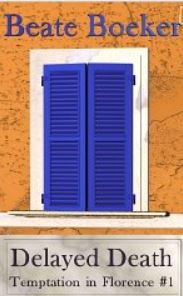
Purchase here
I’m very grateful to
Elizabeth for inviting me as her guest today. She said that her readers are
interested in writing tips and suggested that I write about “writers as a
brand.” 
I’m happy to do this because this happens to be my field of expertise:
Besides being a multi-published author by Avalon Books and now being an
indie-author, I’m also working as a Global Marketing Manager for an
international brand, so building a brand is something I deal with every day.
But what exactly do they mean when they say you should “build a brand”?
Superficially looking, a
brand is a name for a certain range of products. When you look deeper, you’ll
realize that a brand is more than that. It’s an imprint on your mind. An
established brand has certain values linked to it, and these values will pop up
in the mind of the consumer when they see it.
Think Coca Cola. You
will not think of your sofa and a rug over your knees when you see it. Coca
Cola is the brand to go out and have fun, and they have carefully groomed that
image over centuries. Now imagine that a new marketing manager would come to
them and would say “Hey, guys, we can tap into new target groups by positioning
this brand for the home as well.” As a consequence, they start an advertising
campaign focusing on the home, when you’re on your own, just that lovely Coke
and you.
A risky strategy, to say
the least, because the consumer will be irritated. The values that Coca Cola
was standing for – like fun, being on the go, being with friends – are now
suddenly being diluted.
Now this is the same for
authors. For example, I’m positioning myself as an author who writes books with
touches of humor and mischief. It doesn’t matter if they’re romances or
mysteries – as long as they make me chuckle, count me in. I’ve published over
ten books and short stories, and the readers who know my name will know that
they can rely on a happy end, on a chuckle, and that they can give these novels
to their teenage daughters without a qualm. That’s what my name is standing
for.
Now imagine that I
suddenly get this crazy urge to write a noir, dystopian novel that ends with
the world falling apart or a really hot erotic romance. Should I write this
under the name of Beate Boeker? Most definitely not! I would shock my readers
and would confuse them. I’m not saying I can’t write this; I just have to
choose a different brand – in this case a pseudonym – to make sure that my
readers get a clear message. Of course, you can make cross-references and can
tell your established readers about your different names, in case they are open
to reading widely across all genres and like your style, no matter the content,
but you have to keep your marketing well apart.
Everything I post on
Facebook or anywhere else has to fit to the tone of my novel. Of course, I’m
not always feeling breezy and happy and in an Italian-sort-of-mood, but when
I’m building my brand, I have to make sure I’m consistent (and if I need to
rave, I do it offline with my friends!).
Also, a brand has to be
easily recognizable. Ideally, this means that your covers speak the same
language. They don’t all have to look alike, but they have to convey the same
feelings. I admit that I haven’t realized this perfectly for all my novels so
far, however, for my cozy mystery series, I have decided to take one theme –
the typical Italian shutters – and to use them in different color
constellations. This makes it easy to recognize the theme.
Below is an excerpt of
the first novel in my cozy mystery Delayed Death. It’s one of my favorite
scenes, where the heroine, Carlina, gets to know the investigating officer
Garini a little bit better, and I think it’s a typical example of my voice or
brand – a bit of romance all wrapped around the mystery and a bit of humor, set
in Italy. I’m looking forward to discussing what you think about this topic.
“Where did you find your
grandfather?”
Carlina throat tightened. The
preliminaries were over. Now came the hard part. “Grandpa sat at the
kitchen table.” Her voice cracked.
“Go on.”
She felt as if he was pushing her bit by
bit forward, until she would drop off a cliff. “My cousin . . . Emma threw
a fit.”
His eyebrows twitched. “Why?”
“Emma was the bride! His death
destroyed her wedding.”
Commissario Garini looked as if he had no
clue what she was talking about.
Do you have no
imagination at all?
“Can
you picture the bride coming up to church and saying that her grandfather just
died?” Carlina closed her eyes. It was easier to speak without looking at
the man made of steel next to her. “Everybody bursting into tears, the
wedding canceled, no dancing, no party, the flowers wilting, the ceremony
postponed, the honeymoon annulled . . .” She shook her head so hard, she
felt the edge of the shelf beneath her hair.
“I like the wilting flowers,”
he said. “Nice touch.”
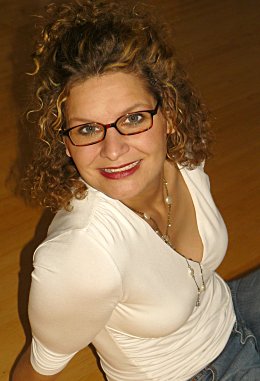
Beate Boeker is a traditionally published author since 2008 and now offers many full-length novels and short stories online. Several were shortlisted for the Golden Quill Contest, the National Readers’ Choice Award, and the ‘Best Indie Books of 2012’ contest.
 
She is a marketing manager by day with a degree in International Business Administration, and her daily experience in marketing continuously provides her with a wide range of fodder for her novels, be it hilarious or cynical.
 
While ‘Boeker’ means ‘books’ in a German dialect, her first name Beate can be translated as ‘Happy’ . . . and with a name that reads ‘Happy Books’, what else could she do but write novels with a happy end?
 
Twitter – @BeateBoeker
Homepage – www.happybooks.de

Audio Books for Self-Published Authors–ACX

by Elizabeth S. Craig, @elizabethscraig
 
As I mentioned in Wednesday’s post, I recently decided to spend time exploring audio options for my self-published books.  The only audio rights I hold, actually, are for self-published books.  Neil Gaiman wrote an interesting post on this problem: “Audiobooks–A Cautionary Tale.” As he put it:

“I think what I want to say mostly is, if you are an author, Get Involved in Your Audiobooks Early. Get your agent involved and interested. Talk about them at contract stage. Find out if you’re selling the rights, and if you are selling them then find out what
control you have or whether you are going to be consulted or not about
who the narrator is and how the audiobook is done.”

Let’s say that you do have rights to some titles–whether they’re self-published or traditionally-published.  How do you start the ball rolling for getting your books into audio?

Right now, the buzz is all about ACX.  This is because ACX is becoming a huge player and is really the self-pub option for audio.  You need a cover (presumably you have one, since you already have either an ebook or a printed book), your text, the rights to your property, and a plan on how you want to pay the narrator.  ACX distributes your audiobook to Audible.com, Amazon.com, and iTunes.  The top retailers for audio, obviously.

You can decide if you want an exclusive arrangement with ACX or not.  I did. More on exclusive vs. non-exclusive:

“Royalties start higher if you choose distribution exclusively through
ACX, which today gets your audiobook listed on Audible.com, Amazon.com,
and iTunes—the three main retailers of audiobooks in the world. If you
choose non-exclusive distribution, you can sell your audiobook wherever
else you’d like, and you will be paid the base escalator royalty rate,
which starts at 25 percent and grows to 90 percent as you sell more
units. At least fifty dollars in royalties must be accrued before
Audible cuts a check.”

If you want a royalty-share arrangement with a narrator, you must have an exclusive arrangement with ACX.

Royalty share is one option.  It’s a 50/50 split plan for the seven year ACX contract.  So ACX takes half the earnings, then you and the narrator would both take 25%.  Or, you can opt to pay narrators upfront, keeping all the royalties as your own (after, obviously, ACX takes its cut.)  More on your options here: (via ACX’s site).

The reason royalty share may be appealing is because of the cost of narration, otherwise.  I believe that $1200 would be a fair estimate for many projects (at $200 a production hour for a six-hour audio project).  However, if you post that you’re looking for a royalty-share agreement, you may be limiting the field of narrators–they’re having to take a big leap of faith that their substantial investment of time will be worth it in the end.  If, obviously, you’ve already got a successful ebook or two on Amazon, that’s going to help your project look more appealing.

The narrators are all screened by ACX for quality.  The narrators have their own studios and produce the recording–recording, editing, producing (in most cases), and even uploading the finished file to the platform.

Listing your book is easy.  Here’s how (I’m using Pretty is as Pretty Dies here as an example since my self-pubbed titles are already uploaded…but I don’t hold the audio rights, so it’s for illustration only.) :)

You tell it which books are yours.  They automatically pulled most of mine up (the magic of “the internets” I guess), but they missed one of my titles.  I filled an ISBN in the slot and it came right up.

You decide how you want to handle the process.  Do you want to record your own books?  Or hire a narrator?  I did not want to record my own books.  And if you do…be aware of the time investment.  I hear it’s huge.

Here’s your contract.

Basic stuff here.  Your book description (I lifted mine off of Amazon), copyright info…the information you have already at your fingertips.

Now here’s where you need to put your thinking cap on.  Not so much for the general book type info, but for the narrator’s voice…that’s huge.  I ran into this part and my brain exploded.  The gender and age isn’t so hard (mine was a natural for elderly and female), but the style…just prepare yourself.  Here’s a sampling of the style options, since I couldn’t get a screenshot of the drop-down menu:
announcer, articulate, brooding, deadpan, engaging, enthusiastic, female narrating a male part, feminine, flirtatious, frightened, girlish, hip, host-interviewer, husky, hysterical, informed, ingenue, inspirational, intimidating, male narrating a female part, masculine, mature, nasal, perky, raspy, refined, snarky, sheepish, soothing, storyteller, sultry, upper-class…well, you get the idea.  I’m not putting them all in here, but spend some time thinking about this before you get to this point in the process.

Here you need to know a couple of things.  For the additional comments…it’s really a pitch.  We’re trying to pitch the project, tell a little about our platform and how we plan to get the word out about the audio version (important…especially with royalty share), and perhaps give some extra insight into what we’re looking for in a narration.

Audition script…you’re putting in a bit from the book for the narrators to read.  ACX advises an action scene.  I ignored their advice and put in the first couple of pages of chapter one.  The form will cut you off after a certain number of words.

After this, you hold tight and wait.  You receive notification via email from ACX that you have auditions to listen to.  I’ve learned that the appropriate etiquette is to keep the narrators apprised as to your process….especially if it’s taking a while.  They’re waiting for our response, after all.  I think it’s akin to our submitting a manuscript to critique partners and then waiting for feedback…they’d like to know where we are in the process.

If your ebook has a lot of reviews/strong sales, then ask ACX (I emailed) if they’ll attach a stipend for the narrators for reading your book.  Apparently, ACX considers it in their best interest, financially, for them to get successful ebooks into audio as soon as possible…and aren’t above creating an incentive for that to happen.  I had two of mine get stipends attached.  The other is newish and they passed.{Update–that book is now suddenly listed with a stipend. Hmm.} Here’s what you need to know about stipends.  And I have no idea why the site asked for producers to log in….I logged in as a “rights holder” and emailed and they responded right back.

How do we make our book more appealing for narrators?  For that, I researched narrator sites.  This is what I came up with:

My 10 Reasons For Accepting Royalty Share on ACX” by Robin Jester Anter.  A tip from Robin: ” I want to see that the author takes their career seriously by establishing a brand and actively marketing themselves.”

7 Reasons Why Your Book is not Getting Auditions on ACX” by Jeffrey Kafer.  Tips from Jeffrey include: making sure you have a good cover (basically, that you have a salable product), having a shorter book (or at least not a saga), and making sure you appear easy to work with.

A few things that struck me as very different from the regular-ebook-self-pub process: 

1. We don’t produce or upload to the platform.  The narrators are (usually) the producers.  They edit the audio and upload it for review to ACX.

2. We don’t set the price for our audiobooks.  That’s set by the retailer.  Here’s what ACX has to say about that:

Each retailer of your audiobook independently prices your product and
determines such price in their sole discretion. While not always the
case, the regular price on Audible.com for the product is generally
priced based on its length, as follows:

  • Under 3 hours: under $10
  • 3 – 5 hours: $10 – $20
  • 5–10 hours: $15 – $25
  • 10–20 hours: $20 – $30
  • Over 20 hours: $25 – $35

To be clear, although the above represents general guidelines as
retailer of audiobooks sold on Audible.com, Audible retains the sole
discretion to set the price of the audiobooks it sells.

3. Really, after we pick the narrator, our part is mostly over.  And a note about picking the narrator out of a collection of auditions: this means we have to make some rejections.  The only reason I bring this up is because I know this is tough on the writer’s artistic soul.  :)  Unfortunately, the nature of this project is that someone has to be chosen and others won’t.  This may be uncomfortable for you.  It’s uncomfortable for me because I’m a writer–I’m not an agent, I’m not an editor, I’m not a publisher.  I’m not used to being in the position of rejecting others.  But this is just part of the process.  I’m trying to put my discomfort aside and handle this task as professionally as I can.

How long will the process of narrating and producing take?  I’m expecting it to take several months.  The narrators may need to take on some projects that pay at the front-end and I completely understand that.  They’re taking a leap of faith that they’ll end up profiting on my projects with the royalty-share arrangement.

I’m new to this, so I’m hoping I’m relating all of this information clearly.  Let me know if you have any additions, questions, corrections, or thoughts here.

Make Your Content Work Harder for You

by Elizabeth S. Craig, @elizabethscraig


Image: MorgueFile: Gracey
I’ve been pretty
single-minded with my plans to expand the self-published side of my book
income.  My focus has been on
writing more books.  Keep writing, keep
doing what I’m doing with my brand and platform.  Volume and consistency.

I continued reading
articles like this one by Dean Wesley Smith (Killing the Sacred Cows of Publishing: You Can’t Make Money Writing Fiction)—encouraging self-published authors to
completely exhaust all available formats/platforms for our content. 
As Dean put it:

Every story we write, every novel we write, is a magic pie full of copyright.
We can sell parts of it to one publisher, other parts to another publisher, some parts to overseas markets, other parts to audio, or eBooks, or game companies, or Hollywood, or web publishers, and on and on and on. One professional writer I knew sold over 100 different gaming rights to different places on one novel. He had a very sharp knife cutting that magic pie.

Still, limited by the clock as always, I made
a mental note and kept doing what I was doing.

I wanted to spend more time considering my options, but….there’s never a good
time to figure out our writing career. 
Life doesn’t ever really slow down.

Recently, however,  readers started really…well, I’d like to
say encouraging me since badgering me sounds rude, to explore
other formats for my work.  I’d received
random and scattered emails since the ebooks released, asking about print versions.  I’d always been able to gently respond that I’d
get around to print at some undetermined future date.

Then I received a particularly
direct email in January.  Actually, it
was an exasperated one.  The reader had
no intention of buying a reader just to read my books although she’d enjoyed
the print versions of my other series.  I told the reader
that I’d put print versions of my Myrtle books on my New Year’s resolution
list.  I’m sure she thought she’d
believe it when she saw it, but I did put a monthly reminder on my calendar at
that point.  Last week I set the process
in motion.  No, I still didn’t have the
time to figure out print formatting (both text and cover), so I’m paying
someone (Dean Fetzer at GunBoss Books) to take care of this detail-oriented task for me so that I can sell the books through
CreateSpace.  I tend to have a do-it-myself attitude toward self-publishing, but I’ve found that subcontracting designers and formatters makes a huge difference–and that my time is worth money.  Here (and it will seem like I’m contradicting myself later), you need to be careful to pay upfront for services.  We shouldn’t have our royalties garnished forever for these types of one-time, basic tasks…there are folks who are eager to take advantage of us that way.

Audio was another
format that I kept hearing I should explore. 
I’m on a couple of writer email loops and they all were enthusiastic
about audio–and the surprising amount of income it generated.  But the usual lack-of-time,
coupled with my concerns over a costly investment, held me back.

 The reason I
suddenly decided to spend time researching audio is that I heard the magic
phrase “royalty share.” The author (or “rights holder” as far as ACX is concerned)
can split royalties 50-50 with the narrator with no money upfront.  Now, as I mentioned above, royalty sharing can be a scary thing…you
want to make sure you know what you’re in for. 
This particular agreement (with ACX) can be renegotiated after seven
years—so there’s a sunset clause built in. 
As a self-published author, we need to be very careful about not
signing away the rights to our content for an indefinite period of time.  In this instance…I know I wouldn’t get my books into an audio format without a royalty share agreement since I considered the financial investment fairly prohibitive.  The reason for the expense is that audio books take many hours of narration, editing, and production.

But an initial investment of $0?  I’m pretty sure I can handle that.  I’ll report more on Friday about my experiences
so far with ACX (although it’s early days still.)

I’m always irritated
with myself for dragging my feet with these things, but at least I’ve gotten
the ball rolling.  Because it’s true—we don’t
only need to create more content, we
need to figure out how to make our content do more for us. (Yeah, there’s foreign rights, too…and I’m dragging my feet
again on that one.)

If you’re
self-published, have you explored all the options and formats available for
you?  If it’s something you’re interested in, have you set yourself a deadline for working on the project or learning about the process?

How To Write While Cleaning Your House


Guest Post by Julie Duffy, @storyadaymay

The sad
truth is that the role of ‘writer’ does not come with staff. Even full-time
professional writers, for the most part, are not issued with a full-time
assistant. Most writers still have to shop for food, clean the bathrooms and
tidy up after ourselves.
But never
again should your domestic chores become a reason not to write. WU brings you
the Essential Guide to Writing While Cleaning Your House.
(Brain)storming
The Castle
As any of
you who have ever taken a shower will know, our best ideas are often
accompanied by the sounds of running water and the smell of soap. Surely it
might work just as well if you are scrubbing the shower rather than yourself?
So turn
off the TV, mute the radio (or set it to soundtracks or classical, or your
writing music of choice) and start thinking about your characters while you
scrub.
How
To Write While Doing Something Else
Now,
granted, you’re probably not going to do a lot of actual typing or writing while
you’re wrestling sheets off the bed, or scrubbing under the u-bend. But there
are ways of working when you’re not at your desk.
You can
plan scenes, dream up plot points or even carry a voice recorder with you to
capture ideas and passages of prose (this works rather better well when there
is no-one else in your house at the time who’ll pop their head in and say,
“What? Were you talking to me?”)
Link
Your Scenes To Certain Jobs
Breaking
down a big job into smaller tasks stops you becoming overwhelmed and happily,
this works for cleaning and storytelling. You have a list of scenes to write
and you have a list of rooms to clean. Make these two things work for you, by
assigning different scenes to different rooms.
When
choosing what to work on in each room, consider the setting. Use the different
rooms to enhance your writing:
*Cleaning the kitchen? Work on a sensual
scene, maybe a dinner or a scene where your hero and heroine trap, skin, gut
and cook a small defenseless creature. Mmmm, carnal! 
*Kid’s bedroom? Think about your teenage
character’s next big scene while you’re fording the sea of discarded clothes in
your own child’s room to reclaim your best earrings from the heap of gewgaws
beside her bed.
*Your bedroom? The ideal opportunity to
work on the big romantic, er, climax. Or not…
*Folding laundry? Perfect! This
repetitive, mechanical task is ideal for letting your mind take a flight of
fancy. Plan your big turning points now. Run through a critical piece of
dialogue. Audition daring new ideas in the safety of a fluffy, fragrant
folding-spree.
*Bathroom? Definitely time to work on
your villain!
Mine
Your Own Emotions
Everything
we write is colored by our own experiences and the little details are often the
ones that bring our characters to life for a reader.So pay attention as you
bend and stretch and scrub and fold, to how you are moving.
What do
you do when your back aches? Would your character move the same way?
How do
you feel when faced with a mountain of unwashed dishes — again? That’s how
your hero feels at the ‘all is lost’ point just before the climax.
Are you
disgusted by the bathroom floor? Great! Notice what you do, how your facial
muscles contort, and how your stomach feels, then use it all when your heroine
encounters the villain at his most dastardly.
Live
To Write
We all
like to imagine how life would be if we had Neil Gaiman’s writing gazebo in the
woods and a fleet of assistants to shop and fetch and clean for us. But in the
meantime, lets turn our formidable creative powers to the task of turning
household chores into the raw material of great writing.
If we can
do that, surely there’s no creative problem that can defeat us!
 

Julie Duffy is a writer and the host of StoryADay May, a creativity challenge and community at StoryADay.org . She is also the author of the StoryADay Guide To Breaking Writers’ Block

Scroll to top