Twitterific

 by Elizabeth S. Craig, @elizabethscraig

Twitterific
links are fed into the
Writer’s
Knowledge Base search engine
(developed by
writer and software engineer Mike Fleming) which has over 19,000 free articles
on writing related topics. It’s the search engine for writers.
Sign up for
our
free newsletter for monthly writing tips and interviews with top
contributors to the WKB or like us on
Facebook.
Mike Fleming
worked with author and writing coach James Scott Bell to offer an online,
interactive, writing program to help make your next novel great. It’s called
“Knockout Novel” and you can learn more about it at
Knockout Novel.com.
Keeping the
murderer’s identity a secret until the end of the book: http://bit.ly/YQoH3v @PriceMcNaughton
The one subplot you
really need: http://bit.ly/12vJWrf
@crackingyarns
The London Book Fair
is disseminated for writers by @Porter_Anderson for @thebookseller: http://bit.ly/XSJofK and http://bit.ly/XSJmEx
A free directory of
cover designers, formatters, freelance editors, and more: http://bit.ly/nolbXq
Pros and Cons of
Being a Plotter: http://bit.ly/12TzwR1
Finding Your Writing
Rhythm: http://bit.ly/122P1Y1 @erikwecks
How To Write Every
Day: Turn on a Dime: http://bit.ly/12TA49w
@cockeyedcaravan
A Dreadful Fear of
Clichés: http://bit.ly/122Pjhu
@thisishorror
Different approaches
to plotting: http://bit.ly/122PxVL @fcmalby
Is writing faster,
better? http://bit.ly/12TAJaY @roniloren
Everything Will Take
Longer Than You Think It Will: http://bit.ly/12TARY5
@blurbisaverb
What Are the Best
Day Jobs for Writers? http://bit.ly/122PQ32
@galleycat
7 tips for tapping
into childlike creativity: http://bit.ly/12TBDnL
@JWhite
7 Amazon Tools To
Help Market Your Book Like A Professional: http://bit.ly/12TCrt0
Cover Images: http://bit.ly/12TCVzb @authopublisher
Screenwriting
Traits: Consistency: http://bit.ly/12TEaOO
@gointothestory
Heighten Your
Novel’s Emotional Connection: http://bit.ly/122RW2F
@lindasclare
The creative edit: http://bit.ly/12TEEEN @BenArtsEngine
@emilywenstrom
Formatting for
CreateSpace: http://bit.ly/122Srdl
@indiadrummond
Recording our ideas:
http://bit.ly/15fFv73
Do Authors Need a
Website and Blog? http://bit.ly/11gU1GY
@jamigold
The Western Hero in
Speculative Fiction: http://bit.ly/15fGt2X
@kgelfland2ndcuz
The Two Pillars of
Novel Structure: http://bit.ly/11gVhtV
@brianklems
Why Facebook is
@HughHowey ‘s favorite promo tool: http://bit.ly/15fGOmp
@galleycat
Project Management:
How to Start: http://bit.ly/11gWd18
Setting, Landscape,
Atmosphere–How Are They Different? http://bit.ly/15fH3O8
Is Baby Boomer Lit
the Next Hot Genre? http://bit.ly/15fH9Wb
@pubperspectives @claudenougat
The truth about
tropes: http://bit.ly/15fHjNk
@fantasyfaction
A closer look at the
@paidcontent and #lbf13 cons : http://bit.ly/Z0F25N
@Porter_Anderson @katiefehren @AndrewRichard @tferriss
Getting It Up,
Keeping It Up: The Conundrum for Indie Authors: http://bit.ly/15fHtnK
@bob_mayer
Does Your
Protagonist Have Amnesia? http://bit.ly/11gXIwi
@lisacron
Einstein Was the
Luckiest Science Fiction Writer Ever: http://bit.ly/11gY4mE
@tordotcom
Do Not Compare
Yourself Unto Others: http://bit.ly/15fHMPu
@Julie_gray
Publisher’s Weekly
picks “worst book cover ever”: http://bit.ly/15fHSqn
@publisherswkly
How To Beat Writer’s
Block Forever: http://bit.ly/11hCBdi
@jonathangunson
Blunt force trauma
in crime fiction: http://bit.ly/15g1FG9
@mkinberg
The Slow Path to
Writing Success: http://bit.ly/11hDdj2
@jeffgoins
Screenwriting
Traits: Flexibility: http://bit.ly/11hDmmG
@gointothestory
The Agony and
Ecstasy of Book Reviews: http://bit.ly/15g27UZ
@MariaZannini
A Map to Get Out of
Writer’s Block: http://bit.ly/15g2wGZ
@NYBookEditors
Putting Together A
Launch Plan: http://bit.ly/11hEzdH
@inkybites
Slow Down Your
Hectic Writing Life With a ‘Pause’ Button: http://bit.ly/15g2T4j
Rounding out main
characters: http://bit.ly/15gdg8e
@glencstrathy
On Keeping a
Notebook in the Digital Age: http://bit.ly/15gduMr
The Art of Writing
Misogynists: http://bit.ly/11i03XX
How To Write Every
Day: Work on Multiple Projects: http://bit.ly/15ge0di
@cockeyedcaravan
The Little Reasons A
Story Works: http://bit.ly/11i0H7W
@mooderino
On Writing Special
Effects: A Little Goes a Long Way: http://bit.ly/11i10zp
@thecreativepenn
7 Secrets To Writing
A Story Your Readers Won’t Be Able To Put Down: http://bit.ly/11i1aXx
@woodwardkaren
Make Your Character
Walk Naked Through Times Square: http://bit.ly/11i1uWd
@NYBookEditors
Can Social Media
Tools Make us a Social Tool? http://bit.ly/15gelNp
@kristenlambtx
The End is the Whole
Book: http://bit.ly/11i1TYV
Making the Science
Work: Freedom through Limitation: http://bit.ly/15gesIx
@fictorians
8 Writers Over 80: http://bit.ly/17fQDgz
Fast-drafting
editing: http://bit.ly/17fQKbR
Commas and Feelings:
http://bit.ly/17fRg9S
It’s Time for (Many)
Experienced Writers to Stop Blogging: http://bit.ly/137VYtj
@llbarkat
Refresher on
capitalization: http://bit.ly/17fRvSh
@livewritethrive
Great Character:
Matty Walker (“Body Heat”): http://bit.ly/17fRFsT
@gointothestory
5 time-management
tips for writers who work at home: http://bit.ly/137WtUe
@bookbaby
5 common obstacles
for finishing and publishing your book: http://bit.ly/17fS8uX
POV: Choosing Whose
Head To Be In: http://bit.ly/137WLdO
@SharlaWrites
Looking for a
critique group? http://bit.ly/17fSp1c
@Janice_hardy
Misplaced and
Dangling Modifiers: http://bit.ly/17fSCBw
@JordanMcCollum
10 frequently
misused words: http://bit.ly/137YL5N
@writerscramp1
Hugh Howey’s 3 Rules
For Writing: http://bit.ly/17fUsCj
@woodwardkaren
Publishing Reversion
Clauses: http://bit.ly/17fUv0M
@deanwesleysmith
7 Types of Narrative
Conflict: http://bit.ly/137Z2pk
@writing_tips
Screenwriting
Traits: Persistence: http://bit.ly/17fUFFs
@gointothestory
DeviantArt’s New
Service Turns Users Into Massive Outsourced Creative Team: http://bit.ly/137ZkNd @Wired_Design
@passivevoiceblg
Your character’s
profanity says a lot about them: http://bit.ly/17fVf6e
@VioletteMalan
“Indie
First?” What Is Best In Publishing? http://bit.ly/1380bxa
@chuckwendig {lang}
Too old to write a
bestseller? http://bit.ly/17fVWMP @yeomanis
Repeating events in
each Throughline: http://bit.ly/119xj11
@glencstrathy
Screenwriting–Writing
A Groundbreaking Game: http://bit.ly/YOrD0u
@fastcocreate
Arguing for a
Disempowered Protagonist and Sadistic Fate: http://bit.ly/YOrSIS
@scriptmag
5 Ways to Self-Edit
Your Writing: http://bit.ly/119zphe
@JulieBMack
Hacks for Hacks: Top
5 Affectations Every Writer Should Adopt: http://bit.ly/119zDoH
@BillFerris
Essential and
Non-essential Elements: http://bit.ly/119zMZn
Kindle’s Book
Publishing Requirements: http://bit.ly/YOvY3M
@authropublisher
Top 10 plotting
problems: http://bit.ly/YOwcIg @aliciarasley
Meet the Reader: 10
Points to Ponder When You Write: http://bit.ly/119A7eC
@scriptmag
On Writing And The
Fear Of Judgment: http://bit.ly/11ahib5
@thecreativepenn
Tips for writing
query letters: http://bit.ly/YPJioE
@noveleditor
The Perils of Pure
Pantsing: http://bit.ly/11ahszc
@jamesscottbell
Why plot milestones
might not be equally spaced – and why that’s good: http://bit.ly/YPKzfg @dirtywhitecandy
It’s ALL writing: http://bit.ly/YPL1KE @YAHighway
Taking care of
yourself as a writer: http://bit.ly/YPSYzi
@jcharbonneau
Hybrid Authors: The
Best of Both Worlds: http://bit.ly/11ap4lg
@amazingstories0
Revising When Your
Head and Your Heart Agree: http://bit.ly/YPYcLF
@MartinaABoone
How to get laughs
without writing jokes: http://bit.ly/YPYCSc
@kenlevine
Finding Your Middle
Grade Voice: http://bit.ly/11aqdcA
@Janice_hardy
Great Scene:
“Ferris Bueller’s Day Off”: http://bit.ly/11aqpss
@gointothestory
A Different Type of
YA Hero: http://bit.ly/11arRuF
@Suzanne_writer
Top 10 Girl-Power
Moments in Science Fiction and Fantasy: http://bit.ly/YQ2OkK
@sciencefiction
Reclaiming Airships
for Epic Fantasy: http://bit.ly/11asyo1
Creating Memorable
Characters: http://bit.ly/YQ3M0q
@hayleymckenzie1
To Blog Or Not To
Blog: http://bit.ly/11asODe @woodwardkaren
Resurrecting the
Literary Dead: http://bit.ly/11asSTE
@amazingstories0
10 Screenwriting
Lessons You Can Learn From Fight Club: http://bit.ly/11at4Cv
@Scriptshadow
What authors want
and how publishers sometimes don’t deliver: http://bit.ly/1002AlU
@jonnygeller
Chuck Wendig On
Story Structure: http://bit.ly/1002Jpj
@woodwardkaren
Dealing with
character trauma: http://bit.ly/1002I4H
@ajackwriting
What is a story? http://bit.ly/XGoDBu @scriptmag
Want to Use Song
Lyrics in Your Novel? 5 Steps to Getting Rights to Lyrics: http://bit.ly/1002Zoj @annerallen
Types of story
planning for writers: http://bit.ly/10038Z3
@mythicscribes
10 Proofreading Tips
For Self-Publishers: http://to.pbs.org/XGpa6H
@completelynovel
10 Tips for the
Debut Author: http://bit.ly/10h9p9V
@KelseyBrowning
The Battle of
Science and Magic: Nostalgia and the New: http://bit.ly/10h9U3K
@VickyThinks
How to Get Over Your
Public-Speaking Nerves: http://bit.ly/10ha0bG
@menwithpens
6 key factors in
dystopian fiction: http://bit.ly/17oMKWC
@zujava
6 tips for
writers–from telling a story to promoting it: http://bit.ly/10hbjYg
Screenwriting Advice
From The Past: The Final Close-Up: http://bit.ly/10hbK4O
@gointothestory
How can you turn an
audience from observers into participants? http://bit.ly/17oNKdh
@scriptmag
Sci-Fi Romance: 10
Star-Crossed Lovers: http://aol.it/17oOI9s
@moviefone
A screenwriter’s
approach to writing: http://bit.ly/10hdGtU
Characters: Static
or Dynamic? : http://bit.ly/ZCvmJf @ava_jae
First Drafts:
Spaghetti Problems: http://bit.ly/Z6GNNR
@fictionnotes
A New Question to
Ask Your Characters: http://bit.ly/ZCvF77
@jeanniecampbell
Juggling
Genres…Brilliance or Pure Folly? http://bit.ly/Z6HhDD
The Writer’s Author
Rank Cheat Sheet: http://bit.ly/ZCvNDE
@copyblogger
5 Tips for Tighter,
Cleaner Writing: http://bit.ly/ZCwQ6v
@kristenlambtx
Be Your Own Book
Doctor: http://bit.ly/Z6JkHP @Janice_hardy
3 Reasons Action is
Important, 3 Reasons It’s Not: http://bit.ly/ZCxrFk
@victoriamixon
3 tips for better
guest posts: http://bit.ly/Z6Jnnb
5 Industry Trends
Requiring Every Writer’s Attention: http://bit.ly/ZCxwsx
@janefriedman
When Writing Is A
Full Body Workout: http://bit.ly/ZCxAsn
@OrlyKonigLopez
Why we should always
carry a notebook: http://bit.ly/Z6JDm3
@melissadonovan
3 Twitter tips for
writers: http://bit.ly/ZCxKjj @junglereds
@dorieclark
What’s In A Genre? http://bit.ly/Z6K9jV @fictorians @sarahahoyt
Using ‘me’ and
‘myself’: http://bit.ly/ZCy6X8 @jodycalkins
Tax tips for
writers: http://bit.ly/Z6KnHG
@rachellegardner
DeviantArt’s New
Service Turns Users Into Massive Outsourced Creative Team: http://bit.ly/137ZkNd @Wired_Design
@passivevoiceblg
A Map to Get Out of
Writer’s Block: http://bit.ly/15g2wGZ
@NYBookEditors
The Year of the
Author? http://bit.ly/12Tz4SG
@passivevoiceblg
Why Write Book
Reviews? 5 Five Payoffs for Authors: http://bit.ly/ZLkVmp
@janvbear
An agent on whether
you still need an agent: http://bit.ly/Z6LDur
@SaraMegibow @lisagailgreen
Konrath on KDP
Select: http://bit.ly/176LOb5 @JAKonrath
Worldbuilding: Hard
and Soft Imports: http://bit.ly/Z72xJq
Screenwriting Skill
#1: Talent: http://bit.ly/176LUiO
@gointothestory
What 1 Writer
Learned About Critiquing From Her Editors: http://bit.ly/Z72GwC
@lkblackburne
When the Hero is His
Own Worst Enemy: http://bit.ly/176M5L1
@kristenlambTX
Keeping your reader
on a need-to-know basis: http://bit.ly/Z90ftl
How to Connect with
Readers Using Wattpad: http://bit.ly/11rHbmT
@goblinwriter
Methods of
cataloging your ideas: http://bit.ly/11rHu0U
@creativesomething
5 Unexpected Lessons
From Inside the Iowa Writers’ Workshop: http://bit.ly/Z90Bjz
@jessicastrawser
When the Hero is His
Own Worst Enemy: http://bit.ly/176M5L1
@kristenlambtx
Do You Write from
Experience or Imagination? http://bit.ly/Z90Zyy
@write_practice
New Publisher
Authors Trust: Themselves: http://nyti.ms/11rIySv&
@nytimes
Then and than: http://bit.ly/11mwCUT
What Type of Writer
are You? http://bit.ly/14CJtHr
Finding scene goals:
http://bit.ly/11mwWTK @JordanMcCollum
The (Submission)
Grinder Is A Free Database Of Fiction Markets: http://bit.ly/14CJFpW
@woodwardkaren
Pros and Cons of
Being a Pantser: http://bit.ly/11mx9WR
@LynnetteLabelle
How Verbs Become
Adjectives: http://bit.ly/Z92RZj
@writing_tips
When good writers
write bad books: http://bit.ly/11qEbca
@kristinerusch
How ‘Same Old, Same
Old’ Can Make You a Successful Writer: http://bit.ly/Z93lP8
@menwithpens
Wrap-up of the
Digital Minds Con: start-ups, industry metaphors, copyright…& few
publisher reps: http://bit.ly/YPPCfH
@Porter_Anderson

Working on Multiple Projects

by Elizabeth S. Craig, @elizabethscraig
Image: MorgueFile: haphthat
I don’t go to a lot of
conferences or give a lot of talks.  When
I do give a talk though, and it’s time
for an audience q&a, I know which question I’ll be getting.
“Do you work on all
three series at once?”
It used to be that I’d
get the famous “where do you get your ideas from” question most often, but this
new one has definitely surpassed the other. 
And I don’t really
know why people are interested in this. 
Maybe they’re looking for tips for juggling their own stuff.
Here’s the answer—not
unless I have to.
The reason—I get very
confused.
The series are very
different.  My protagonists are very
different. But…when you’re writing humorous cozy mysteries set in Southern
towns, there’s enough similarity there to get your mind boggled.
The toughest is when
you’re working on more than one first draft at a time.  I avoid doing this at all costs! If I’ve got to, then I try to work one day on Project A and the next day on Project B.  I would rather have a “if it’s Tuesday, it
must be a quilting mystery” scenario than a “if it’s 2 p.m., it must be
quilting, if it’s 3 p.m., it must be barbeque mysteries” scenario.
It’s even easy to get
confused when you’re drafting one book and doing edits on another.  I just got an email on Thursday that the
proofreader had found an error on the page proofs and my editor asked me to
correct it.  Now I know that working on page proofs means that
the text is already set…any corrections need to have the same number of
characters as the original to prevent text reflow.  But I’d already forgotten that we were in the
pass page stage of the process since I’m busily drafting another book.  I sent in a broad correction (I deleted most
of a paragraph) and emailed it to my editor. She emailed me back a very patient
reminder.
This week, though, I
came across a post that actually recommended working on multiple projects
simultaneously.  I read the post with
interest since this is a blog that I regular follow and tweet and have found
some great information on: Cockeyed
Caravan
.  The blog’s author is Matt
Bird, a screenwriter.  Matt says:
Writing a few pages of
another project is helpful in multiple ways:
  • It
    buoys you up out of that sinking sensation and allows you to start fresh
    on new challenges.
  • It
    reminds you that not everything is riding on your main project, so it can
    be what it needs to be, instead of being all things to all people.
  • It
    allows you to move that big problem to the back of your mind, but it keeps
    working the muscles that you need to solve it, which makes it more likely
    that you’ll have that “Eureka!” moment, when a solution for the supposedly
    forgotten problem suddenly flashes into your head.  If you take days
    off to just think about the main problem, it’s more likely that you’ll
    forget it entirely.
He’s specifically
talking about writer’s block in the post. 
Writer’s block isn’t something that I have a problem with.  But I can see his point—working on more than
one project means that when you reach a stumbling block with one book, you can
make headway on the other and feel like you’re not missing your goal.  It could be a good way for some writers to
stay motivated and keep a creative spark.
For me, though…there’s
always that temptation to cheat on my current project with a new project.  It’s known as Shiny New Idea Syndrome.  Plus, for me, there’s that aforementioned
confusion factor.
Sometimes, though, I
do have to work on multiple projects at once. 
Whether you’re working on more than one book by choice or because of
publisher-set deadlines, here are a few tips:
Keep a style sheet or series bible for
your series/each project.  A style sheet
listing character names, short descriptions, setting names, character traits and quirks,  and relationships
between characters can help you keep organized and jump back and forth between
projects much easier.
It can be easier to
edit one book while drafting another…the processes seem to use different parts
of our brain.  If you’ve got to work on
two books at once, see if you can avoid drafting
two different projects at once.
If you’re writing
series, it’s helpful to keep the old Word documents of already-published
previous books in the series.  That way
you’ve got an easy way to quickly search a book for details you might have
forgotten (or have forgotten when working on the other project.)
Noting where you left
off with each story is a helpful way to quickly jump back in the next day.  If you’re writing Project A and it’s time to
move to Project B, do a one-line recap to refresh your memory when you return
to the book the next day: Myrtle finished
questioning Sybil and now plans to talk with Lucas about the argument he had.
  
One more tip–if you’re working on multiple projects, you might want to take care to carefully put everything on your calendar and make lists for all your non-writing-related activities.  I’ve dropped the ball in a spectacular way several times when I was working on two books at once.  Your mind is just so thoroughly engaged in the two worlds that it’s hard to remember the dentist and doctor appointments, the carpool you’re supposed to drive, etc.
And take care of yourself if you’re working that hard.  Remember to eat and sleep and exercise.  Those things are also easy to forget when we’re busy.
Have you ever worked
on multiple projects before?  Did you
enjoy it?  How did you make it work and
keep it all straight?

Why Some Traditionally Published Writers Aren’t Self-Publishing


by
Elizabeth S. Craig, @elizabethscraig

Image by Purpleslog, Flickr
Sometimes when I’m scanning my blog reader or reading
through some of the messages from writer loops I’m on, I’m stunned by the lack of recognition
or acknowledgment of the rapidly changing industry on traditionally published
author blogs.  This applies to some agent
blogs, too, although certainly not all of them (among agents, Rachelle Gardner
is probably the very best at addressing the topic.)
These authors will write about the writing craft, querying,
the waiting period before their books release, promo…nothing about switching to
digital or any of the upheaval they must surely be experiencing/aware of in
their dealings with traditional publishers.
I’ve
certainly seen changes in publishing and I haven’t been in the business nearly
as long as some other writers.  For one
thing, it used to be fairly standard with paperback mysteries that contract
extensions were in 3-book increments. 
Now you’ll frequently get a contract extension one book at a time.
In my online interactions, I’ve been surprised at the lack
of conversation regarding switching to digital and POD. 
From time to time, a traditionally published writer will get in touch
with me when they’re exploring going to self-pub…but only to ask if I know
cover designers or editors, never to ask my opinion on making the switch.  This is interesting to me, considering I’ve
got a fairly high profile as a hybrid writer.
Occasionally, I’ll rock the boat a little.  I’ve urged writers I know to experiment—to try
putting something up as a self-published book or short story.  This is met by a variety of reactions…many
times negative ones.
I’m just surprised there aren’t many other hybrid writers
like me.  There are more every day, but
not nearly the number that I’d expect.
Here’s
what I think is going on:
The main excuse I’ve heard for not exploring self-publishing
is time.  Some writers have got contracts
for several years into the future and don’t see themselves starting another
series for self-publishing. One writer told me that she just didn’t have the
time to write anything other than the series she was already working on (and
was contracted out for years for.)
I’ve also observed a sense among some authors that if they’re
publicly vocal about self-publishing that it will somehow hurt their
traditionally published career…that it will hint at their unhappiness with
traditional publishing or imply criticism of it when they don’t actually feel
that way.
Some writers aren’t connected enough with the writing community
to know how best to approach self-publishing or see it as a huge time-suck of a
challenge.
There also seems to be a preconception that self-publishing
is for projects that aren’t commercially viable. If they have something to
publish, they’re hoping to shop it to traditional publishers—they think it’s too
commercially attractive to self-publish it.
For some, there still seems to be a stigma attached to
self-publishing.  Some writers appear to believe
that self-publishing would make it appear that they were dropped by their
publisher or that their series were discontinued.  
Some are so used to having the production process taken care
of (titling, copywriting, editing, design, formatting, and interior design)
that the thought of taking on these aspects of the business is completely
overwhelming.
Others seem to be running into non-compete clauses.  More on those contract clauses in this post
by Kristine Rusch: “Competition.”
And here’s just a general observation: the group that seems
to be most enthusiastically making the leap to self-publishing (and with the
most commercial success) appears to be the romance writers.  Frequently, these are really savvy writers. Many
of the romance writers that I’m acquainted with are older writers (middle aged
and up) who have been in the business for decades and have huge backlists.  They’ve very nimbly adapted to the changing
industry and are finding significant commercial success…sometimes for the first
time in their careers.
This topic might engender some discussion…the reason I’m
bringing it up at all (since I’m not exactly the type who wants to be a lightning
rod of any kind) is out of concern for these writers, moving forward. And the fact that I’m somewhat frustrated and mystified.  If these writers are
simply satisfied with their current situation…I’m wondering how long that’s going
to continue being true as advances decrease and bookstores close. As publishers
tighten their belts and take on fewer manuscripts. As publishers merge or close
their doors.  I’m wondering why they aren’t
testing the waters and exploring a bit.  I think many of the above reasons for not exploring self-publishing
are hooey.  I worry these writers are burying their heads in the sand and some of them are great writers–I would miss their stories.
If you’re really cautious about self-publishing and you’re
traditionally published, there are ways you can minimize your risk. Write under
a pen name.  Write a short story or
collection of shorts as an experiment.  Spend
time each day developing a new project for self-publishing. Or spend time
figuring out if you can get the rights back to some of your backlist.   Start
reading up on industry changes, if you haven’t already. Read blogs by writers
and industry insiders like Jane Friedman, Porter Anderson, Mike Shatzkin, and
Kris Rusch
Consider your career…this is a business. Tune in.
That is all. :)

Keeping the Murderer Secret until the End

By Price McNaughton, @PriceMcNaughton

When I first began writing
murder mysteries, my biggest fear was that I would reveal the murderer too
soon. I hate books that make the perpetrator evident from the moment he/she
steps onto the page. I didn’t want to be guilty of the same! 
Every time I slipped
in a clue, I felt that I had just shone a spotlight on the guilty party. Some
authors try to protect their antagonist by refusing to leave any clues that
lead to him/her, but I was never comfortable with this strategy. There are
better methods of protection.
I’m the first to admit that I
have never formally studied writing murder mysteries, though I have read
hundreds of them and written a few. Instead, I followed my own rules, which I
have listed below.
  1. You must decidedly know who your murderer is and why
    they did it
    . This seems obvious, but I’ve read many books that do
    not explain the why factor. It seems as if the author has no idea who
    their antagonist is or what motivates them. I’ve actually read a couple of
    books that disintegrate to the point that the ending is… drumroll… why
    he/she did this remains a mystery. 

    The murderer admits to killing everyone, but gives no examples as
    to how he/she committed these crimes or why he/she did it.
    This leaves the reader feeling confused. One of the main
    reasons that a person reads a murder mystery is to find out what would
    motivate someone to commit the crime. The author can always explain what
    has occurred, but at the very least the detective must have a theory as to
    why someone would commit such a crime OR the killer must explain why.

Good example: It was obvious
now that Mr. Smith had been jealous of his wife’s first husband. He feared that
his wife still loved him and that the man would return and put an end to his
happy marriage. Mr. Smith felt that he was left with only one choice. Murder.
And so that was what he did.
Bad example: “Yes, I killed
him.” Mr. Smith said.
“But why?” Mrs. Smith asked.
She did not receive a reply. It remains a mystery to this day. The End.
 
Quick tip: Know your murderer inside and out. 
  1. You must leave clues. How many of you have read
    a book that gives absolutely no clues as to who committed the crime?
    Believe or not, I have a read a few and they are very frustrating. The
    clues do not have to be obvious or even fully explained. In fact, fully
    explaining the motivation of every character gets old very quickly. Leave
    some mystery in your mystery!
Good Example: Mrs. Smith’s
face contorted briefly in an expression of deep sadness as her fingers trailed
over the lovely lace edging the material of the gown. Mr. Smith pressed his
lips together in dismay as he turned away.
“I hate seeing her so upset.”
He said as he left the room.
Anger flickered briefly in
Mrs. Smith’s eyes as she jerked her hand away from the soft fabric.
Now all you have to do is drop a line here or there in the
book that could explain her feelings, such as “Mrs.
Smith was left at the altar once several years ago, but you would never know
it; she’s so happily married now.”
This could
explain why she acted as she did earlier in the book and ends up fully
explaining the mystery. Mrs. Smith still loved her ex and Mr. Smith killed him
because he feared he would lose Mrs. Smith. Mr. Smith didn’t know that Mrs.
Smith was also angry with her ex for some reason, but the reader does. The
anger might make some readers suspect Mrs. Smith of the murder.
Bad Example: Mrs. Smith’s
face contorted briefly in an expression of deep sadness followed by anger as
her fingers trailed over the lovely lace edging the fabric of the gown because
she was left at the altar some years earlier.
 
Quick tip: Try to never use because when explaining a
character.
  1. Reread your book and add in clues as you see fit. If you
    know your character and their motivation, it’s easy to pick out places to
    drop extra clues while rereading your book.


Example Sentence: Mrs. Smith
said she spent the day reading. Her half-opened book lay on the table.
Added clue/red herring: Mrs.
Smith quietly informed the officer that she had spent the day reading. The
detective paused in his questioning as his gaze fell onto the open book on the
table.
“Were you as surprised as I
was when Sarah died?” the detective asked.
“What?” Mrs. Smith replied,
distracted.
“In the book?”
“Oh, yes, quite.” Mrs. Smith
smiled sadly. “I’m afraid my mind was elsewhere.”
“I understand.” The detective
replied as he returned the book to the table. “I would be, too.”
With the extra information above, the observant reader now
has some doubt in their mind as to whether Mrs. Smith was actually reading the
book as she said.
Quick tip: Red herrings are much easier to add in after the
book is written as long as you don’t write yourself into a corner with your
characters, such as explaining everything they do and why.
  1. Let your characters LIVE. Life is a mystery. Let
    your characters retain some mystery. No one can ever be fully explained,
    should your characters be any different? The answer is no. I try to write
    my mysteries where anyone
    could have
    committed a crime, but most are unlikely to have done so. Many people have
    experiences or motivations in life that could lead them to crime, but do
    not because of the person’s psychological makeup/ upbringing/ etc. People
    are more complex than heroes and villains. Characters should be as well.


Example: Tears welling in his
eyes, Mr. Smith reached for his wife’s hand as she stared into the casket. “I’m
sorry you have to go through this,” he said as he held her hand tightly. The
dark bags under his blue eyes revealed the fact that he had spent the night sitting
up with his inconsolable wife.
“I know.” Mrs. Smith replied,
squeezing his hand in response. She felt his arm slip around her shoulders as
he supported her small frame.
He is sorry she has to
go through the situation he created. He’s just more concerned with losing her
than with her facing loss. He’s selfish.
Quick tip: You can’t ever go wrong with making your
characters human and therefore both good and bad.
  1. Let your protagonist think. Create questions in the
    readers’ mind that you would consider if you were in the same situation.
Example:  Is Mrs. Smith happy in her marriage? Does a part of
her still dwell on her past love? Would she be unhappy enough to kill over it?
The detective wondered as he studied the couple before him.
Quick tip:
It’s okay for a protagonist to be unsure.
The perfect murder mystery is
very obvious when the reader reflects on the information they were given. What
didn’t stand out before becomes central to the plot line. I love a book that
redirects the thought process and when analyzed, the information shifts into
focus much like a puzzle picture when the last piece is added. I think most
readers agree with me. I don’t pretend to have all the answers, but these are
the methods I use when writing. I do believe, if you follow these rules it
helps in keeping the murderer secret until the great reveal at the end.
What rules do you follow when
writing your murder mystery? Do you already have a story in your head
concerning Mr. and Mrs. Smith? Visit my blog to learn more about writing your
own fan fiction regarding the Smiths’ and be eligible to win an ebook copy of
both of my books.
Price
McNaughton was born and raised in a small town in Tennessee. A childhood
steeped in the stories and legends of her ancestors as well as the southern way
of life led her to carry on the tradition and become a storyteller herself.
After years of traveling and working at a variety of jobs, she has finally
returned to her roots and devoted herself to writing. She is the author of A
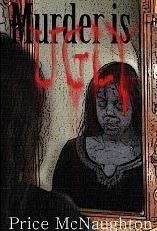
Vision of Murder and Murder is Ugly as well as The Ruby Necklace (a
mini-mystery).
Murderis Ugly: When Jinx Delaney agrees to spend a horse-filled, relaxing summer with
her old friend and sorority sister, Brynn Brookefield, in her exclusive
community, she never suspects that murder will be the second house guest. Set
in a beautiful neighborhood in the Deep South among carefully restored,
historic homes and nosy neighbors, Jinx finds that looks can be deceiving and
murder truly is ugly.
Book review blog: http://www.talebearers.com/
Twitter:https://twitter.com/PriceMcNaughton

Recording Our Ideas

by Elizabeth S. Craig, @elizabethscraig
 
I was on my way to a meeting last week and was perfectly on
time.  The meeting was a bit off the
beaten path, out of the city, and down a road I wasn’t familiar with. 
The landscape changed from businesses to a combination of
very nice homes and dilapidated homes to stables to silos.
But when I passed the house pictured above, I knew I had to
turn around and go back.  I had to take a picture.  It was going to make me a little late (and I’m
practically OCD about being late, as I’ve mentioned here before).  But I had
to take the picture. The discarded door propped up against a column, the ruined
and overgrown landscaping, the boarded-up windows….it gave the house the
perfect, haunted feel.
I’m very fond of Southern Gothic,  even going so far as to daringly insert as
much of the element as I could get away with in
a cozy
that’s coming out this December for Penguin.  So having an inspiration file that includes
real examples of Southern Gothic homes (the kind of places that William
Faulkner would have set stories around.) 
The pictures I took went into a special file that I keep for
story inspiration.  Pictures are a big
part of it.  Description is not my strong
suit, but looking at pictures of settings and potential characters makes the
process a lot easier. Once I was so stunned at a restaurant by running into one of my characters (someone I’d made up…who looked–in my mind–exactly like the stranger in front of me), that I ended up sneaking four or five photos of them with my phone. I’m hoping they just didn’t notice what I was doing.  Otherwise they likely thought I was completely insane.
Idea files are, in my way of thinking, completely
necessary.  And not only for the work we’re
currently writing, but whatever else we might be interested in writing down the
road. 
Some writers are using Pinterest
for inspiration: pinning images of people who look like characters they’re
developing or settings they’re using in their story.  Writer Karen Woodward has a nice post on
other ways of using Pinterest to help us write our books in “Using
Pinterest To Help Build Your Fictional Worlds
.” 
But there’s no need to use Pinterest if you don’t want
to.  The important thing is just to respect
our ideas enough to record them.  There
have been many, many times when I
thought I’d remember my great idea…and then completely forgot them.  
Evernote is a free,
handy way to record and search our ideas. 
There is a desktop version as well as an app (and you can sync them to
each other, if you like.)  You can use it
to store pictures and text, or email files directly to the app.  Organizing the ideas is easy if you tag your
entries or assign them to notebooks. 
Then you can search for the tags when you’re ready to write.
Voice recorders.  I
use Smart
Voice Recorder
—a free app for my phone.  It’s just another way to capture thoughts for
later.  The reason why sometimes I like
using a voice recorder for ideas is because occasionally I’ll get an idea so
nebulous that I can’t even really describe or pin it down at that point.  So I’ll explain what I was doing and who was
around and voice as much about the idea or feeling as I can.
Word docs work well, too and are a good repository for random bits of ideas.  We should back these up the same way we do our stories.
I probably go the old-fashioned route and use pen and paper most often.  The most important thing I’ve
learned about this cheap and portable way of recording ideas is that I need to
collect all my scraps of paper at the end of the day and either catalog them
on a computer or at least put them in a central location so I can locate them
when I need them.
How you do record your ideas and find them again later?

Scroll to top