How to Write a Novel in Three Years or More

It’s often said that
writing a novel is akin to running a marathon, not a sprint. For me, it’s felt
more like the long, painful, drawn-out process of training
for a marathon.
I am two and a half
years into the process of writing my fantasy novel, and even though I write for
about an hour every day, I’m only starting to see the light at the end of the
tunnel. Along the way, I’ve learned a lot of lessons about how I could have made
this easier on myself … and become an expert in the many ways to make this
process take as long as possible.
So allow me to share
my wisdom—you too can write a novel in three years or more!
Make your introduction perfect before moving forward.
Since this was my
first novel, I wasn’t sure what my voice was yet. I didn’t even have much
confidence that I could write anything worthwhile. So instead of ripping
through the first draft and getting my ideas on the page, I obsessed over my
opening. I reworked it over and over and over until it was perfect. THEN I
moved forward. I wasted a few months doing this. Months.
Don’t worry about worldbuilding.
I knew my main
character when I started writing, and the general trajectory the plot would go
in.  And … that’s it.  So as my character moved through each scene,
I had to figure out where he was, what the rules were there, and why. What was
the world’s history? Myths and beliefs? Social structure? This meant a lot of
stopping and thinking during my precious one hour in the morning. Time that
could have been spent writing. This is more intense for a fantasy novel, but
every story has a setting that the writer must know intimately.
Plot threads what?
As stated, when I
started writing I had only a general sense of my main plot line. My first draft
helped me find the path and conclusion for that trajectory. But when my first
draft’s word count hit only 45,000 words, I realized I hadn’t thought a dot about
any other plot threads—I’d been too consumed with coming up with my primary
arc.  My last eight months of writing
have been dedicated to creating and untangling these supporting plot threads.
Update changes as you go.
Because I made such
a mess of my plotting, there’s been many significant changes to my story’s
details as it has developed. At first, I wanted to keep everything nice and
clean, and went back and corrected inconsistencies right away. Then I realized
it didn’t matter how much cleaning I did in the rough draft phase, because soon
as I cleaned up one mess, I was sure to find another. Much better to finish the
draft, then go back and address all the changes together.
Spread yourself thin and overcommit.
I like to tell
myself that my novel is my top priority. But if I’m really honest, I’ve spread
myself too thin. My family is a priority, and my full-time career has to be a
priority too. On top of that, I run my own blog, with posts three times a week.
And just because I’m a special brand of crazy, I also launched a short story
zine last January. I have my reasons for holding on to these other pet
projects. But let’s get real—they’re getting in the way of finishing my novel.
How much does it
really matter how quickly you finish your manuscript? Well, that depends on you
and your goals. We all write at our own pace. Taking your time is not
necessarily a bad thing—after all, it took J.K. Rowling six years to write the
first Harry Potter book, and literary history is littered with other greats who
take their time with their works. I’ve learned invaluable lessons from my
sluggish process.
But if you dream of
supporting yourself from your writing, you can’t afford to take three years for
each book—even J.K. Rowling picked up her pace, releasing all seven books in
the Harry Potter series in 10 years. It’s a fast-paced world, and the more you
can organize your process for efficiency (without losing your creativity or
quality of writing, of course), the greater your career potential. More
finished works means more opportunities for success. 

Emily Wenstrom is the editor of wordhaus, a weekly short story ezine. She also blogs about
creativity for writers, artists and professionals at
Creative
Juicer
. Follow her on Twitter @emilywenstrom.
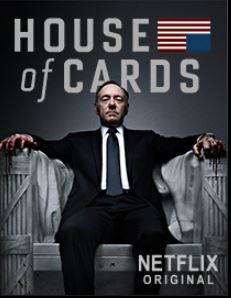
"House of Cards," Binge Viewing, Algorithms…and Writing

 by Elizabeth S. Craig, @elizabethscraig
I don’t usually watch a lot of television.
One of the reasons is that I’m so short on time and jealously guard the free
time I do have.  I don’t want to waste it
on bad TV.
Then, by the time it finally trickles
down into my consciousness that something is a good
show, it’s probably two or three seasons in…I’m just that out of the loop. By
that point, it seems useless to even try to catch up. 
But at some point, networks started
realizing that if they aired old episodes online, they could snag new
viewers.  My sister-in-law assured me
that I’d enjoy Lost which was airing
on ABC. At the time, the show’s last season was about to air.  I started watching episode one on my laptop
during my lunch one day.  I continued
watching an episode or even more each day after that until I was finished
catching up by the time the final season aired. 
What’s more, I felt like I’d really followed the fairly convoluted plot
because of the way I’d chosen to consume the show.  It had been a self-paced marathon.

 I’ve been fascinated by the way Netflix
is approaching television with their February 1 release of House
of Cards
. They left the pacing up to the viewers by releasing all thirteen episodes of the season at once.  I’ve watched the series and it’s a strangely
addicting process to view a show knowing you can just keep going once the
credits start rolling. You want to keep watching and see what happens next.  What’s more—the show is available for you
when you’re available for it.   If
you’ve got a block of free time, you can watch more than the usual weekly new
episode that’s allotted to viewers by the networks.

I’ve also noted, with interest, the
success some self-published authors have had
with putting up large numbers of books at once
, or releasing books in
rapid succession.  I believe this has
been a contributing factor in some authors’ success…resulting in increased
visibility at online retailers (specifically Amazon.) Romance writer, Barbara Freethy, released a
substantial backlist very quickly.  Amanda Hocking wrote quite a
few books before releasing any (she was trying to break into traditional
publishing and wrote other books as she submitted, as she outlined in her post:
An
Epic Tale of How it all Started.
  
Hugh Howey began seeing success with his first installment of Wool and was encouraged to outline the rest of
the story and accelerate his output…forgoing NaNoWriMo
to focus on working on Wool, as he
explains in his post “The Story of
My Middling Success
.”   It’s also,
obviously, very important to have some quality control for what you’re
releasing…these books weren’t written and published in haste, but over a period
of time.
Back to the television, Netflix
is also being innovative by using data as part
of their creative process
. Greg
Satall
writes in “What
Netflix’s House of Cards Means for the Future of TV
” for Forbes: “Finally,
it’s the first time that programming has been developed with the aid of
big data algorithms.”  Jessica Leber
for the MIT Technology Review stated in
her article, “House of Cards and Our Future of Algorithmic
Programming
”: “(Netflix) bought House of Cards based on what it knows about
the viewing habits of its 33 million users—it knew which and how many users
watch movies starring Kevin Spacey and the director David Fincher, and, through
its tagging and recommendation system, how many sat through other similar
political dramas. It has shown different trailers to people depending on their
particular viewing habits, too.”

As authors, we don’t have as much data
available to us as media providers like Netflix and retailers like Amazon…but
we do have some, and we can make educated guesses as to other data.  We can measure reader response to titles, covers,
and stories by tracking sales. We can review the highlighted sections on the
bottom of our book’s sale page to see what resonates with readers.  We can study our reviews on retail sites like
Amazon, and book sharing sites like Goodreads (now owned by Amazon), even if
that’s painful for us (and it’s sure a lot easier if we can adopt an analytical
approach to the reviews.)
As I mentioned, I’m fascinated by these
developments.  I see exciting
possibilities for writers…but I also see some potential pitfalls.  I’m going to post part two of this post
(since this first is becoming a bit longwinded) on Friday…and I’d love to hear
your thoughts, too.
What excites or concerns you about the a
possible change in viewing/reading/consumer habits for entertainment?  Do you see a place for algorithms in
publishing?  In the creative process,
itself?

Twitterific

by Elizabeth S. Craig, @elizabethscraig

Twitterific links are fed into the Writer’s Knowledge Base search engine
(developed by writer and software engineer Mike Fleming) which has over 20,000
free articles on writing related topics. It’s the search engine for writers.
Sign up for our free newsletter for monthly
writing tips and interviews with top contributors to the WKB or like us on Facebook.
Mike Fleming worked with author and
writing coach James Scott Bell to offer an online, interactive, writing program
to help make your next novel great. It’s called “Knockout Novel” and
you can learn more about it at Knockout
Novel.com
.
An approach for plotting a novel: http://bit.ly/12JAdM9 @WriterAbroad
Realistic fantasy–an oxymoron: http://bit.ly/12JAj6K @amazingstories0
Getting into the head of your
protagonist: http://bit.ly/10Z2Pnw
WordPress Questions and Answers: http://bit.ly/12JAu1N @jamigold
The Alphabet in Crime Fiction: Horse
Collars, Herbs and Other Highly Unusual Homicides: http://bit.ly/15aUCv7 @mkinberg
BEA’s Authorial Irony: http://bit.ly/14ZB25J @Porter_Anderson
Finding Your Unique Author Voice… Like
Everyone Else? http://bit.ly/1aydEwM
Equal Opportunity Ego: http://bit.ly/11v18IS @Porter_Anderson @Jack
Writing to the Rule of Three: http://bit.ly/11CBKH5 @Lindasclare
#BEA13 kicks off with industry insights
from Malcolm Gladwell and @HughHowey: http://bit.ly/10K9H3O
@Porter_Anderson
Finding Character Motivation, Conflict
and Compassion: http://bit.ly/10Z2YHF
@jeannevb @scriptmag
Who Owns E-book Rights From Old
Publishing Contracts? http://bit.ly/12JAAGD
@nathanbransford
3 Ways To Create An Antihero Your Readers
Identify With: http://bit.ly/10Z3aqo
@woodwardkaren
3 Cases of Confusion with Introductory
Adverbial Phrases: http://bit.ly/12JALlh
@writing_tips
Staying Creative: http://bit.ly/12JAUVZ
E. B. White on Egoism and the Art of the
Essay: http://bit.ly/10Z3pld @brainpicker
Now You Can Read The Worst Novel Ever
Written For Free: http://bit.ly/12JB7Z3
@chris_shultz81
Poetry and its audience: http://bit.ly/10Z3Fkj @poetrynews
Structure vs. Creativity in Writing: http://bit.ly/12JBh2I
Screenwriting–everything you wanted to
know about specs: http://bit.ly/10Z3Pbt
@gointothestory
Why it’s okay to buy books and not read
them: http://bit.ly/12JBsuQ @berkun
Ideal reader exercises: http://bit.ly/12JBz9X @LauraPepWu
Best-Seller Lists: A Self-Fulfilling
Prophecy? http://bit.ly/10Z4eKM
A Novelist’s Adventures in Screenwriting:
http://bit.ly/12JBFhJ @grubwriters
How Indie Authors Can Work Together: http://bit.ly/10Z4vgP @galleycat @jasonboog
6 Tips on Reading to Train the Writer’s
Eye: http://bit.ly/12JBRNX @robdyoungwrites
The real reason 1 writer writes every
day: http://bit.ly/10Z4Dgp @Rachel_Aaron
A free writer’s group directory: http://bit.ly/10Z4KIV @galleycat
Jumping in Time in Writing a Novel,
Memoir, Screenplay: http://bit.ly/12JC5o8
@plotwhisperer
Choosing Your Next Project: http://bit.ly/10Z4SYI @Lydia_sharp
Refine Your Characters With the Pizza
Test: http://bit.ly/12JD7AM @kmweiland
The Writing Zone: 5 Top Tips For Staying
There: http://bit.ly/12JDjQo
@AwfullyBigBlog @lucycoats
How to Format Remembered Dialogue: http://bit.ly/10Z6mCm @Janice_Hardy
The Flipside of Hero Empathy: http://bit.ly/12JDISZ @storyfix
“The Lie Most Frequently Told In
Hollywood”: http://bit.ly/10Z6SQO
@gointothestory @goodinaroom
Writers offer suggestions for finding
reviews in a post’s comments: http://bit.ly/12JDTOc
5 truths 1 writer wishes she’d known
before she began writing: http://bit.ly/10Z7aqS
@ava_jae
Are libraries offering enough
self-published ebooks?  http://bit.ly/12JE4cd @digibookworld
Why big names are turning to self-pub: http://bit.ly/10Z7Igl @wherewriterswin
Defining the New Role for Literary
Agents: http://bit.ly/12JEwao
@passivevoiceblg
Has Climate Change Created A New Literary
Genre? http://n.pr/16EzmT7 @AJEvancie
@nprbooks
15 classic science fiction and fantasy
novels that publishers rejected: http://bit.ly/10Q3SBu
@io9
5 Ways Writers Can Get the Most Out of
Goodreads: http://bit.ly/16EBI4x
@writersdigest
30 things to tell a book snob: http://bit.ly/16ECiiE @booktrust
Treating each finished book as an event
hurts writers: http://bit.ly/16ECT3Z
@kristinerusch
Skip the boring stuff–questions to ask
when determining whether a scene should be scrapped: http://bit.ly/16ELcwv @MartinaABoone
Tone, Mood, & Style—The Feel of
Fiction: http://bit.ly/10Q92NZ @noveleditor
An agent answers picture book questions: http://bit.ly/16EOks9
Tips for writing better book titles: http://bit.ly/10QacZS @killzoneauthors
Objectives Provide Story Momentum: http://bit.ly/16EPZ15 @mooderino
The Flipside of Hero Empathy: http://bit.ly/10QarEe @storyfix
The myth of writing slow to write better
actually hurts writers: http://bit.ly/16EQhoG
@deanwesleysmith
4 more tips for title creation: http://bit.ly/10QewZb @SophieMasson1
Thesaurus of Physical Attributes Entry:
Neck: http://bit.ly/16EYbOJ @beccapuglisi
Tips for submitting graphic novels: http://bit.ly/16EYxVA @Dear_Editor
How High Will Your Elevator Speech Take
You? http://bit.ly/16EYSrt
5 Reasons to Set Your Novel in a Famous
Place: http://bit.ly/W4bmPd @writersdigest
Is waking up early the secret to artistic
success? http://slate.me/12K1WxC @slate
Use Your Dreams To Be Endlessly Creative:
http://bit.ly/17ZXMpO
12 Screenwriting Tips For Aspiring
Screenwriters: http://bit.ly/12K25Bl
Is Your Writing Drab or Full of Color? http://bit.ly/17ZYbIZ @lleander11
How an editor chooses (or rejects) a
story: http://bit.ly/12K2iUS
@amazingstories0
Tips for readers and authors on effective
reviews: http://bit.ly/17ZYrHM @tobywneal
What’s next for ebooks? Ask a teen: http://bit.ly/12LQKjX @digibookworld
What agents don’t tell clients and
clients don’t tell agents: http://bit.ly/13Kxc0I
@JanetGrant
2 Strategic and Compelling Reasons to
Keep Blogging—and When to Kill a Blog: http://bit.ly/12LQYaY
@DanBlank @JaneFriedman
How to Create the Final Story-Moment: http://bit.ly/13KxlBc @shalvatizis
Things To Consider When Planning Your
Protagonist’s Death: http://huff.to/12LRc1P
@writersrelief
What Makes a Reader Pick Up a Book By a
Debut Author? http://bit.ly/13KxwfX
@jodyhedlund
Advanced Manuscript Revision (with ‘Great
Scene’ Checklist): http://bit.ly/13L3yID
C.O.R.E. of a Hero: http://bit.ly/12MxtyW
What Would Happen if Amazon Gave Every
Ebook Away for Free? http://bit.ly/13L3MiP
@EdNawotka
Writing With the All the Senses: http://bit.ly/12MxPWe @LauraHoward78
@PriceMcNaughton
Solutions for Wordy Phrasing: http://bit.ly/13L48pS @writing_tips
12 things about writer Chuck Palahniuk: http://bit.ly/12Myl6P @flavorwire
Thoughts on the changes the digital
revolution in publishing has wrought: http://bit.ly/13L4yfJ
@author_sullivan
What Do You Want From Your Reader? http://bit.ly/13L53qb @phillywriters
Getting everything right is wrong: http://bit.ly/12MzICk @boydmorrison
‘Separated-ended’ and ‘self-ended’
picture books: http://bit.ly/13LXcFq
Translating Trauma into Memoir: http://bit.ly/16QEbYV @meghancward
10 types of transitions: http://bit.ly/13LXyvU @writing_tips
5 tips for finding ghostblogging clients:
http://bit.ly/16QElj6 @MichelleRafter
A Poet on the Road: http://bit.ly/13LXQTs @CharlieSimic @nybooks
The One Question Every New Writer Wants
Answered: http://bit.ly/13LYdgD
@shewritesdotcom
Every Event Must Be A Character Event: http://bit.ly/16QEP8I @cockeyedcaravan
What Soap Operas Can Teach Us about
Writing: http://bit.ly/13LYoIS @jamigold
Theme And Truth In Story: http://bit.ly/16QF4AG @mooderino
Tips for building chapters: http://bit.ly/13LZ4hu @kathytemean
Thoughts on chapter breaks: http://bit.ly/16QFqY6 @KgElfland2ndCuz
The (Ongoing) Death and Transfiguration
of Science Fiction Publishing: http://bit.ly/13LZHrq
@AmazingStories0
Stormwriting: What It Is and Why You
Should Try It: http://bit.ly/16QFHue
@writersdigest
Pre-publication samples: http://oreil.ly/16QFJSR @jwikert
Making Money with the Amazon Affiliate
Program: http://bit.ly/13M07Oo @problogger
8 Classic Western Noir Films: http://bit.ly/16QG6wE @crimehq
What The Hell Is A “Hybrid”
Author, Anyway? http://bit.ly/13M0mJn
{language}
Author Turns Book Release Party into a
Game: http://bit.ly/16QGgEi @galleycat
Publishing Gets Its Own Hackathon: http://bit.ly/13M0uIN @theatlantic
The Game of Storytelling: http://bit.ly/16QGvPH
How Embarrassing Will Your Dystopian
Fantasy Be 100 Years from Now? http://bit.ly/13M1b4O
@GeoffreyCubbage
Successful Self-Publishing Authors Are
Entrepreneurs: http://bit.ly/16QGOtN
@indieauthoralli
The Value of Life Experience: http://bit.ly/13M1wEJ @nathanbransford
Ten writers’ reasons for reading: http://bit.ly/13M1Djv @guardianbooks
How To Write A Critique: The Sandwich
Method: http://bit.ly/16QGXxq
@woodwardkaren
2 dangers to watch out for when writing
romantic relationships: http://bit.ly/16QH2Bi
@ava_jae
What Writers Can Learn From Rock Stars: http://bit.ly/10ICb2j @thereviewreview
How To Create A Press Kit: http://bit.ly/12BJS7c @woodwardkaren
Agents’ no response=not interested
policy: http://bit.ly/11iWHGV
@ingridsundberg
Marcel Proust, Franz Kafka, and other
artists who did great work in the wee hours: http://slate.me/12BM3Yy
@slate @masoncurrey
The Hook and The Arm It’s Attached To: http://bit.ly/11iXhob @fantasyfaction
@DEMEmrys
Target Editing – A Time-Saving Strategy
for Writers: http://bit.ly/12BMJ00
Explore Your Characters: Be Surprised: http://bit.ly/11iXHeh @fictionnotes
Tips from agents for beginning a novel: http://bit.ly/12BN5Un @chucksambuchino
Building a bridge between literary and
genre fiction: http://bit.ly/11iY5t9
@EMCastellan
Editing Your Own Work: How to Dismember
Your Darlings: http://bit.ly/11jbG3A
@thisishorror
Unnecessary Romance in YA: http://huff.to/11jbT76 @AnimeJune
Three Easy Steps to Deep POV: http://bit.ly/11jcsxu @lindasclare
The Favorite Books of 32 Famous People: http://bit.ly/12C3iJ6 @neatorama
How to build tension successfully: http://bit.ly/12C3EPZ @angelaackerman
Script readers: http://bit.ly/11jeRsb @gointothestory
Beta Readers and Critique Groups: http://bit.ly/12C5sIM @authorterryo
The language of fairy tales: http://bit.ly/11jf3Yr @terriwindling
Konrath on Patterson: http://bit.ly/12C5zEg @jakonrath
3 Things Non-Writers Don’t See: http://bit.ly/11jfh1J @louise_wise
How to Tell Charles Dickens’s Prose From
Every Other Dead White Guy’s: http://bit.ly/12C5JeM
@TheAtlantic
A look at participial phrases: http://bit.ly/11jfzWq @JordanMcCollum
How to trim the fat from your story: http://bit.ly/17JGXNf @nickthacker
7 Tips for Choosing Your Book Cover Art: http://bit.ly/10iAE15 @charmaineclancy
Literary Agents Are Watching Blogs &
Amazon Bestseller Lists: http://bit.ly/10iChMl
@galleycat
20 things 1 author has learned about
writing: http://bit.ly/11jg1np @wickerkat
Unified Theory Of Writing: http://bit.ly/12C6chb @mooderino
The Demise of Private Writing? http://bit.ly/12C77OB @BTMargins
@NicholeBernier
Focus on the creative process and write
what excites you: http://bit.ly/12C7jgG
@MartinaABoone
Are We Badgering Readers? http://bit.ly/10EnkBj @BTMargins
@randysusanmeyer
What 1 writer loves about notebooks: http://bit.ly/15vTkiP @Jennifer_Castle
What Works in Real Life Works Just as
Well in Writing: http://bit.ly/17MIbYj
@EdieMelson
Scriptwriters: Are You Planning Your
Script? http://bit.ly/10r00KO @jacobkrueger
De-constructing Criticism is a Required
Skill for Writers: http://bit.ly/14Ma6Gx
@authortward
The Author Website – Keep it Simple and
to the Point: http://bit.ly/10r0eBy
@karencv
Why 1 writer stops reading a novel: http://bit.ly/14MasNp @jodyhedlund
6 tips for reading critically: http://bit.ly/10r0jp2 @woodwardkaren
Writing Fantasy Heroes: http://bit.ly/14MaHIn @SarahAveryBooks
Mind Maps for Writers: Get Inspired and
Get Organized: http://bit.ly/14MaQLK
@DPLyleMD
Common self-pub mistakes: http://bit.ly/10r0xwu @miralsattar
@bibliocrunch

When Platform-Building Bites Back

by Elizabeth S. Craig, @elizabethscraig

MorgueFile--Crass
I read a post recently  (yes, I’m about a
month behind in my Feedly reader) that I thought was a very interesting
read…and I found myself wincing in sympathy for the writer.  The post is “Floundering
by Stevie Libra, guesting on Robert Lee Brewer’s  My
Name is Not Bob
blog.
Stevie seems to be relatively new to
writing and to platform-building.  She
stated that she’d participated in Robert’s 
30-day
Platform Challenge
in 2012, which resulted in setting up a presence on
different sites.  As she put it, getting
established on these sites created “a monster that required daily feedings of
intensifying proportions.”
It’s an interesting post because Stevie
analyzes some of the problems she was experiencing while trying to keep up with
her platform building.  These included
email collection for newsletters, fighting spam on her blog, what to blog
about, and finding the time to do any of these things when she was struggling
with her writing.
Stevie reports that she solved some of
her problems by cutting back and simplifying what she’s doing online. 
I was glad to see that she was cutting
back.  As Jane Friedman put it in a post
entitled “Industry
Trends Requiring Every Writer’s Attention
” on the Writer
Unboxed
blog, she stated:
If you’re a totally new, unpublished writer who is
focused on fiction, memoir, poetry, or any type of narrative-driven work,
forget you ever heard the word platform. I think it’s causing more damage than
good. It’s causing writers to do things that they dislike (even hate), and that
are unnatural for them at an early stage of their careers. They’re confused,
for good reason, and platform building grows into a raging distraction from the
work at hand—the writing.
Therefore, build your platform by writing and
publishing in outlets that are a good fit for you, lead to professional growth,
and build your network. The other pieces will start to fall into place.
I think that’s fantastic advice.  I will say that I think it’s important to set
up a few basics, even for new writers:
A professional email address (your name,
perhaps) with gmail, outlook, or another free provider.
A home base of some sort, as a
writer.  For me, it’s the blog.  My blog is the one place online where I
consistently interact with other writers. 
That’s been a critical source of support and encouragement for me as a
writer.  For you it might be some other
site you enjoy: Twitter, Facebook, Pinterest, etc.
For the harried, published writer:
If we regularly update our website/home
base (blog, etc.), and we need to cut back…I can’t see the harm in it.  I used to blog every day until my schedule
got so crazy that I cut back to four days a week.  I know several successful “slow bloggers” who
post once a week, but are very consistent and have large followings.  Again, I think it’s important to stick with
what we enjoy…if we enjoy Facebook more than blogging, then that’s what we
should focus on.  The important thing is
having a way for readers to connect with us, if they want to.
Eventually, I’m imagining (and it’s
already technically possible, but I haven’t seen it employed in any ebooks that
I’ve read) that eventually we’ll get to the point where our platform is located
inside our digital books.  Honestly, it
seems to me where this makes the most sense to connect with our readers…through
the books themselves.  I’ve seen live
links to authors’ Facebook and Twitter accounts, but it seems like we could have
more of an interactive book club type thing…forums, discussion boards, etc. in
the books.
How do you juggle social media and
writing?  Have you cut back your time
online?

Writing to the Rule of Three

by Linda S. Clare, @Lindasclare
MorgueFile: silverhairster
Writing isn’t an exact science. Maybe
that’s what Somerset Maugham meant when he said, “There are three rules for
writing a novel. Unfortunately nobody knows what they are.” Make that steep
learning curve a bit more manageable by using the Rule of Three.
The Rule of Three in Fiction. Since
nobody knows what the rules are, the “rule” is really a guideline. Don’t be a
slave! Use the Rule of Three as a guideline—to help you write better back story
(flashbacks) clauses and dialogue. Here’s how:
Back
Story:
Limit (especially in opening chapters)
back story/flashbacks to the Rule of Three. Use three or fewer sentences of
back story before at least touching back on the real time scene. If you allow
your reader to become immersed in the back story without revisiting the real
time scene, that reader is likely to forget about the real time scene. 
Clauses:
Use the Rule of Three in description. A
list of three (this, this and that) feels satisfying to the reader. Pay special
attention to threes when you want to establish a pattern for the reader to
remember. If you tend to draft exhaustive lists of description in setting or
character, edit out all but the best three to give your reader a quick and
complete picture of that person, place or thing.
Dialogue:
Write no more than three sentences spoken continuously by the same
speaker. After three, the dialogue becomes a speech. Break up with action,
narration or counter dialogue. Write no more than three exchanges between two
characters. Add a “beat” of action or narration to break up and keep reader
engaged.Try introducing a third character into a two-person scene to shift the
focus (camera) and make the dialogue/tension more complex.
Linda S. Clare is the author of women’s
fiction, including The Fence My Father Built
(Abingdon 2009) and upcoming A Sky without
Stars
(Abingdon 2014). She teaches writing at a community college and
for George Fox University and lives in the Northwest with her family and three
wayward cats. Visit her at www.Lindasclare.com
or connect at www.facebook.com/Lindaclarebooks
or @Lindasclare on Twitter.
Scroll to top