Editorial Letters and Other Edit Requests:

By Elizabeth S. Craig, @elizabethscraig
Not every editor sends editorial letters
along with requests for edits, but my editor for the quilting mysteries
does—and I love them.  
 The reason she’s
one of my favorites to work with in this business is because of the way she
approaches criticism.  She opens her
letters full of praise for the story, and then brings up issues to be
addressed.  It’s a pleasure to work with
her.  I just received one from my editor
last week, and I’ll share some of the points she brought up in mine.
Things she mentioned that she liked in
the story (in case you’re editing your own mystery): plot twists, character
growth for minor characters (I tried hard in this particular story to show
different sides of characters…especially the more unlikeable ones), and the
setting.  Y’all know I really don’t enjoy
setting (at all!) but this time I tried
to make the setting more fun to write so that I’d do a better job with it…I
released my inner Nancy Drew and wrote in secret passageways, trap doors, and a
spooky attic.  I also brought in some
Southern Gothic elements…just because I’m a fan.  The Gothic elements also made the setting
more fun to write in.
Wondering what types of issues come up in
editorial letters?  I’m happy to share my
mistakes in case any of you have got the same sorts of issues.  Mine seem to come up in the same categories:
Making
sure bits of story set-up are present at story wrap-up:
This book is an old-fashioned country
house mystery—remote location, ice storm, murderer in the house.  You know. 
So my set-up involved trees that had broken during the ice storm and
blocked the driveway, making escape down the mountainous driveway
impossible.  Somehow, I’d forgotten to
mention those trees at the end of the story and during the rescue, there was no
mention of them.  I quickly wrote in the
trees and the necessity of a chainsaw.
Make sure
that other mentions in the story are explained in the wrap-up:
Was there really a ghost?
How did a gun get into a character’s
room?
Why wasn’t the house heated?
Character
consistency:
I’ve got a character who was a wealthy
and ruthless businesswoman.  Why would
her house be in such poor repair/so shabby? 
Well, she was a miser and didn’t want to pay for the upkeep.  In my head,
I knew this…forgot to share it with the reader.
And the
bits that were mentioned in Track Changes on the actual manuscript:
More
detail wanted
(what did the van look like, sound like? What type of gun
was the gun?)
Transitions
needed:
Needed a bit of text to show a car going into a driveway instead
of suddenly ending up at the house.  Needed to add transition to a very abrupt change after a section break.
Correcting
what characters knew:
  How did the
characters know which bedroom was theirs?
Who is
speaking?
  A bit of dialogue
confusion.
Continuity:
Peanut butter sandwiches miraculously turned into pasta
Tension:  Drawing out tension in one scene—I was asked
to add a few sentences between the appearance of a pale-faced, frightened
character and her explanation of what she’d seen to make her that way.
Echoes:
A couple of accidentally repeated words that meant I needed to rewrite one or
two of the words.
Convoluted
logic:
A character made an assumption while creating a plan…a leap of
logic that didn’t really make sense.  It
was simply a leap I needed the character to make.  I wrote in other options and explained why
the character ended up making the plan she did.
A sentence
that was a little too rough for the genre:
I toned it down for my cozy
readers, at the editor’s request.  I must
have been in a grim mood that day! Read a bit more like noir than cozy.
So those were my edits for the book
coming out in December.  Not too bad…able
to work methodically through them and make the changes in a day.
What kinds of things do you focus on
during your edits? Do you usually need to make similar changes to mine?

Twitterific

By Elizabeth S. Craig, @elizabethscraig
by Elizabeth S. Craig, @elizabethscraig
 
Twitterific links are fed into the Writer’s Knowledge Base search engine (developed by writer and software engineer Mike Fleming)
which has over 20,000 free articles on writing related topics. It’s the search
engine for writers.
Sign up for
our
free newsletter for monthly writing tips and interviews with top
contributors to the WKB or like us on
Facebook.
Mike Fleming
and writing coach James Scott Bell are offering an online, interactive, writing
program to help make your next novel great. It’s called “Knockout
Novel” and you can learn more about it at
Knockout Novel.com.
5 Reasons Why Amazon’s
Kindle Worlds Is Great For Writers: http://bit.ly/11V16LK
@Harrison314
The challenges trad pubs
face and their silence while dealing with them: http://bit.ly/15BGFEQ
@barryeisler @molbarton @Porter_Anderson
Tips for Creating
Multi-Dimensional Characters: http://bit.ly/11ZiQEU
@WritingCozies
Trains in crime fiction: http://bit.ly/16z8TT3 @mkinberg
Financing Fan Fiction: http://bit.ly/16zdrJ9 @eoinpurcell
@Porter_Anderson
The changing world of
literary criticism–http://bit.ly/1506Qs8 @Porter_Anderson @silvermanjacob 4
Fiction Felonies that Make Your Plot Unbelievable: http://bit.ly/1aoEfz9 @MarcyKennedy
Letting go of scarcity thinking: http://bit.ly/11IIIoB @rachellegardner
Tips for finding an agent: http://bit.ly/1aoFu17 @yeomanis
@writeitsideways
Writing romantic relationships–the
disoriented/disorganized attachment style: http://bit.ly/11IJLox
@FaeRowen
Character Archetypes 101: The Lover: http://bit.ly/11IJQsl @jeanniecampbell
What Wordbirthing & Name-Nicking Can
Do for Fiction: http://bit.ly/11IJW3b
@Jan_Ohara
Novel length and novel size: http://bit.ly/1aoGhiI @VeronicaSicoe
Trusting Your Own Work: http://bit.ly/11IKaqR @stdennard
Do Not Exhaust the Reader: http://bit.ly/1aoGum6 @katieganshert
12 Ways to Revitalize Your Social Media
Presence: http://bit.ly/1aoGQZI @katielance
@12Most
Dealing with Mental Exhaustion: http://bit.ly/11ITpY5 @Author_DFarland
Self-Publishing: It’s Not for Everyone: http://bit.ly/12H6fwi @ava_jae
The Shape of a Story: http://bit.ly/12H6vv9 @tabithaolson
Drive the Flaw to the Surface for Great
Fiction: http://bit.ly/15gfgrU
@kristenlambtx
A query’s revision and critique: http://bit.ly/15gfUWz @YAStands
1 writer’s year of writing faster: http://bit.ly/15gghjP @blurbisaverb
@SarahPinneo
ISBN Advice for Self-Published Authors: http://bit.ly/15gglAc @galleycat
Why Every Freelancer Should Get Screwed
Over Once (But Never Again): http://bit.ly/12H7Nq7
@nickdaws @DaleyJFrancis
How Young is a Young Adult? http://bit.ly/12H8UpI @amazingstories0
Writing a Page-Turner: http://bit.ly/15ghXde @shalvatzis
3 Things To Know Before You Publish: http://bit.ly/12H99RB @diymfa
The iceberg approach to demonstrating
character: http://bit.ly/15gig7L
@LaurelGarver
5 Things Indie Authors Do Very Well: http://bit.ly/12H9rrL @IndieReader @alisonbav
Specific Genre Structures: Comedy: http://bit.ly/15giLia @cockeyedcaravan
13 blog post blunders to avoid: http://bit.ly/15gqoVN @writerplatform
Why Fiction Writers Should Read Poetry: http://bit.ly/12HgAYZ @lucasallenhunt
Tips for running a book contest: http://bit.ly/12HgNvc @nickthacker
10 Ways to Bring New Life to Old Blog
Posts: http://bit.ly/15gsSn8 @patflynn
The fantastical during the golden age of
children’s lit: http://nyti.ms/15gtbOO&
@nytimes
Nonfiction–Why a Competitive Analysis
Improves Your Book’s Chances of Success: http://bit.ly/15gtxoG
@ninaamir
What’s your excuse? http://bit.ly/12HhKUo @cjlyonswriter
How to add a Facebook badge to your
blog’s sidebar: http://bit.ly/15guyNl
How To Do Your Own eBook Distribution: http://bit.ly/12HibOk @NewShelvesBooks
Telling It Like It Is With Our Writing: http://nyti.ms/12HiubW @nytimes
21 Platform Building Insights from
Authors and Experts Who Excel at It: http://bit.ly/15gyEFs
@writerplatform
20 Inspirational Apps and Online
Resources For Writers: http://bit.ly/15gyTjy
@lifehackorg
Anatomy Of A Successful Kickstarter
Campaign (And What You Should Know Before Launching Yours): http://bit.ly/12HlncO @tomsbiketrip
How to Sell to Libraries: http://bit.ly/15gzFgs @BookMarketer
Traumatizing Your Characters: Factors
That Determine “Severity” of the Trauma: http://bit.ly/12HI3tt @finesarah
Tips for deepening character: http://bit.ly/15h2g5j @candygourlay
@cliffmcnish
7 Weekly Steps to Becoming an Organized
Writer: http://bit.ly/15h2ARz
@KelseyBrowning
Getting Readers to Fill In Your
Character’s Blanks: http://bit.ly/12HIGDt
@dirtywhitecandy @kmweiland
Thoughts on Creative
Adaptations–challenges, risks, reasons to attempt one: http://bit.ly/12HIUup @denisedesigns
The Sensitive, Passionate Story: http://bit.ly/15h6JoE @livewritethrive
The Surprising Benefits of a Creative
Rivalry: http://bit.ly/12HLws3
@Psych_Writer
Embrace Creative Collaboration: http://bit.ly/15h6Xfx @denisedesigns
Why Your Library May Not Have the E-Book
You Want: http://bit.ly/12HM5lB
100+ Websites That Pay Writers: http://bit.ly/15h7uOK @ticewrites
Getting your work ready for
self-pubbing–1 writer’s tips: http://bit.ly/15h7X3a
@authopublisher
Blog tours and how to screw them up: http://bit.ly/15heDyn and http://bit.ly/15heD1f @EmilyMah
Business of Screenwriting: ‘Rocky’ The
Perfect Movie: http://bit.ly/11XvV5J
@scriptmag
What You Need to Know about Book Piracy: http://bit.ly/19gyAts @passivevoiceblg
The Age of the Empowered Writer: http://bit.ly/11XwbBR @SusanKayeQuinn
Getting pecked to death: Are critique
groups worth it? http://bit.ly/19gyKRz
To be great, strive to be ordinary: http://bit.ly/11Xwn41 @esimsauthor
11 Compound Word Errors to Avoid: http://bit.ly/19gyTEz @copyblogger
Cultivate Reader Interest Through
Unexpected Emotions: http://bit.ly/19gyWAa
@angelaackerman @donmaass
7 Secrets to Writing Persuasive Back
Cover Sales Copy: http://bit.ly/11XwwnW
@caseydemchak @jfbookman
Art vs. Entertainment / Criticism vs.
Reviewing: http://bit.ly/11SkkC7
@Porter_Anderson
7 kinds of kisses to recognize in
romance: http://bit.ly/11XxuRd
@jennifershirk
3 Things Writers Can Learn from the Beat
Generation: http://bit.ly/19gzQg8
@joebunting
7 Things Readers Notice When Picking Up A
Book: http://bit.ly/11XxHnk
What Are the Real Costs of
Self-Publishing? Wrong Question: http://bit.ly/11XxPmV
@JWManus @PassiveVoiceBlg
Checklist infographic to improve your
Facebook fan page: http://bit.ly/12I463g
@askkim
10 Immutable Laws for the Literary Agent:
http://bit.ly/16eHoht @wendylawton
The Many Definitions of Plot: http://bit.ly/12I4f70 @ingridsundberg
Vampires in film–the undead will live
forever: http://econ.st/16eIlqe
@EconCulture
Songwriting–horror themes in heavy metal
music: http://bit.ly/12I5pzn @BubblewsBlog
Influences: How to Control Yours: http://bit.ly/16eIGcu @emilywenstrom
Ebook formatting: Tag and Restore Italics
in Word: http://bit.ly/12I5Jhi @JWManus
Should authors read their own reviews? http://bit.ly/19gO0Or @rachellegardner
5 Stages of Editorial Letters: http://bit.ly/10wJTNV @cafecliche
Think Like a Bookseller–On Turns, and
Returns: http://bit.ly/10wJZ89 @literaticat
10 Ways to Evaluate Fiction Markets: http://bit.ly/16g5PeB @wickerkat
Rules of grammar? Writers need good
judgment…the rules are only guidelines: http://bit.ly/10wKyyT
@GrammarGirl
How winning a literary prize can change
your life: http://bit.ly/16g69Kr
How to Set Up a Free WordPress.com Blog
(A Blogging Beginner’s Guide): http://bit.ly/16g6jBn
@FreelanceSW
Mystery vs. Suspense: The 8 Keys: http://bit.ly/16g6sVm @IndelibleWriter
@watched1
Plot points for fantasies: http://bit.ly/16g6H2Q @ThereDraftAgain
@EMCastellan
Leading Readers By the Hand: Navigating
Ebooks: http://bit.ly/16g6T27 @jwmanus
Writing Fiction: Bring Your Characters To
Life: http://bit.ly/10wLu69
@thecreativepenn @dirtywhitecandy
Saying no to an editor: http://bit.ly/16g73X5 @fictionnotes
When Agents Wave the Red Flag: http://bit.ly/10wLS4H @MissDahlELama
The Benefits of a Standing Desk: http://bit.ly/16g7lgL @liakeyes
Time, insecurity and other woes: http://bit.ly/1465Gc0 @matty_gibbon
Dealing With Bad Reviews: http://bit.ly/180c4Hf @colbymarshall
The Limits of Marketing: When Does
Manipulation Go Too Far? http://bit.ly/180caPm
@dearauthor
After readers have figured out the
whodunit in crime fic, is there still incentive to keep reading? http://bit.ly/1466v4u @mkinberg
Writing Time: A Guilty Pleasure or a
Necessity? http://bit.ly/180cptv
@jodyhedlund
The Many Bromances of Neil Gaiman: http://bit.ly/1467d1I @tordotcom @RyancBritt
Your book’s cover is its own best
salesperson: http://bit.ly/1467kdA
@GLeeBurgett
Cutting subplots: http://bit.ly/180cHAE @plotwhisperer
Writing and Illustrating a Picture Book: http://bit.ly/1467th3
Tips for growing your blog readership: http://bit.ly/1467FNo @juliegray
PR and Marketing for Self-Publishing: Dos
and Don’ts: http://bit.ly/180cU6R
@BookSparksPR
Querying In the Digital Age: With
Information Comes Power: http://bit.ly/1467QZb
@carlywatters
10 Benefits of Reading: http://bit.ly/180dVMp @lifehackorg
6 tips for your own stay-at-home writing
retreat: http://bit.ly/1469R7r @beth_barany
What are the odds of success in the
writing business? http://bit.ly/180e3eR
@kristenlambtx
7 Steps to Proofreading Like a Pro: http://bit.ly/146a76x @problogger
Where to find cover artists: http://bit.ly/ZH23d6 @woodwardkaren
Publishers Should Empower Authors to Sell
Their Own E-books: http://bit.ly/11TnSme
@nathanbransford

Self-pubbed authors change their covers
for better sales: http://bit.ly/12bZywn
@MsBessieBell @ByRozMorris @Porter_Anderson
12 Compelling Reasons Writers Should
Blog: http://bit.ly/180elT3 @12most
Crime Scenes: The Dos And Don’ts: http://bit.ly/146aUo5 @LeeLofland
Deconstructing Horror: Shaky Hands (the
Homemade Hand-Held Camera Look): http://bit.ly/180ePII
@amazingstories0
Game Writing–The Decline of
Survival-Horror and Why it Needs Saving: http://bit.ly/13CLrDY
@ausgamers
Being Creative While Avoiding Outsider
Status: http://bit.ly/180kONA
@PatrickRwrites
1 writer’s greatest fear: http://bit.ly/146o2JG @karenzach @billycoffey
The snowflake method as a brainstorming
technique: http://bit.ly/180l3Zd
@glencstrathy
4 Tips For Dealing With Difficult People
on Social Media: http://bit.ly/146ooA9
@BadRedheadMedia @loriculwell
Trust Your Process: http://bit.ly/180lliD @SmackDabBlog
7 reasons you might need an agent: http://bit.ly/146oUht @ninaamir
9 facts about life that 1 writer has
learned from writing about death: http://bit.ly/146pdcc
@danasitar
Pitching To Understaffed Media: http://bit.ly/180lNxw
Those “Toxic” Ebook Royalties: http://bit.ly/16zdEvW @Harkaway @DeFiore
@Porter_Anderson

Author Photos

By Elizabeth S. Craig, @elizabethscraig

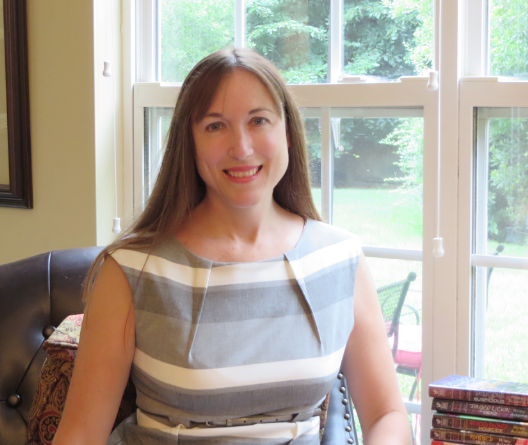
Author photos aren’t just for the backs
of books.  They’re also used to brand our
series and connect different bits of our platform.  They can also connect a pseudonym to our real
name. My photo is one of the few things connecting my Riley Adams books to my
Elizabeth Craig books on both my Goodreads pages and Author Central on
Amazon.  They’re useful for guest posting
on blog tours.
And it’s much better to use our photo
than our book cover for branding.  Our
covers and series change…our faces stay the same.  Sort of. 
:)
I was amazed how many sites I had to
update yesterday with the new photo.  I
updated for two Facebooks, two Goodreads, Twitter, Amazon Author Central (twice
for the two profiles), my website, Google Plus, LinkedIn, my avatar for
Wordpress, and my blog.  And I have the
sneaking suspicion that I’m forgetting something.
I try to update my photo every year,
although last year got away from me.  I
have a particular favorite author and read her once-yearly books when they
release. When she finally updated her author photo after ten years, I
gasped.  What had happened to her?  Then I realized…oh.  It had been ten books since that picture had
changed.  If we can, it’s probably better
to update our photos more frequently than that.
I’ve gone to professional studios twice
before for headshots and I just haven’t been as happy with the results. The
fault lies squarely on my shoulders.  I
completely understand that professionals are better for a variety of different
reasons…but I tend to stiffen up and produce extremely unnatural-looking
expressions.  The last time I went to a
studio, the photographer told me in frustration that she’d rather work with the
screaming toddler down the hall than me—that I needed to learn to relax.
This is why I’m now using my daughter to
take my headshots. :) My publishers haven’t seemed to notice a difference in the quality of the photo.  Newly-recovered
from her tonsillectomy, and bored because she’s not doing normal activities
yet, my daughter took photos of me yesterday to update my images on my sites. I will smile for my daughter.  She’s even signed legal releases for Penguin
so that her picture of me can go in the backs of my books.  The point is that I look more relaxed. I definitely looked stressed in some of my studio pictures.
If you do go to a studio, you need to
make sure that they will release the rights to the photo to you.  Most of them do…there are only a couple of
commercial chains that I’ve heard aren’t good about it.  They’ll usually recommend wearing a solid
color (I frequently ignore this advice), and not to wear very light colors if
you’re fair.
The studio drove me a little batty
because they wanted me to strike a variety of poses—and I knew my publisher
didn’t want that.  The publishers I’ve
worked with have asked for headshots—not full-length photos—and they don’t want
you looking off to the side or cradling your head in your hand or doing
anything that looks particularly artsy. 
You only have to pay for the poses you want, but I felt as though I were
wasting my time with everything but headshots at the studio.
If you do
go to a studio, though, be sure to take more than one outfit with you.  They let you change during the shoot.  In fact, they’re delighted to let you change
because it means you may buy several different portraits (since you’re in
several different outfits, it appears that you’ve had more than one shoot.)
Midnight Ink, as I recall, had a whole
page of author photo instructions.  From
what I remember of Penguin’s instructions, it was mainly just that they needed
a headshot and the specific resolution they needed to have a clear black and
white picture on the inside back cover of the mass market paperbacks. But
you’ll want to make sure that you know your publisher’s requirements before you
get your photo taken.
Have you updated your photo lately?  Any tips that I’ve forgotten?

7 Secrets to Loving Book Promotion (Even If You’re an Introvert)

by  Toni Tesori,
@Duolit
Do you consider
yourself an introvert?
If so, you’re
definitely not alone. Over
eighty percent
of writers (myself included!) belong to that group. In the
world at large, however, we’re outnumbered three-to-one by our extroverted
brethren. 
When it comes to
writing, this works out perfectly. Crafting your story is, after all, a
solitary task. Lots of time alone to think, plan, get creative – all things we
introverts excel at!
But what the task
that comes after you type that final sentence? What happens when the time comes
(shudder) to promote your work?

I can see your recoil through the screen!
I completely
understand your hesitation. The vast majority of marketing advice seems to be
written for the more extroverted among us, those who don’t mind sharing their
work and expounding on its virtues.
I don’t know about
you, but that concept makes me feel a little bit queasy. I’ll never feel
comfortable with the “here’s my awesome book, check it out!” mindset.
I’m willing to bet
that you feel the same way.
And that’s a big problem.
Because, when you
start out with a negative perception of book promotion, you’ll have a hard time
forcing yourself to work at it. And if you don’t promote your work at all, the
odds of your having the writing career of your dreams are (sadly) slim to none.
Luckily for us
introverts, there is a way we can promote our work with confidence AND actually
have a little bit of (*gasp*) fun at the same time!
Sounds pretty good,
huh? 
Icky Feeling, Begone!
Using the
self-promotion secrets I outline below, you’ll build a book marketing habit you
can stick with, all while working with (instead of against) your introverted
nature.
Ready to get
started?
Secret #1: Change Your Marketing Definition
Before we can get
into real promotional tactics, we must first be on the same page about what
book marketing really is. If you’re anything like me, the word “marketing”
brings to mind either (1) sleazy used car salesman or (2) manipulative Mad
Men-esque advertising execs. Neither one a positive image, right?
Just for a moment,
erase those sketchy tactics and flashy hype out from your mind. Let’s redefine
what self-promotion really means. 
When you promote
your book, all you’re doing is sharing your work with folks who will
(hopefully!) love it. That’s it! No coercion, hype or pressure required. 
Thinking of it that
way takes much of the “scary” out of book marketing, doesn’t it?
Secret #2: See Your Readers as People
Trying to figure out
how to reach a nameless, faceless blob of 18-34 year-old women (or whoever
makes up your target market) can be, at the very least, a bit
overwhelming. 
How do you what
appeals to them? How do you even find them? The task feels so insurmountable
that  turning to those “me me me!” self-promotion tactics seems your only
option.
Luckily, your
results can be just as effective when, instead of trying to figure out a huge
segment of readers, you narrow your focus to individual members of your target
market. A great way to do this is by creating
profiles of individual readers
, almost like characters in your book.
Then, when you try
to figure out how to reach your readers, you can have a mental conversation
with a single reader, which is way easier than trying to figure out thousands
at once!
Secret #3: Slow Down
While I know you’re
eager to see your sales start climbing as soon as possible, don’t let that
panic make you rush into uncomfortable book marketing territory. 
Instead, slow
down. 
Build up your
comfort level with marketing one day at a time.
Focus on a single
task (such as building a mailing list or creating an author blog) for a bit
and, only when you feel comfortable, move onto the next.
Book promotion isn’t
a race. There are (and will be) many winners. By slowing down, you build your
fanbase naturally and prevent burnout. Which is important because…
Secret #4: Be Consistent
When it comes to
building your readership, consistency is far more important than
intensity. 
Far too often,
authors feel the need to take on the gamut of book promotion possibilities at
once; that if they can’t build a website, Facebook fan page, GoodReads page,
mailing list and Twitter following all at the same time, they are doomed to
certain failure.
As a result, they
feel obligated to spend hours every single day working on book marketing
(because how else would you ever be able to fit all of that stuff in?)
It’s no wonder so
many of us end up suffering from book promotion burnout!
I hereby give you
permission to stop that madness. Just slowing down and focusing your efforts
will get you to the same end result, so will being consistent.
I’d much rather you
find a promotion schedule you can stick with for the long term (even if it’s
only 15 or 30 minutes at a time, a few days a week) than throw yourself into
something unsustainable.
If you’re wondering
how you can get anything done in such short bursts, check out my Bowflex Method (silly name, but a popular
post)!
Secret #5: Find Your Motivation
Love her or hate
her, fitness celebrity Jillian
Michaels
certainly is popular here in America, and she has this piece of
advice that I absolutely love: “Find your Why. Because when you have a
significant Why, you can tolerate any How.”
I know she’s not the
first person to come up with this concept, but I think it’s a really important
point for authors as well. 
Ask yourself: Why
are you publishing your work? Why are you building your fanbase? What ideal
outcome do you want to achieve?
With the right
motivation, book promotion becomes just another step in the writing process,
moving you toward the success you desire.
Secret #6: Step Back and Observe
Book promotion feels
very action-oriented, but for us introverts, it’s important to have time to
chill out. To reflect. To recharge.
Even when you need
to step back from marketing, you can still make that time away useful. 
Use the time to
reflect on the promotional tactics you’ve been working on and make some
observations: what’s working? What isn’t? How much
progress have you made?
As an added bonus,
seeing how far you’ve come is another great motivator!
The Final Secret: Don’t Take it Too Seriously
While everything
I’ve said above is solid advice, this might just be the best of all: don’t take
this whole book marketing thing too
seriously.
I won’t argue that
promotion is extremely important (I love me some book marketing, y’all), but
it’s also important to see it for what it really is: fun!
Book marketing is a
celebration of the finished product you spent months, years, decades of your
life creating. You’re connecting with people who will fall in love with the
story you created, the characters you dreamed up, the worlds you’ve described.
What could be more fun than that?
Talk Back
Do you consider
yourself an introvert? Does the idea of book promotion give you the
heebie-jeebies? Did any of the advice above make you excited to build your
fanbase? Let’s chat in the comments!
Toni Tesori is one half of Duolit, two gals who help passionate fiction authors sell
more books by building their crazy-dedicated fanbase. If you’re ready to stop
dreading and start loving the process of book promotion, check out their
FREE Weekend Book Marketing
Makeover
, a guided workbook that jumpstarts
your fanbase-building efforts in just two days!

Chalk One Up for Outlining

by Elizabeth S. Craig, @elizabethscraig
I’m one of those writers who is an everyday kind of writer.  Creating habits isn’t easy for me—once I’ve
formed one, I have to repeat it every single day to keep it. 
And writing is like using a muscle…I’ve found
my writing gets flabby if it’s not regularly exercised. I make the time. It’s
way too hard for me to pick up a train of thought, the voice, that story rhythm
if I don’t write daily. It’s tough to get back into the story.
 I’ve squeezed writing into completely
impossible days.  I write at 5 a.m.  I write in carpool lines. I write in doctor’s
office waiting rooms. I come up with dialogue while doing yard work. I’ve written while eating lunch.  I’ve sacrificed sleep to write. I’ve written
while traveling. I always make my deadlines. Whatever I need to do to hit those 3.5 pages a day, I’ll do it. If life goes to hell, I’m flexible–I’ll write when it’s not my favorite time of the day.
But sometimes, you can’t write. I’ve been fortunate not to have
many of those days. If I can’t write, I’ve likely been stricken with some
ghastly virus. Even then, I’ve frequently been able to mull over my story,
think up dialogue, or add to character description.
The last week, though, I really haven’t been able to write.  My daughter had her tonsils out and
unfortunately the recovery didn’t go well. She’s fine now, but there was a
point where we thought we’d have to check her into the hospital.  We Craigs do illness in a spectacular fashion.
:)  With an ailing child and
mentally drained… I found it impossible to write. I could write blog posts or
emails with the nervous energy I felt while I hung out in the room with my
daughter. But creative writing wasn’t possible.
A couple of days ago, I finally opened my
manuscript on Word again. Usually, this would be a tough assignment with my
head out of the story for so long. 
Instead, I looked at my outline, found the point where I’d left off, and
picked right back up with the book again. 
No problem.
No problem at all.  It was as if I’d
only left off writing a few hours before.
I had a complete plan.  The outline said,
“Here’s what you write today.” No questions asked or needed.
It annoys me that outlining is working so
well for me.  I despise outlining and I
hate following outlines.  But I can’t
argue with the success I’ve had so far with it. 
So…if you have an erratic life where it’s
very, very tough to fit your writing in on a regular basis, I really have to
reluctantly recommend outlining. It seems to work well in those circumstances.
Other things you can do with your story
if you have no time to write (and you seriously don’t want to outline):
List title ideas.
Come up with character profiles or
background.
Brainstorm character arc and growth for
the course of the book
List names of characters, names of
settings.
Lists of things that puts you more in
touch with your character’s personality: 5 things your character is afraid of,
5 things your character wants, 5 types of neighbors your character would hate
to move in next door.
Since writing description is drudgery for
me, I’ll sometimes sketch out description (for characters and setting) and
layer them in later.
Brainstorm for subplots.
Brainstorm for endings.
So there are non-outlining-related
methods of moving forward with your story on no-good, really bad days.  But…and I wince as I write this…when it
comes to reacquainting yourself with a cold story…
outlining appears to work better.
Scroll to top