5 Things About Book Publishing I Wish I Knew Then

 Guest Post by Deborah Sharp


First, I must
recognize Mystery Writing is Murder as the fantastic resource it is for me, and
for countless others. Much thanks to Elizabeth for her fantastic blog, and for
inviting me to guest post today.  
This month marks the
publication of the
fifth book in my Mace Bauer Mystery Series. It seems a good time to pause
to look back at what I didn’t know when I started out.  Here are 5 Things About Book Publishing I Wish I Knew Then:
 

1. Writing your first book isn’t the hard part.
The other stuff —
getting it published, promoting it, learning the ins and outs of marketing when
your entire experience in sales was peddling Girl Scout cookies in the fifth
grade — that’s the hard part. And if you’re doing a series, like me, you’ll also
be writing another book during the learning curve. Start learning about the
business side of being a writer before you get published. 
2. Your readers are not only drawn TO your setting,
they’re drawn FROM your setting. 
Give this some
thought. Had I done so at the beginning, I might not have set my first book,
and hence my series, in a region of Florida that has more cattle than people.
Cows, in case you didn’t know, do not buy books.  
3. Publishers
want what they want when they want it. 
When I began working
on my switch from journalism to fiction-writing in 2004, ebooks weren’t even a
gleam in Amazon’s eye
. I went the traditional publishing route. If you do the
same, you’ll probably wait months to hear from a publisher you’ve pitched. You
may not ever hear back at all. But if you do, and turn in the finished version
of your manuscript, months may pass without a word. Then, suddenly, they’ll get
back to you with a cover design, or a request for changes, and it’ll be, SNAP
TO IT!  As a former news reporter, I viewed that distant deadline as a
long, luxurious stretch of time. Now I know how time accelerates quickly toward
the end of the process. Understand that publishers do not like to be kept
waiting. 
4. When you
decide to don something “fun” or “quirky” because it’s
something your character might wear, readers will expect to see you in it. ALL
THE TIME.
 
”Where’s Mama’s
veil?” 
I still hear that
question, three years after I dressed in hideously tacky wedding attire to
promote Book No. 3, ”Mama Gets Hitched.”  Not only did I get a permanent
neck crick from plopping five pounds of pearls, ribbons, and tulle on my head,
the wedding hat became a hard act to follow. Sure, a feather boa and diva
sunglasses worked for the movie theme of No. 4, ”Mama Sees Stars.” But what
am I supposed to do for No. 5,  ”Mama
Gets Trashed
?” That book opens in the city dump. Must I dress in a Hefty
bag, and dip up punch from a trash can?  Be careful with costumes!
5. The quality
of your first book is key to the success of your series.
Fortunately, I
had lots of time — and a fantastic critique group — to polish and improve my
first title.  I only realized later most series readers start at No. 1, no
matter which book the author may be promoting. That one establishes the characters
and the foundation for everything that follows. If No. 1 is a sloppy rush job,
readers won’t pick up No. 2.  All aspiring writers hear this advice.
Listen, because it’s absolutely true: Write the best book you can, right out of
the gate.
One lesson I’m
struggling with now is how real life can intrude on our writing lives. 
I write a funny
mystery series. When sad things happen, it’s hard to be funny. Within the span
of a year, my mother’s failing health and dementia forced me to place her in
assisted living. I had to sell the house where Mom — my muse! — lived for 65
years; the house where I was raised. Meanwhile, my husband’s mother was dying
of cancer. We were at her bedside when she passed away. Nothing funny about any
of that.
I decided to take a
break from writing the series. My editor at Midnight Ink has been kind enough
to leave the door open should Mace, Mama, and the gang from Himmarshee, Fla., want to
come back. I’ve had some time lately to slow down, so I’ve been thinking of
things I wish I knew back when.  
How about you? What
lessons have you learned along the way that you wish you’d known at the start?
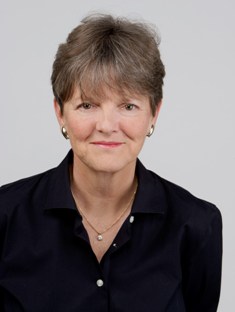
Florida native Deborah Sharp
is the author of the funny, southern-flavored
Mace Bauer Mysteries, featuring Mace’s wacky mama. She
lives with husband Kerry Sanders in Fort
Lauderdale, where she spends her time chasing
the iguanas out of her hibiscus.

Primary Sources

By Elizabeth S. Craig, @elizabethscraig

Last December I was at a Christmas
drop-in and was hanging out near the back of the room…my favorite haunt at
social events.  This spot is even better
if there is wine near the back of the room, which was the case for this party.
I’m sure I’m the despair of many a poor
hostess, but this one was doing a great job trying to engage me.  “Let me introduce you
to my friend,” she said.  She brought me over to a
gentleman who was also standing in the back of a room, this one the
kitchen.  “Elizabeth is a mystery
writer,” she said with a smile.  Of
course I winced at being outed as a writer—you just never know how that’s going
to go. And the hostess continued, “Elizabeth, my friend is a botanist.”
I lit up. 
The party flew by and I wasn’t the first person to leave this
time—perhaps not even the fourth or fifth person. I’d immediately gasped as if
I’d met a rock star and said, “So you must know all about poisons!”   He did. 
The poor man.
It was a good thing that no one else
found the botanist as fascinating as I did. 
I completely monopolized him as I avidly picked his brain on North
Carolina poisons, emailing myself the information on my phone.  My husband gave up trying to be part of our
conversation as I recorded poison after poison in complete delight. It was my
most favorite party ever. And—I got lots of information on Destroying Angel, a
type of mushroom that I’m using in my next book.
This made me realize that, introverted as
I am and as fond of computer research as I am—sometimes nothing beats primary
sources.  The botanist loved talking about poisons and had ideas for
many different types.  I could
immediately learn if they’d work for my story by asking how long before they
took effect, if they had a bitter taste that would prevent the victim from
continuing to eat/drink the item, etc.
I’ve also used primary sources to fill in
bits of research that would take forever for me to research online.  Last year, I asked a successful barbeque
competitor how teams were set up for the Memphis in May barbeque competition
and what it took to win.  I’ve asked cops
police procedural questions, particularly how they relate to small towns.  And I’ve asked a former participant in beauty
contests exactly how one contestant could take revenge on another and ruin
their chances…and if these contests got that competitive (they can and do,
apparently).
Aside from the botanist, I’m usually
fairly organized when I contact a primary source.  If I’m calling, I immediately explain that
I’m a writer (especially when I ask police officers murder-related questions!),
ask if there’s a good time to call them back or if they’re currently available,
and always make sure I have my list of questions in front of me.  Email sometimes is a better way to
communicate with sources because then you’ve got it all in writing.  I’m not fond of the phone, but sometimes
that’s preferred by the person I’m interviewing.  And, as much as I dislike it, I probably do
get the information faster because I can ask follow-up questions right then
instead of having to email them back.
Something else I’ve found on these
occasions when I’ve talked with a primary source—I get ideas and information to
work with on other projects.  Plus, it gives me extra inspiration to talk
with someone who really knows the topic I’m asking them about and who’s excited
about it.
I credit my source in my acknowledgments
and send them a signed book when it releases.
Have you ever used primary sources for
researching a book? 

Twitterific

By Elizabeth S. Craig, @elizabethscraig
Twitterific
links are fed into the
Writer’s
Knowledge Base search engine
(developed by
writer and software engineer Mike Fleming) which has over 23,000 free articles
on writing related topics. It’s the search engine for writers.
Sign up for our free newsletter for bimonthly writing tips and interviews with top
contributors to the WKB or like us on
Facebook
Mike Fleming and writing coach James Scott Bell are
offering an online, interactive, writing program to help make your next novel
great. It’s called “Knockout Novel” and you can learn more about it
at
Knockout Novel.com
A writer’s
experiences with audiobooks (ACX) for her self-pubbed works: http://dld.bz/cPcjq and http://dld.bz/cPcjr @authorterryo
Conflicting story goals: http://dld.bz/cPcrB @JulieMusil

How to Write a Self-Help Book: http://dld.bz/cPdd8 @CormackCarr
Is the Dust-Up Over Kobo’s Devices Fair? http://dld.bz/cPeNJ @Porter_Anderson @JDGsaid
@DennisAbrams2
Authors who were able to successfully
cross over to writing mysteries: http://dld.bz/cPhvN
@mkinberg
Agatha Christie sleuth Poirot to return
in new novel: http://dld.bz/cPhM3 @timesmarts
A community for screenwriters offering
resources for screenwriters and fiction writers in other media: http://dld.bz/cPjwJ @theBlackBoard
A free directory of cover designers,
formatters, freelance editors, and more: http://bit.ly/nolbXq
7 Habits of Highly Successful Writers: http://dld.bz/cNTnx @paperblanks
How to Become a Novelist in Your Second
Career: http://dld.bz/cNTp3 @NancyCollamer
@RLTVLive
How to Finish Your Novel (While Life Goes
On): http://dld.bz/cNTtf @aliventures
Clothing Your Characters: http://dld.bz/cNTtn @writerunboxed
The Hidden Psychological Benefits of a
Standing Desk: http://dld.bz/cNTty
@lifehacker
An Important Technique for Adding
Momentum to a Slow Plot: http://dld.bz/cNTt3
@jodyhedlund
Failure and Writing: http://dld.bz/cNTtB @mabelsblog
Top 5 Misunderstood Monsters in
Literature: http://dld.bz/cNTtC @paperblanks
7 Reasons Every Writer Needs to Be on
Twitter: http://dld.bz/cNTtJ @KristenLambTX
Writing in Bed: The Peculiar Perks of
Being Ill: http://dld.bz/cNT4X @maryawasmuth
Brain Power: What Makes A Superhero? http://dld.bz/cNT5e @tordotcom
One Book, One Year: In Praise of Reading
Slowly: http://dld.bz/cNT5m @WallaceYovetich
Flash Memoir: http://dld.bz/cNT5x
The New Face of Book Pirates:
Plagiarists: http://dld.bz/cNT55 @jamigold
3 Threats to Effective Time Blocking and
How To Solve Them: http://dld.bz/cNT5G
@ProductiveSd
Standard Pages for A Fiction Website: http://dld.bz/cNTWZ @authormedia
4 simple tips to know before you write
your first book: http://dld.bz/cNTXp
@emilypfreeman
Grid Lets You Organize Your Ideas
Visually: http://dld.bz/cNTX3 @mediabistro
10 Ways to Know You’ve Found Your Voice: http://dld.bz/cNTX9
Using your craft to enact revenge: http://dld.bz/cNTXU @AKellyAnderson @pshares
5 Things You Shouldn’t Say to Authors: http://dld.bz/cNTY4 @brandontietz
About “multiple” or
“simultaneous” submissions: http://dld.bz/cNTYD
@DaphneUn
Positives & Negatives of Getting an
MFA (or BFA): http://dld.bz/cNV9V
@jchenwriter
7 Ways to Build Your Writing Confidence: http://dld.bz/cNVAA @KMWeiland
Journalists declare war…on ellipses: http://dld.bz/cNVAH @Poynter
Thoughts On Travel Writing: http://dld.bz/cNVAS @jones_alden @cogwbur
Taking A Break From Your Platform: http://dld.bz/cNVAV @danblank
The e.e. cummings Poem That Turned a
Surly Teenager Into a Grown-Up Author:  http://dld.bz/cNVBh @AlexanderMaksik
“The bullies of
Goodreads”: http://dld.bz/cPmMC
@NathanBransford @Porter_Anderson
A writer hears from residents of a town
she thought she’d made up: http://dld.bz/cNVB4
@nailyournovel
10 Techniques for Greater Creativity in
Writing: http://dld.bz/cNVJP @inspiredmag
Will Self’s rules for writers: http://dld.bz/cNVKe @guardianbooks @wself
Lost for words: The curse of writer’s
block: http://dld.bz/cNVKG
Is theater elitist? Theater blogs debate
whether ‘experimental’ theatre turns off ‘regular’ people: http://dld.bz/cNVMc
You’re Where You Are Because of Who You
Are (but that ain’t necessarily a bad thing): http://dld.bz/cNVMw
The Mother of All Query Letters: http://dld.bz/cNVMR @speechwriterguy
Rewrite Your Way to Greatness: http://dld.bz/cNXVE @alering
The Tao of the three drafts: http://dld.bz/cNXVK
Romance, gender, and the measure of a
‘real book’: http://dld.bz/cNXVM @RomanceSoc
“My WiP is Making Me Fat”
(& Other Writerly Truths): http://dld.bz/cNXVN
@katyupperman
Series–do they help an author sell more
books? http://dld.bz/cNXVR @rebeccaberto
How not to be eaten by sharks as a
writer: http://dld.bz/cNXWh @SusanKayeQuinn
When Not to Give an Interesting Character
a POV: http://dld.bz/cNXWn @kmweiland
How to Write Description Through
Character: http://dld.bz/cNXWp @ava_jae
The Reading Checklist for Authors: http://dld.bz/cNXWy @YAmuses
Top 7 Reasons You Should Give Your Book
Away For Free: http://dld.bz/cNXWB
@ADDerWORLD @joebunting
For The Writers: It’s Just Books: http://dld.bz/cNXWC @LASbauer
Writing for today’s ADD Audience: http://dld.bz/cNXWJ
On overusing exclamation points: http://dld.bz/cNXWM @GraemeIng
Tips for keeping your reader awake: http://dld.bz/cNXWP @KarenKellyBoyce
9 Reasons to Keep A Reading Journal: http://dld.bz/cN5FU @DollyGarland
8 Practical Tips for a Better
Relationship with a Writer: http://dld.bz/cN7ZM
@_mohul
This Is Your Writing On Drugs: http://dld.bz/cNReK @kenyonreview
A Revision Check List: http://dld.bz/cNYEW @WriterlyTweets
A Study in Sherlock–Finding a Character
Through Deduction: http://dld.bz/cNYFa
@YAmuses @KALongshore
Screenwriting: 7 Ways Film Training Can
Ruin Your Career: http://dld.bz/cNYFk
@Raindance @fredericabyron
How Not To Begin A Story: http://dld.bz/cNYFC @woodwardkaren
Building a better Batcave (comfortable
writing environment): http://dld.bz/cNYFQ
@eThrillerWriter
30 Things to Tell A Book Snob: http://dld.bz/cNYFU @matthaig1
Character building tips: http://dld.bz/cNYFV @eThrillerWriter
Three Dimensional Characters: http://dld.bz/cNYFW @TaliaVance @YAmuses
10 Dead Simple Ways To Make Readers Love
Your Characters: http://dld.bz/cNYGf
@ScreenwritingST @scriptgods
The Shy Writer’s Cocktail Party Survival
Guide: http://dld.bz/cNZ8Z @AnneGBrown
“750 Words” Helps You Meet
Daily Writing Goals: http://dld.bz/cNZ9q
@jasonboog
Top Free & Paid Services to Promote
Your Kindle Books: http://dld.bz/cNZ9w
Inspiration is a Fickle Mistress: How to
write sustainably: http://dld.bz/cNZ9W
@ReadDanLevinson
The 7 Personalities Every Successful Film
Crowdfunder Has: http://dld.bz/cNZAg
@elliot_grove @raindance
Searching for Your Character’s Root Need:
http://dld.bz/cNZAm @YAMuses @rossibooks
Why it’s difficult to get into the
manga/comic business: http://dld.bz/cNZAs
@DavidCampitiGHG
Editing tips: http://dld.bz/cNZAv
For coffee-addicted writers: What
Caffeine Really Does to Your Brain: http://dld.bz/cNZAy
@PsyBlog
Use Google as a Timer with a Simple
Search Command: http://dld.bz/cNZAD @kingthor
3 Rules to Write World-Changing Memoir: http://dld.bz/cNZAH @jeffgoins
3 conversations about writing: http://dld.bz/cNZAX @afesmith
Authors on the Importance of Writing the
Final Chapter First: http://dld.bz/cParP
@flavorwire
Why We Hate & Love The Cheaters Who
Lie: http://dld.bz/cParT
1 simple secret for success for a writer:
http://dld.bz/cPase @ChadRAllen
6 reasons why you need to write more
books: http://dld.bz/cPash @Brooklyn__Ann
Writers and the
advice culture: http://dld.bz/cPnCs
@jaelmchenry @Porter_Anderson @hughhowey
How to Get Your Screenplay Read Without
Asking: http://dld.bz/cPasv @jeannevb
@scriptmag
Letting your characters go: http://dld.bz/cPas8 @writerunboxed
What is means when you hear your
“tone is wrong”: http://dld.bz/cPasM
@io9
10 Traits of a Strong Antagonist: http://dld.bz/cPasR @janice_hardy
Promoting a Poetry Collection: http://dld.bz/cPatm @robertleebrewer
10 OneNote Features that Will Rock Your
Writing World: http://dld.bz/cPatt
@JennyHansenCA
Is Perfectionism Killing Your Career? http://dld.bz/cPa2V @KristenLambTX
50 Productivity Tricks: http://dld.bz/cPa2Z @lifehackorg
Gender and the Gothic Space: http://dld.bz/cPa3E @GothImagination
The Millennial Method Of Publishing?
Do-It-Yourself: http://dld.bz/cPa3F
@ShereneJoseph @Forbes
Want to Make Your Writing Life Joyful?
Stop Counting: http://dld.bz/cPa3G
Dreams and Bestsellers: http://dld.bz/cPa3K @kristinerusch
Contrasting personality traits: http://dld.bz/cPbDn @glencstrathy
Recording things: Snippets of dialogue: http://dld.bz/cPbDq @Le_Shack
MYTH #1–There is only 1 right way to do
anything in publishing: http://dld.bz/cPbD2
@deanwesleysmith
Regulating Our Emotions To Be More
Creative: http://dld.bz/cPbDD @DouglasEby
@PsychCentral
Commonly Confused Words: http://dld.bz/cPbDG @janetboyer
Physical Attributes Entry: Underweight: http://dld.bz/cPbDK @beccapuglisi
Best Online Backup Services: http://dld.bz/cPbDZ @lifehacker
Audience Development for Writers: Your
Life-Long Career Investment: http://dld.bz/cPbEd
@janefriedman
3 Ways Marketing Fiction Differs from
Marketing Nonfiction: http://dld.bz/cPbEe
@thecreativepenn
Authors and Reading Communities: http://dld.bz/cPbEn @author_sullivan
“Everything I Know About Writing Sci
Fi I Learned from Star Trek”: http://dld.bz/cPbEH
@PiperBayard
5 Ways To Get The Most Out Of Your
Editing Experience: http://dld.bz/cPbFm
@BookAnalyst
The Writer’s Toolbox: Must-Haves for
Today’s Author, with Links to Free Downloads: http://dld.bz/cPbFw
@ruthharrisbooks
The 5-Step Mission Statement (An Author
Essential): http://dld.bz/cPbFz @duolit
A Full-time Indie Author Answers Your
Questions: http://dld.bz/cPbF4 @goblinwriter
Is it ever too late to write an outline? http://dld.bz/cPbGc @nailyournovel
Is Your Prose Too Complex? http://dld.bz/cPbGe @KMWeiland
The issue of novel length: http://dld.bz/cPbGU @lawrence_wray
How to Edit Your Own Book: Tips from
Authors on the Revision Process: http://dld.bz/cPbHc
@chrisrobley
How A Great Twitter Bio Can Net You More
Followers…and Sales: http://dld.bz/cPbHj
@badredheadmedia
Paying to promote your book? Read this: http://dld.bz/cPbRb
The Art of Writing Simply: http://dld.bz/cPbRh @Uberflip
7 Rules for Writing Short Films: http://dld.bz/cPbSc @raindance
The fine art of writing small: http://dld.bz/cPbSv
On ebook price points: http://dld.bz/cPbS3 @dearauthor
Slate Gets It Wrong – The Real Reason
Hollywood Makes Bad Movies: http://dld.bz/cPbS9
@goodinaroom
3 steps to selling more of your
nonfiction books: http://dld.bz/cPbSH
@MrBuzzFactor
71 Ways to Promote and Market Your Book: http://dld.bz/cPbSQ @writerplatform
Character Motivation and Desire Lines: http://dld.bz/cPbSX
40 Inspiring Workspaces Of The Famously
Creative: http://dld.bz/cPbTv @BuzzFeedDIY
Book Marketing: The Long Term Launch: http://dld.bz/cPbTz @CormackCarr
ISBN Essentials: An FAQ for eBook
Publishers: http://dld.bz/cPbT9 @Wogahn
Be Smart not Taken: Red Flags to Heed
When Seeking Self-Publishing Providers: http://dld.bz/cPbTQ
@shewritesdotcom
The Daily Routines of 12 Famous Writers
(And How They Can Help You Succeed): http://dld.bz/cPbUm
@james_clear
7 Deadly Sins of Worldbuilding: http://dld.bz/cPbUs @io9
Spanish Gothic Horror: http://dld.bz/cPbU4 @GothImagination
“Wait, Video Games Have
Writers?” http://dld.bz/cPbUC
@HiJayPosey
What if video games didn’t exist… and
we all read books instead: http://dld.bz/cPbUK
@CatGoneCrazy
Your Music Publishing Cheat Sheet: http://dld.bz/cPea8 @eshac
Tips for approaching an editor: http://dld.bz/cPeaR
Writer’s Block: On The Persistence of
Demons: http://dld.bz/cPeaZ @BTMargins
Must We Like the Characters? http://dld.bz/cPeba @junglereds
Top 12 Quotes On Writing Memoirs: http://dld.bz/cPeRt @Writers_Write
10 tips to help you avoid telling
writing: http://dld.bz/cPeR8 @Scribendi_Inc
Writing People of Color in NA Fiction: http://dld.bz/cPeSX @NAAlleyBlog
How to Develop Good Writing Habits: http://dld.bz/cPeTj @cloutpower

Helpful Links for Writers

By Elizabeth S. Craig, @elizabethscraig

I wanted to share some sites that I’ve
found really helpful lately.  I’m always
looking for ways to save time using apps and, so frequently, I seem to end up
with exactly the opposite—sites that take too long to set up, are unwieldy, or
that are total time sucks.
But these sites get special recognition
from me today because they’ve helped me out. I’m in favor of anything that
saves me even a few minutes of time. These sites are all free.
I realize I might be the last kid on the
block to find out about this site. But I somehow stumbled into it recently and
it’s been very useful. Useful, as in “I’ve made more money in sales from
something that’s free.”  I’m not doing
the premium membership (yes, I’m cheap), but the free membership has had
several cool features that I’ve found helpful.

One is a link that links to a
ton of places to list your free book promo on Kindle.  I’ve never, ever used these. I hear about
Pixel of Ink and these types of sites and I nod that it’s a terrific idea. I
never use them.  This time, I pulled up
my book’s Amazon link, pulled up my website link, pasted my ISBN/ASIN onto a
Notepad doc (this is handy to have around since several sites wanted them), and
I started listing my free book on various sites.  I spent 15 minutes.  I noticed a significant increase in sales in
a short period of time, so I’m assuming these sites had something to do with
it.

There’s also a handy book widget creation
tool. I was pretty impressed.
For
organizing information:
I’ve mentioned
before
that I use the free version of Evernote
to organize information.  It’s sort of
like an online file cabinet with different notebooks inside. You can use it to
store pictures and text, or email files directly to the app. You can also sync
it to your phone if you want access to your files on the go (which I do.
Particularly at the grocery store when I can’t remember the ingredients for the
supper I’m planning.  All my favorite
recipes are on Evernote.
But somehow, I never got the hang of the Evernote web clipper.  I’d installed it once, then forgot it was
there and never used it.  Then I read
this Lifehacker article by Whitson Gordon recently on Evernote (I’ve Been Using Evernote All Wrong. Here’s Why It’s
Actually Amazing
) and how to get better use out of it.  It mentioned the web clipper.  Let’s just say that I’m a fan.  If there’s a writing-related post that’s
helpful, for instance, I just click on the little web clipper icon that’s in my
toolbar and it clips the body of the article, skipping the header, footer,
margins, etc. I can even add notes to the clipping in the pop-up window.  It’s handy and easy.  I’ve got many notebooks in my
Evernote—everything from recipes to settings to writing tips.  What I like most is the way I can search
Evernote easily for exactly what I need.
Curation:
All right, I know this won’t apply to everyone. 
But I think that Prismatic is a very cool site.  If you’re not a content curator, you could
use Prismatic to discover new blogs to follow.
I discovered the site while reading an
article by Steve Young for Social Media Examiner: How
to Find Great Content to Share on Twitter
. 
I’m actually in the position of having tons of content to share on Twitter.  I’m currently following over 2700 blogs in my
Feedly reader. 
But I’ve found that sometimes either I feel like the material I’m seeing
is a little stale—or maybe it’s just that I’m
a little stale after reading through so much content.  When SME recommended Prismatic, I decided to
give it a go.  Through them, I’ve
discovered new blogs to follow…blogs with different points of view and
different types of writing-related content. 
It’s made me a bit more interested in posting links, simply because I’m
looking at new material. This can be a
time suck because there are so many cool blogs to discover…you might want to
set yourself a timer if you head over there.
Time
Management:
And one last word…on the subject of timers,
actually.  I’ve used
Online
Stopwatch
for years (free, of
course), but recently saw an article on Lifehacker (yes, Lifehacker once again)
by
Thorin Klosowski: Use Google as a Timer with a Simple
Search Command
.  Yes, that’s all it takes.  Type in “set timer for 30 minutes”—or however
many minutes—and you’ve got an instant timer. 
Obviously handy for a phone, too.
That’s all for me today.  Have you got any cool sites or apps to share?

Thoughts on Teaser Chapters

By Elizabeth S. Craig, @elizabethscraig

I had a deadline Sunday that I met just
in the nick of time. :)  It was a
deadline for a teaser chapter—the first chapter in my current WIP that will go
into the back of the December Penguin release.
I realized that I treat teaser chapters
differently, depending on the situation. 
I actually sweated a bit over this one, which was probably why I ran so
close to deadline.  That’s because my
editor asked for this chapter (with a September 1 deadline) before I actually started writing the book or
even the outline.  That means that I
wrote the chapter with an eye for marketing.
I was particularly conscious of the
opening hook and the chapter ending. Ordinarily…I really don’t think too much
about them.  I always open with dialogue,
even though I keep reading that this is a “bad thing.” It’s worked out all
right for me.
It’s certainly easier on me when I get the request for a teaser chapter and I can lift the chapter out of an
already-completed first draft.
My publisher tells me that they want the
first chapter “fairly firm”—in other words, they don’t want any major
changes.  Minor word changes would be all
right.  Changing the characters’
names—not so great.
My editor will always say that if I don’t
have a solid first chapter for the teaser that they’ll use the first chapter
for the first book in the series.  My gut
tells me that’s a less-successful marketing technique so I always make sure
that I’ve got the first chapter for the new book ready (even if I’ve not
written the rest of it).
On the other hand—it occurred to me that
cliffhangers in trad-published teasers aren’t necessarily a great thing. Yes, it can pique
reader interest in the next book.  But,
if the next book isn’t being released for nearly a year (as in this case), then
it might prompt some reader frustration, too.
But if you’re self-publishing, this might be exactly the effect you’re looking
for.  Maybe you’ve even got the next
release in your series ready to go.  Perhaps these are even backlist books. In
that case, a cliffhanger of a teaser chapter would be smart marketing. 
And then…part of me wonders if teaser
chapters make a huge difference to readers at all. For me, I’m already committed to
reading the next book in a series, if I’ve enjoyed the series so far.  What I have
done, as a reader, is buy someone else’s
book when a book has been cross-promoted by a publisher with a teaser
chapter.  This makes me think the
self-publishing practice of trading teasers with other authors is a
smart move.
As a writer, do you use teaser
chapters?  As a reader, do they have an
impact on your buying habits?
Scroll to top