On Translation

 Translator Julie Rose has translated some of France’s most highly prized writers, both classical and contemporary and is best known for her critically acclaimed translation of Victor Hugo’s masterpiece, Les Misérables. Rose has always been an avid reader of crime fiction. She just translated The Greenland Breach by Bernard Besson, a cli-fi spy novel recently published in English by Le French Book.

How did you get started in translation?

For me it started when I moved to France in the 1980s, after graduating from Sydney University and scoring a doctoral scholarship from the French government. The scholarship wouldn’t have kept a gal in kirs royaux, should it have been required to, so I did what everyone else did: I taught English to French people in firms all over town and interpreted for visiting delegations of administrators and business people of all stripes.

Interpreting was a baptism of fire and it sharpened my focus. It led to a lot of related translation work, as well as a lot of lovely long lunches.

Literary translators can despise the technical, commercial and legal stuff. I like it. I like having the illusion that I know about the “real world.” And it’s stood me in good stead, particularly with Paul Virilio, France’s great critic of the modern moment who talks a lot about technological innovations and their downsides. And, even more so, with Victor Hugo.

Yes, tell us about Victor Hugo.

Les Misérables has to be the major highlight of my translating career so far. Victor Hugo’s interest in the real world was encyclopedic. He was never content to mention a thing, whether it was man-made, like lace or jet beads or sewerage systems; or whether it was a natural phenomenon. He had to know how it was made or formed and explore all its features in minute detail.

That forensic interest of Hugo’s, combined with his social awareness and spiritual and emotional depth, make his great masterpiece as potent as ever. I loved translating it, but it took three years and was horribly intense. I couldn’t have done it without my very supportive husband and our energetic dog: she and I frolicked over hill and dale every day for hours. That gave me the stamina to keep going – and the love. Les Misérables is all about love… and what happens when it’s missing or corrupted.

Why translate The Greenland Breach?

This is an action-packed thriller. It’s as fast-paced and racy as a manga comic. That’s not a putdown. Besson has an unerringly dramatic sense of structure. He shifts the action constantly from one part of Greenland to another, and from Greenland to Paris and Paris to the ship in the Arctic Ocean and back to France – Le Havre, the Morvan, Normandy. It becomes symphonic, in a military kind of way, as Besson whips up the action and the various times of the action (Paris time, Nuuk time, etc.) into a series of crescendos on all fronts. It’s spellbinding, and exhilarating. But all that swirling movement and the “dirty deeds” that propel it have a point: they stamp this as melodrama. And the thing about melodrama, as G.K. Chesterton once said, is that it’s sensational: the audience’s reward is tears… or, in this case, floods of adrenalin. We are always in the action. That makes us a vital component of the plot.

Did you face any particular challenges translating The Greenland Breach?

The biggest challenge as far as terminology goes, for me, in a way, was the boat. One strand of the action takes place on a ship that has been exploring Greenland’s icecap. I was born and bred in Sydney, Australia, a uniquely beautiful city built around water. Boating’s very big. But I’m a landlubber, or maybe a fish. I like being in the water, not on it. I kept a long list by my keyboard of perfectly banal, but to me mysterious, words like “bulkhead,” “stem,” “forecastle”/ “fo’c’sle,” and even “starboard” and “portside” – always have to think twice before I remember which is which.

The first “adult” book I ever read as a child was a novel by Hammond Innes, set on a ship. The sulfurous, claustrophobic, isolated world of that ship has stayed with me as a locus of foul play and dirty dealing. Besson’s ship is exactly that, and more. Death is always looming, from within and without.

****

A cli-fi spy novel by prizewinning novelist and former top-level French intelligence officer

The Greenland Breach by Bernard Besson is now available. This eco-thriller has environmental catastrophe, geopolitical fallout, freelance spies and Bond-like action. The Arctic ice caps are breaking up. Europe and the East Coast of the United States brace for a tidal wave. Meanwhile, former French intelligence officer John Spencer Larivière, his karate-trained, steamy Eurasian partner Victoire, and their bisexual computer-genius sidekick Luc pick up an ordinary freelance assignment that quickly leads them into the glacial silence of the great north, where a merciless war is being waged for control of discoveries that will change the future of humanity.  Bestselling author Jon Land calls it “a spectacular thriller.” Translated by award-winning Les Misérables translator Julie Rose.


Who Says You Can’t Judge a Book By Its Cover?

 by Rebecca Yount

As a child I had a love affair with book covers.

Wesley Dennis’s artwork that graced Marguerite Henry’s stories drew me in like a magnet attracts metal.

So, too, Arthur Rackham’s illustrated edition of Kenneth Grahame’s The Wind in the Willows.  It was Rackham’s cover that initially attracted me to the book that would become one of the most beloved of my childhood.

To this day, I cherish memories of the “olde fashioned” illustrations from my early edition of Mother Goose.  At times I merely flipped through the pages to revel in the pictures, rather than read the nonsensical verses.

And I surrendered to shameless vapors over Beatrix Potter’s charming illustrations for Peter Rabbit and her other tales.

My point is this: these evocative covers led me to read those books and their successors.  In short, a passion for the cover preceded my love for the story.

A cover can make or break a book.  If it fails to convey the essence of the story, the buyer will move on.  This is especially true for a first-time author: the only thing readers have to go on is your book’s cover.  Does it attract them?  Does it intrigue them?  Does it speak to them?  Does it compel them to flip through the pages, attempting to divine your book’s contents?

Ideally a cover should announce to the prospective reader, “This book is going to rock your world!”

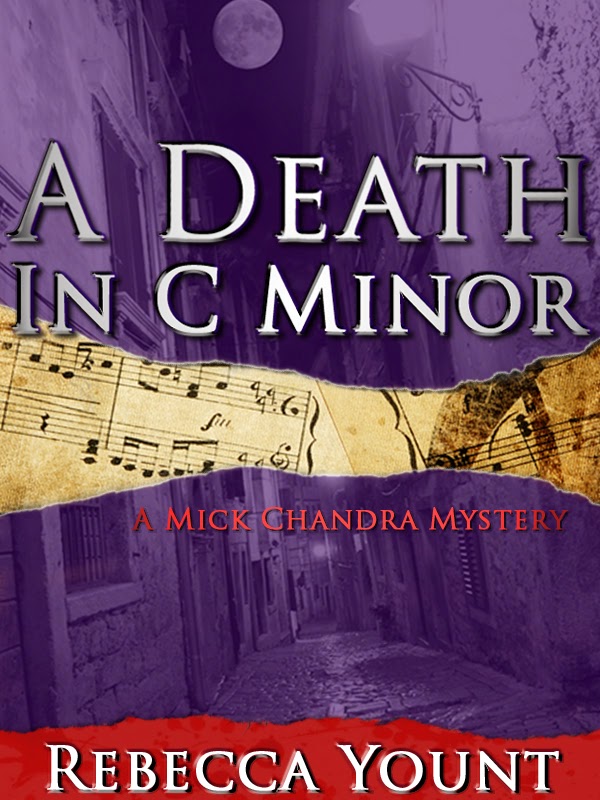
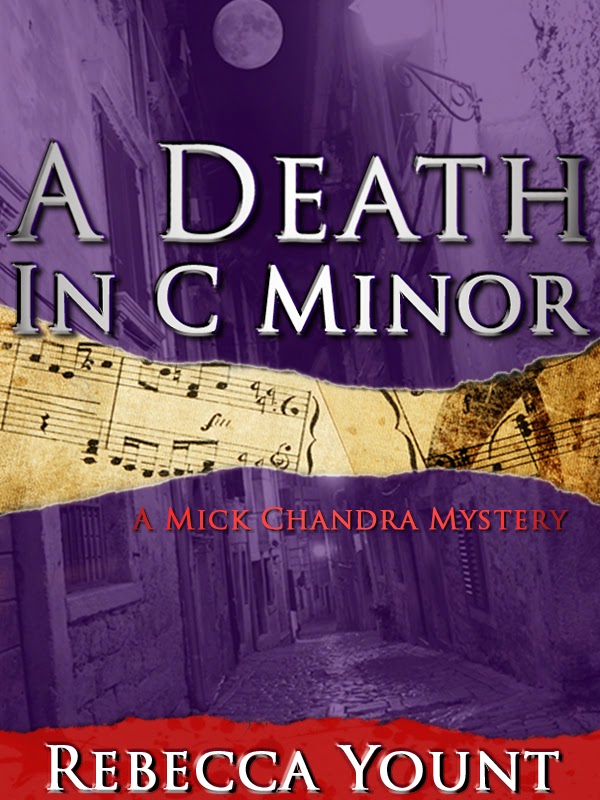
I am a new author, having had my debut crime novel, A Death in C Minor, published as an e-book in the summer of 2012. The following November, my second book in the series, The Erlking, was also published as an e-book. I released the third title, The Ravenhoe Cauldron, on June 30th.

I have been fortunate to work with Sarah Cotur, who manages to divine my thoughts.  Being a graphic designer, Sarah is visual while I am verbal.  While I am garrulous, she is a woman of few words.  However, what Sarah does say matters.

Somehow she and I have managed to override our individual quirks while having fun along the way.

“Designing book covers, particularly electronic, is a relatively new design endeavor for me,” Sarah admits.

“As a designer,” she continues, “I have learned that asking the right questions and listening well is as important as the design skills themselves.  From our first conversation, Rebecca immediately had an idea about how she’d like to visually represent her novel.  I didn’t have to ask too many questions.

“However, it can be difficult to extract exactly the image a client (author) has envisioned….  Even if the design is completely wrong, [designer and author] will be literally ‘on the same page’ and can build upon feedback from that first draft.”

As Sarah infers, our initial effort was further complicated by the book being electronic, rather than hard copy.  Does an e-book cover really matter?  Is rain wet?

Whatever early differences Sarah and I may have had regarding concept, we both knew that both covers had to knock my books out of the park.

Our initial conversation about A Death in C Minor went something like this:

Me: “The story is about a mysterious man who is murdered with his own kitchen cleaver.”

Sarah:  “Hmm.”

Me:  “So could you work up a cover with a bloody cleaver —  perhaps having it chop through the head of a musical note, since the female protagonist is a concert pianist?”

Sarah: “I think you may need an illustrator.”

Me:  “But I want you.”

Sarah:  (Pause). “Okay, I’ll take a crack at it.  ‘Talk to you in a week.”

A week later Sarah e-mailed her draft cover: a bloody cleaver impaling the head of an equally bloody musical note.  She had created exactly what I had asked her to do.

And it was all wrong — which was entirely my fault.

So it was back to the drawing board.

Our second conversation:

Me: “Gee, Sarah, this cover is really gory!”

Sarah:  (Silence).

Me:  “Then again, it’s what I had asked for, isn’t it?”

Sarah:  “Perhaps some background would help.”

Me:  “How about a suggestion of the story’s English rural village in the background? And a reference to a musical score?”

Sarah e-mailed her concept of the background to me: a village in the moonlight with a ripped musical score slicing across the graphics.  It was pure genius!

And so A Death in C Minor is graced with a cover that has received effusive praise.  It evokes the story, reaching out to the reader and announcing, “If you enter this picture and walk with me down that moonlit village path, you’ll be in for the adventure of your life.”

Conceptualizing the covers for the next two titles was easier.  By that time Sarah and I were completely comfortable working together.  As a result, she created two more knock-out designs that have also attracted considerable praise.

So don’t ever delude yourself into thinking that e-book covers don’t matter.  A brilliant one can take the book to places you never imagined.

Is there a Pulitzer Prize for book covers?  A National Book Award cover prize?  Is there something akin to a book cover Academy Award?

If not, there ought to be.


Rebecca Yount’s Mick Chandra series, A Death in C Minor, The Erlking, and The Ravenhoe Cauldron are published in e-book format and are available from all major vendors. Her website is www.rebeccayount.com.


Rebecca Yount’s Mick Chandra series, A Death in C Minor, The Erlking,and The
Ravenhoe Cauldron
are published in e-book format and are available from all major vendors. Her website is www.rebeccayount.com.

Deepening the Mystery

by Paul Anthony Shortt, @PAShortt

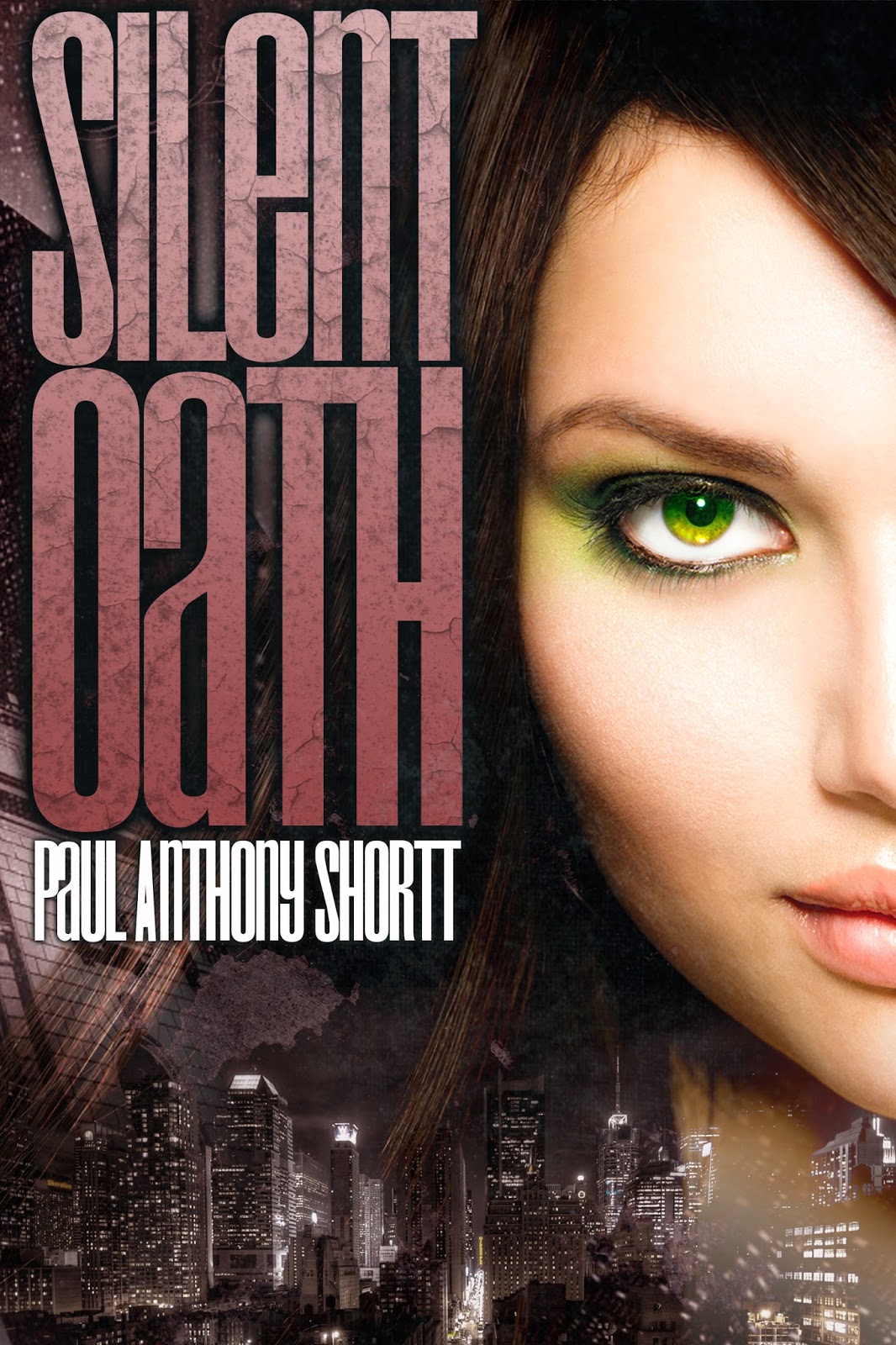
While I’m not a mystery writer, I have enjoyed including mystery elements in Locked Within Silent Oath. Nathan Shepherd started off his journey investigating mysterious deaths and disappearances. His eidetic memory helps him piece together clues and figure out what his enemies are planning.

Many urban fantasy series include elements of detective fiction. It’s common for the protagonist to have a job, or some form of responsibility, that relates to crime investigation. For Nathan, what started out as a strange death led to the discovery of the supernatural world he was once a part of. One thing which I did, which is a little different to many urban fantasies, was use Nathan’s past-life memories to explore the setting and take that opportunity to make other characters draw him into this world, rather than push him away. It was the antagonists, Dorian and Morningway, who held the mystery, not the world itself.

In Silent Oath, this practice continues. The state of Nathan’s world is laid bare to the reader. He is working to create a new conclave that can protect New York from the Council of Chains. However, there is more mystery to be solved, with the arrival of Athamar, an enemy from Nathan’s previous incarnations, and Elena, the reincarnation of his lost lover. Until his memories fully return, can Nathan trust that these people are who he expects? What is it that drives Athamar to hunt Nathan across lifetimes? Why has it been so long since he and Elena were reborn? And why is it now, when Athamar also returns to bring chaos to the city, that Nathan and Elena have found each other at all?

When creating a series, mystery or not, every answer must lead to another question. This way, the reader is hooked and drawn into the characters’ turmoil. They share the protagonist’s need to find the truth, even when that truth may be difficult to accept.

An ideal mystery has multiple layers. There’s the surface mystery, determining what the villain is up to, why they’re pursuing this goal, and how they plan to achieve it. This is the mystery that is most often actively investigated, the course of events that snares the protagonist’s thoughts and drives them on.

Then there’s the personal mystery. Why does the protagonist have such feelings for another person? Why does the antagonist hate the hero so much? What could the hero have possibly done to turn another person so completely against them? This mystery may only be a mystery to the reader, but in Nathan’s case, because he has not yet remembered all of his past lives, the reader shares in each of his revelations and setbacks. Before this ordeal is over, Nathan will learn things that make him question everything he thought he knew.

***

A child at heart who turned to writing and roleplaying games when there simply weren’t enough action figures to play out the stories he wanted, Paul Anthony Shortt has been writing all his life. Growing up surrounded by music, film and theatre gave him a deep love of all forms of storytelling, each teaching him something new he could use. When not playing with the people in his head, he enjoys cooking and regular meet-ups with his gaming group.


Paul lives in Ireland with his wife Jen and their dogs, Pepper and Jasper. Their first child, Conor William Henry Shortt, was born on July 11th, 2011. He passed away three days later, but brought love and joy into their lives and those of their friends. The following year, Jen gave birth to twins, Amy and Erica, and is now expecting their fourth child.

Paul’s first novel, Locked Within, was released on November 6th, 2012, by WiDo Publishing. Silent Oath is the second book in this urban fantasy trilogy.

***

Hope has returned to New York City. Nathan Shepherd leads a small band of dedicated fighters against the Council of Chains and the city’s supernatural masters. But it’s not enough. Because from the shadows of Nathan’s former lives comes an old enemy, one who knows terrible secrets that Nathan has not yet remembered, secrets that could undo everything he has fought for.

Nathan’s only chance to uncover the memories of his previous existence, and to conquer these new forces of evil, lies in Elena DeSantis. A woman he has fought beside in past lifetimes. A woman he has loved.

Together, Nathan and Elena are the only future the city has.


The Slow Release—Not the End of the World

By Elizabeth S. Craig, @elizabethscraig

It used to be, and still mainly is, in traditional publishing, that you wanted a really strong book release.  My publishers like to see good pre-orders and a high sale volume for the first month of a book’s release.  They want books sold off bookstore shelves and few returns.

That’s mostly because, in the print tradition, if you didn’t have a strong start and your books hung out on bookstore shelves too long, the stores would quickly end up shipping those books back to the publisher to make room for other titles.

But with digital sales, we’re in it for the long haul.  Amazon will keep those books for sale—there are no returns.  Having a strong start is nice…but not vital.  It’s more important that we realize we’ve got a long time to keep ourselves and our books visible—that the online relationships and networking that we’re doing is going to continue for a very long time.

The first time I put a self-published book up in 2011, it took a while to get sales moving.  Luckily, I’d read enough blogs at the time to know that this was how it worked in the digital world.  It wasn’t as if I really promoted the release—I think I mentioned it on the blog.  I believe I made a Facebook mention (something along the lines of:  If you’ve enjoyed my other series, hope you’ll check out the new release in my Myrtle Clover series).

Slowly, though, it started to catch on.  What really accelerates sales is when Amazon’s algorithms (whatever they may be…and none of us really knows what they entail) start working in your favor.  I keep checking my book’s page to see when the “customers who bought this also bought_____” shows up. It’s a tremendous relief when it does, because my part is pretty much done at that point.  The sales escalate and I can start ignoring the sales and focus on writing my next book.

Each of my self-published books has had a slow start.  Some took a week or more to get going and others a little less than a week.  I know that Amazon sends emails to readers when I have a Penguin book release—some folks share the emails they receive with me.  But I don’t think they’ve ever emailed readers to let them know about a new self-published release of mine.  At least, no one has ever mentioned it.  Obviously…that would help.  But their algorithm works enough in my favor that I’m not too concerned about the lack of promo emails.  And the free book promo that I run for another book in the same series also helps with sales for the entire series.

Industry expert Jane Friedman’s new online magazine for writers, Scratch, had an interesting article recently in its preview issue:  “The Age of the Algorithm.”  The article states:

Author Joanna Penn writes, in How to Market a Book, “Launch sales are generally disappointing compared to what happens once the Amazon algorithms kick in and you get some traction around reviews and reputation.” Likewise, novelist Hugh Howey, who signed with a traditional publisher after succeeding on his own, said during an industry conference in May, “I don’t have a timeframe for a book to do well. I let readers be the one to discover it and tell everyone. They can do it with a level of excitement that’s more genuine than me. It’s a real slow burn.”  See more of the article here.

I’ve gotten to the point where I’m not restless while I wait for the book to catch on with readers.  But I have friends who have other strategies for a spike in sales at the start of a launch.  I’ve seen them:

Mention it on Facebook and Twitter (once or twice is definitely enough there).

Throw a Goodreads giveaway for print copies.

Send a newsletter to inform readers that they’ve had a release.

Some have signed up for services like Wattpad or Story Cartel to get reviews going.  The number of reviews a book has seems definitely linked into Amazon’s algorithm, although no one knows to what extent.

Blog tour.

Whatever your strategy, it should include writing that next book. All of the problems I’ve seen with writers who drive others nuts with over-promoting is tied to the fact that they’re putting all of their energy into that one book.  So much better to do some light promo while working on book two.  Because one thing seems clear…the more real estate you own on an online retailer like Amazon, the better it is for sales.

Thoughts about the longevity of book life at online retailers?  Have you ever had a book that was slow to start?  What kinds of things do you do to spur sales for a launched book?


Image: MorgueFile: helicopterjeff

Twitterific

By Elizabeth S. Craig, @elizabethscraig


By Elizabeth S. Craig, @elizabethscraig

Twitterific links are fed into the Writer’s Knowledge Base search engine (developed by writer and software engineer Mike Fleming) which has over 23,000 free articles on writing related topics. It’s the search engine for writers.

Check out the new resource for writers.  It’s Alex J. Cavanaugh’s Insecure Writer’s Support Group website.  There you’ll find pages of links to resources—writing tips, publishers, agents, queries, self-publishing, marketing, contests, and publications for writers.

The Age of the Algorithm: Is everything we know about book marketing about to be wrong? http://dld.bz/cSTXR @JaneFriedman @scratch_mag

Characters–Wealth and Power.  Alpha Dogs: http://dld.bz/cSWEw @camillelaguire

Macmillan and the Library Biz: http://dld.bz/cSP7g @sarahw @laurahazardowen @Porter_Anderson

Publishing’s future in “concept, creative work & technical production”: http://dld.bz/cSP8d @Porter_Anderson @MirabilisDave @agnieszkasshoes

Contracts 101: The Stand Up for Your Rights Clause: http://dld.bz/cSRbE @JaneFriedman @scratch_mag

Books are content, not containers. Moving into a “webby” future: http://dld.bz/cSWEM @Porter_Anderson @PeterHaasz @tealtan @katepullinger

Crime fiction–giving into temptation as a theme: http://dld.bz/cSWFU @Mkinberg

Play a story game to generate ideas: http://dld.bz/cTc9Q @camillelaguire

A free directory of cover designers, formatters, freelance editors, and more: http://bit.ly/nolbXq

The Art of Tiger Trapping and Truth in Writing: http://dld.bz/cS6VQ

How not to be a starving freelancer: http://dld.bz/cS6Wh @KristenStrassel

A Conversation About Writing Conferences: http://dld.bz/cS6Wp @Vol1Brooklyn

Designer Combines Bed & Writing Desk: http://dld.bz/cS6Wq @galleycat

The Flawed Notion That Novels Can Transcend Genres: http://dld.bz/cS6Wr @TheAtlantic

Writing and the Creative Life: “Creativity-In-Action”: http://dld.bz/cS6Wv @gointothestory

Neil Gaiman explains the worth and value of libraries: http://dld.bz/cS6Wz @boingboing

Writing Through Depression: http://dld.bz/cS6WA

Writing Pitfall: Stereotypes and Clichés: http://dld.bz/cS8ED @Savage_Woman

3 Easy Ways to Increase Your Writing Speed: http://dld.bz/cS8Fs @francescaSN

No-inventory publishing changes everything for everybody and nobody will escape making adjustments: http://dld.bz/cS8Fw @MikeShatzkin

What to Price Your eBooks: an Ongoing Experiment: http://dld.bz/cS8F4 @loriculwell

The indie publishing option for short fiction: http://dld.bz/cSy5V @smithwritr

How To Create Your Screenplay Plot In 5 Steps: http://dld.bz/cS36y @raindance

How to Kill the Inner Critic Inside Your Mind: http://dld.bz/cS4ad @kippras @MenwithPens

10 tips to bag a writer: http://dld.bz/cS4a6 @npbooks

11 Famous Authors Who Weren’t Published Until After Age 40: http://dld.bz/cSDrX @11points

How Stephen King’s Wife Saved ‘Carrie’ and Launched His Career: http://dld.bz/cSDva @mental_floss

Turn Traumatic Experiences Into Fuel For Your Writing: http://dld.bz/cSDMK @LydiaCrichton

How to Write a Screenplay in 3 Weeks: http://dld.bz/cSDMM @raindance

How to Bring Writing into Your Day Job: http://dld.bz/cSDMP @indieauthoralli

The Busy Person’s Guide to Writing a Nonfiction Book: http://dld.bz/cSDMX @ChadRAllen

Conquer Your Fear of Screwing Up the Book You Want to Write: http://dld.bz/cSDNb @florabrown

Date A Girl Who Writes: http://dld.bz/cSDNs @thoughtcatalog

The Mobile Writer: http://dld.bz/cSDNu

The Opposite of Success: http://dld.bz/cSDNw @rachellegardner

The 5 Keys to Being Unstoppable in Your Screenwriting Career: http://dld.bz/cSDNz @scriptmag

Finding your next book, or, the discovery problem: http://dld.bz/cSFzr @MikeShatzkin

A clever book promo by @HughHowey: http://dld.bz/cSHeq @jonathangunson

Is Genre a Straitjacket? http://dld.bz/cSHes @AnthonyEhlers

The Dark Stories Dark Writers Tell in the Dark: http://dld.bz/cSHev @leah_beth

Creative writing tips taught in writing courses and how they are looked at in Dramatica: http://dld.bz/cSHe5 @glencstrathy

22 storytelling rules: http://dld.bz/cSHfF

Why superheroes & supervillains need each other: http://dld.bz/cSHfS

“No, I Am Not Going To Write Your Story”: http://dld.bz/cSHgc @TeriHeyer

How Do You Write? Answers of Notable Screenwriters May Help Your Process: http://dld.bz/cSHgf @nofilmschool

Dear Young Writer: http://dld.bz/cSHgr @susankayequinn

Plot and character are equally important: http://dld.bz/cSHwg @mythicscribes @KMWeiland

Tips for writing better blog titles: http://dld.bz/cQ6y8 @MarcyKennedy

Thoughts on Other Cultures and Diversity in SFF: http://dld.bz/cSHwq @aliettedb

Formatting for iTunes: http://dld.bz/cSHwC @susankayequinn

5 Good Habits for Writers: http://dld.bz/cSHwG @ava_jae

How screwed up can your hero be and still be a hero? http://dld.bz/cSHyx @stephenwoodfin @ventgalleries

Good rejections: http://dld.bz/cSHyC @WriterNancyJane

Testing Clarity and Wordiness in an Opening Scene: http://dld.bz/cSK2p @Janice_Hardy

What 1 writer learned by growing up with trashy TV: http://dld.bz/cSK2C @dnkboston

15 kinds of tweets that will get your blog posts shared more: http://dld.bz/cSK2V @JudyLeeDunn

6 things 1 writer wishes she’d known before she tried to get published: http://dld.bz/cSK3j @TA_Martin

A writer’s 10 writing confessions: http://dld.bz/cSK3D @roxannecrouse

5 writing mistakes: http://dld.bz/cSM6E @robertbruce76

Long to Write a Novel? Join in the Annual Race to 50,000 Words: http://dld.bz/cSM6Q @florabrown

Pros and cons of self-publishing: http://dld.bz/cSM6S @Kerrie_Flanagan

How Beats Helped a Writer Self-Publish an Amazon Hit: http://dld.bz/cSM6Y @ChrisKohout

Tools and skills for a successful freelance editor: http://dld.bz/cSM7d @Indie_Jane

Talking Heads, Hearing Voices and the Disappearing Narrator: http://dld.bz/cSM74 @CraigClevenger

5 Signs You’re Hiding Behind Your Writing—and 5 Ways to Use It as a Mirror Instead: http://dld.bz/cSM7C @KMWeiland

Writing a scene that works: http://dld.bz/cSM7R @woodwardkaren

Social Media Quicksand: http://dld.bz/cSNZ4 @susankayequinn

Rules, Discipline, and the Paradox of Creativity: http://dld.bz/cSNZF @jeffgoins

Are Beat Sheets Intimidating? Cut through the Clutter: http://dld.bz/cSNZN @jemigold

How to Start Your Novel: http://dld.bz/cSNZV @ChuckSambuchino

3 Tips On Cleaning Up Your Twitter Account: http://dld.bz/cSPac @JennyHansenCA

The Best Online Photo Editing Tool is Google+: http://dld.bz/cSPan

15 Questions That Will Define Your Book Market: http://dld.bz/cSPar @wherewriterswin @ShariJStauch

Mapping your story world: http://dld.bz/cSPa8 @Alvarez_Justin

Tips for writing for teens: http://dld.bz/cSPaJ

Book-Writing as Parenting: A Way to Explain Things to Non-Writery Types: http://dld.bz/cSQWC @YAHighway

Facebook Groups for Indie Authors: http://dld.bz/cSQWF @cateartios

Ebook Pricing: What’s The Perfect Number? http://dld.bz/cSQYc @mollygreene

Choosing the Right Viewpoint and Tense for Your Fiction: http://dld.bz/cSQYe @aliventures

5 Reasons to Use a Facebook Profile (Not a Page) to Build Platform: http://dld.bz/cSQY4 @LisaHallWilson

How to Please Your Editor—Without Losing Yourself: http://dld.bz/cSTd3 @kbrittonvt

What’s an author event worth? http://dld.bz/cSTdM

Critique Technique—Confused Storyline: http://dld.bz/cSTdV @Ross_B_Lampert

Stop Self-Editing While Writing: http://dld.bz/cSTeb @larin20

Creativity Is Really Just Persistence, And Science Can Prove It: http://dld.bz/cSTeA @drake_baer @fastcompany

Your Characters Are Lost: 4 Ways to Find Them: http://dld.bz/cSTeD @aliciarades

Radio Interview Pointers: http://dld.bz/cSTeK @carolewyer

9 Key Elements of a Great Author Media Kit: http://dld.bz/cSTeU @SusanGilbert

How Searchable are Your Book’s Title and Subtitle? http://dld.bz/cSTgp @KMWeiland

Dos and Don’ts of Pitching Journalists on Social Media: http://dld.bz/cSTg4 @mashable

5 writing exercises: http://dld.bz/cSTg9

Why 1 writer isn’t a fan of tip jars: http://dld.bz/cSTgF @author_sullivan

Promo overkill: http://dld.bz/cSWtv @scarlettparrish

Why 5-Star Book Reviews are Utter Rubbish: http://dld.bz/cSWt5 @TaraSparling

5 Books Dictated From Beyond the Grave: http://dld.bz/cSWt9 @mental_floss

8 tips for subtitling your book: http://dld.bz/cSWtX @JonAcuff

15 Ways to Survive as a Freelancer: http://dld.bz/cSWtZ @GlennStout

Writing In A Roomful of Elephants: http://dld.bz/cSWuj @JadedIbisPress @laurelhermanson

How to Overcome Anxiety as a Writer: http://dld.bz/cSWuq @111publishing

3 Simple Tips for Finding Your Story: http://dld.bz/cSWuv

30 Mantras To Keep In Mind To Write Better: http://dld.bz/cSWuz @ZionAmalRafeeq

Pricing for Launch: Book 1 in a New Series, Go High or Low? http://dld.bz/cSWu7 @goblinwriter

How to develop a writer’s instinct: http://dld.bz/cSWuB @nailyournovel

The Ebook Market No Author Should Ignore: Think Globally: http://dld.bz/cSWuG @annerallen

Write short to write long: http://dld.bz/cSWuN @sciwrihandbook

7 easy questions to shape your story (and synopsis): http://dld.bz/cSWuR @tombarry100

Resources for writers: http://dld.bz/cSWv3 @DeirdreSpark

Tag Lines to Hook a Reader: http://dld.bz/cSWvB @novelrocket

Don’t like doing promo? Don’t write a book: http://dld.bz/cSWvD @JonAcuff

How to pre-plot a series: http://dld.bz/cSWvM @plotwhisperer

Cover conferences: http://dld.bz/cSWwa

“Words are still the most powerful medium for telling stories.” http://dld.bz/cSW5f @MirabilisDave @Porter_Anderson

5 Inspiring Holiday Destinations For Writers: http://dld.bz/cSW57

Self-Editing- Choose Your Modifiers Carefully: http://dld.bz/cSW5E @AimeeLSalter

9 Online Gold Mines for Finding Paid Freelance Writing Jobs: http://dld.bz/cSW5Y @thewritelife

Finding your character’s voice: http://dld.bz/cSW85 @flawritersconf

Are You In the Stare-Into-Space Phase of the Writing Process? http://dld.bz/cSW9S @joebunting

13 Rules For Using Commas Without Looking Like An Idiot: http://dld.bz/cSW9V @businessinsider

Promoting a Virtual Book Tour: http://dld.bz/cSWGk @jolinsdell

The establishing shot and your novel: http://dld.bz/cS6Qm @ashkrafton

4 Reasons You Need a Business Plan for Your Book: http://dld.bz/cS6VU @ninaamir

Comics & Film–More Than Storyboards: Collaboration – The Smartest Person in the Room Isn’t You: http://dld.bz/cSy5e @tylerweaver

Using sticks and carrots to keep motivated: http://dld.bz/cSDN9 @kristinerusch

First Manuscripts: Self-Publish or Keep Going? http://dld.bz/cSHw4 @KateBrauning

SFF Goes Mainstream: http://dld.bz/cSHy7 @Leo_Cristea

6 things alcohol taught 1 writer about writing: http://dld.bz/cSHyP @MiaJouBotha

Start Your Author Blog in Five Easy Steps: http://dld.bz/cSNZ9 @BillFerris

 

Scroll to top