
Building a World From the Ground Up—by Janice Hardy

The_Shifter_72As a fantasy author, creating the worlds my characters inhabit is half the fun. But it can also be a lot of work, because there’s so much you need to know to create a whole world – and most of it never even makes it into the book. To make this easier on myself, I like to use real places as a foundation and build my worlds from there.

For my adventure fantasy, The Shifter, I wanted to create a lakeside Venice, so I started researching the world’s biggest lakes. Lake Superior had interesting possibilities, but it was pretty deep and cold, and anyone building a city on a lake would probably need it to be shallow. Lake Tanganyika was an option, but it was too long and skinny for what I had in mind. I wanted my city to have a sense of isolation that only a vast expanse of water could create. Then I found Lake Victoria in Africa. Round, shallow, interesting geographic location—it was perfect.

Now that I had my lake, I researched what plants grew in that area, what people ate, and what kind of animals there were. All the little details that make a world come to life, and things that I could easily grab when I needed a detail for a scene. Fishing would obviously be important, so that would be a large industry and where most of Nya’s (my protagonist) odd jobs would come from. In a small city riddled with canals, vehicles would takes up a lot of space, so most people would probably walk. Carriages and horses would be restricted to the very rich or powerful. Instead, boats would likely be used to carry people and goods from one side of the isle to the other. With just a little research I could already see my world coming to life.

Darkfall_72I also found some fun real life details I could use. Like how water hyacinths are a problem around Lake Victoria, because they grow so fast and get caught in boat propellers. This translated into a problem my city of Geveg could have, with plants clogging the canals and boat owners needing someone to yank them out by hand. Sounded like a risky job to me, so why not make it even riskier by adding crocodiles to the mix? People desperate for a job would risk being eaten to pull a few plants now and then. And since I knew Nya was going to be poor, this could be something she might consider doing. (And it turned out to have devastating consequence in the third book, Darkfall)

Once I had a basic world foundation, it was time to think about the technology. I wanted my people to be advanced enough to have certain things like clocks and glass, but still maintain a fantasy feel (which can’t have too much science or it starts to feel like science fiction). I picked 16th century Italy, giving the world a Renaissance undertone. Education was available, books existed, commerce was more developed, but it was still an old-fashioned world. I cross-referenced this with the natural resources of my African lake climate, so I could see what technologies would have developed and which wouldn’t have. For example, if there’s no access to gold, then you don’t have gold smithing or gold jewelry.

Then it was on to style. (This is where the artist in me came into play) What would the art look like? How would these people decorate? Again, I went back to my base influences. The African lake and the Italian city. I decided to mix the two and go for a Byzantine feel. Arches, tiles, mosaics, beads, bright colors and patterns. Textures.

And of course, every culture has a religion (if not several). I decided to give my world a spiritual side, but not one that required the deities to actively participate in the lives of the people. Something that guided morality and faith, but didn’t dominate it. Saints popped into my mind (couldn’t even tell you what inspired that) and since the story involved sisters, I wanted to make all the Saints female and sisters. Alliteration naturally took me to the Seven Sisters, and that worked into the seven deadly sins. My Saints became the opposite, and represented the seven virtues. Nya’s patron Saint is Saint Saea, Sister of Compassion. That really fits Nya since she gets into the trouble she does by being compassionate.

Slowly, my world took shape, and it was time to start naming things. I used an African lake as a world foundation, so I thought it would fun to create names from African words. I chose Geveg as my city’s name, because geveg means struggle, which suits a city struggling under the occupation of enemy forces (which it is). That enemy is called Baseer, which is a derivative of beseer or hurt, because they’re the ones doing the hurting. Pynvium, the magical metal in my story, comes from pyn, the word for pain. Few people are ever going to know the meanings when they read the book, but having a little secret makes it more fun for me. And since Afrikaans is close to Dutch, I’ve actually had readers e-mail me asking if a certain name really does mean something in particular. Many of my names have hidden meanings in them, and you can get a hint about those characters if you happen to know what their name means.

Once you name something it’s yours, so I had my world and my story and I was ready to write it. And figure out what kinds of troubles I could cause poor little Nya in her fun little world. Because for me, the other half of the fun is seeing how my characters get out of the messes I put them in.

*********************

Janice Hardy RGB 72Janice Hardy always wondered about the darker side of healing. For her fantasy trilogy THE HEALING WARS, she tapped into her own dark side to create a world where healing was dangerous, and those with the best intentions often made the worst choices. Her books include THE SHIFTER, and BLUE FIRE. DARKFALL, the final book of the trilogy, is due out October 4, 2011.

She lives in Georgia with her husband, three cats and one very nervous freshwater eel. You can visit her online at www.janicehardy.com, chat with her about writing on her blog, The Other Side of the Story (http://blog.janicehardy.com/), or find her on Twitter @Janice_Hardy.

Writing Profanity

april fools 2010 020aIn the post, WTF is Up With Cursing in YA, agent Jennifer Laughran answers writers’ questions on offensive language and its location in a manuscript.

She also points out that you’ll want to make sure you’re not sending a profanity-laced book to a publisher that focuses on younger-YA books or clean YA. She states that profanity can work:

Provided of course that it is right for the character, that it makes sense in context and you aren’t just randomly throwing words around….cursing CAN be a lazy writer’s way of making a character seem “edgy.”

I write traditional mysteries, also called cozies. Use of profanity is generally discouraged in these books—it’s just not what the reader is expecting or looking for when they purchase a cozy mystery.

Conversely, if a reader has chosen a novel that focuses on the harrowing day-to-day life of members of a Mafia family…they’re going to be shocked if there’s no profanity. That would likely be something they’d expect (especially since Goodfellas and The Godfather have conditioned us to it).

So I think reader expectations can play an important role in whether a writer should include profanity in a book. Readers are, ultimately, the people we’re trying to please if we’re publishing.

Some things to consider when deciding on use of profanity in your book:

Would the character ordinarily use it? Is it realistic?

Does it make sense in the context? Is it really needed in the particular situation? Could it be left out and have the scene be just as effective?

Do you have to use dialogue with the profanity, or can you just state: Kevin cursed fluently as he hit his thumb with the hammer?

Does it fit your genre? Your audience?

Could it potentially be offensive to a reader, or is it fairly mild?

Is it distracting in the text? (By its frequency, wording, etc?)

Is it gratuitous? Is it there just for shock value or does it add something (realism, character insight) to the story?

Does profanity work with your genre and your intended readers? How much is too much?

*************************

Sign up for the free, monthly Writer’s Knowledge Base newsletter for writing tips and resources and to be entered in our first giveaway. Details here.


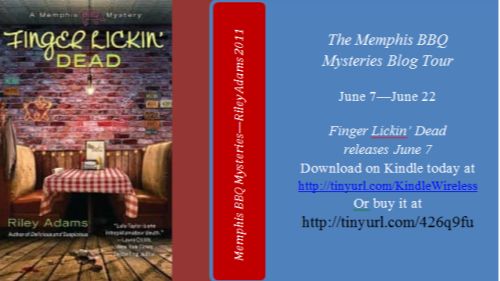
Finger Lickin’ Dead launches June 7th!

You Are Already a Writer. Now Write, Dammit. by Harrison Bradlow

If It Still Has A Head...Being a writer is not about how many people have read your work. It is not about getting an agent who will take you on as a client (or, for that matter, who will respond to your repeated contacts). It is not even about being published. If you have passion for writing and you’ve ever put a pen to paper, then you’re already a writer.

All those other things are nice, of course. There could be writers out there who don’t dream about being on the New York Times bestsellers list, but I haven’t met them yet. Being published in twenty-seven different languages, selling tens of millions of copies, and seeing your work transformed into movies starring Hollywood’s A-list celebrities would all be really cool. But nobody expects that of you right out of the gate, and you shouldn’t either.

I have been a voracious reader all my life, and I’ve always dreamed of being a published writer. Note the word “published” in there. That’s where the glamour comes from, isn’t it? Holding a book in your hand with your name on the front and your head shot on the back? That’s what I dreamed of. I didn’t stay up at night thinking about the actual writing process, which is weird, because that’s really where my passion was.

And looking back, I realize that in my own way I’ve been a writer most of my life. Even as a kid I wrote stories, mostly just for fun. Whenever a writing assignment came up in class I’d jump on it.

I remember in fifth grade we were directed to read a book and write a story about ourselves set inside the book’s world. It was a very creative assignment, actually. I chose “The Indian in the Cupboard.” The story, if memory serves, was supposed to be a minimum of five pages, typed and double-spaced. Mine was thirty-something. I’ve searched and unfortunately cannot find a copy of it anywhere.

I’ve always been a writer, but I wasn’t confident enough to call myself one, which is sad. I was shy about it. I didn’t dare share that passion with friends or family. I didn’t attend writing seminars. I didn’t take writing courses in college.

I thought I had to have an agent, or be published, before I could call myself a writer. I expected way too much out of myself, much as I imagine so many others out there do too. I thought that because I didn’t have my name on a cover, I wasn’t really a writer.

It took actually getting my name on a cover to realize how superficial that was. I recently published my first book, a work of poetry titled If It Still Has a Head, It Isn’t Quite Dead. I’ll probably never forget the moment when I first held a copy of that book in my hands. Wow. It was overwhelming. But after that moment passed, I realized something I should have known all along.

Books don’t make writers. Writers make books. Not having a book yet does not mean you’re not a writer. It just means you’re a writer who hasn’t made a book yet. I didn’t pick up that book and become a writer. I just picked up a book.

I’ve wanted to write all my life, but I didn’t pursue it until very recently, thanks in large part to encouragement from my wife. I should add, I didn’t even open up to her about my desire to write until long after I should have.

Why was I so afraid?

I don’t know. I suppose I was afraid of being judged, afraid of failure, afraid of all the things anybody might be afraid of before doing something new. That was probably natural for me. It was also really stupid! I put off doing something I loved, and for what? Fear?

I didn’t have the courage to share with my friends and family what I wanted to be until after I had that book in my hands. Can you believe that? I was publishing a book, and I didn’t tell anyone. It was among the most exciting things I have done in my entire life, and I didn’t tell anyone. It shouldn’t have taken me so long, and if you are in a similar place to where I was a year ago, don’t let it take you that long either.

Write, dammit. Set up a blog. Write poetry (it worked for me, which believe me, still boggles my mind). Write short stories. Post them online for all to see. Email them to anyone you think might read them. Solicit everyone and their mom for feedback. Grow.

In the process you’ll build a fan base as well, so that once you finally do have that book in your hands, you won’t be starting from scratch.

I was afraid. I can’t go back and change that, but perhaps I can help some readers out there who have similar fears overcome theirs faster than it took me to overcome mine.

*******************

Harrison is a very proud first time author. He invites readers to follow him on Twitter @Harrison314 and to visit his website: www.harrisonbradlow.com. His book, If It Still Has a Head, It Isn’t Quite Dead: A book of poetry on zombies, vampires, werewolves, ghosts, ghouls, and other generally scary monster-type creatures, is available online from Barnes and Noble and Amazon.com, among other outlets. Poetry excerpts from the book are available at his website as well.

Twitterific

WkbBadgeTerry3_thumb[1]

Below are writing links that I’ve posted to Twitter in the last week.

The Writer’s Knowledge Base search engine, designed by software engineer and writer Mike Fleming, makes all these links searchable—try it for searches on plotting, characterization, querying, book promo, and more.

Anyone signing up for the free Writer’s Knowledge Base newsletter this month (and current subscribers) will be automatically entered in a June drawing to receive K.M. Weiland’s CD (or MP3) Conquering Writer’s Block and Summoning Inspiration CD . Sign up here for the web’s best writing links and interviews: http://bit.ly/gx7hg1 . (You can unsubscribe at any time, and your email information is never shared.)

Hidden Treasures You Find at Conferences: http://bit.ly/m5gxwN @hopeclark

One writer’s 10 steps to novel completion: http://bit.ly/mhjpl2

Staying Out of the Story: http://bit.ly/m6RIKn

202 Tips To Increase Your Blog Traffic: http://bit.ly/jXKO5C

The downside of the e-revolution in publishing: http://bit.ly/mthOYP @BSquaredInOz

Myst. Lov. Kitchen: CONSIDER THE ASPARAGUS http://bit.ly/mnYna5

Writers Are Worth It: http://bit.ly/iXavj3 @merylkevans

Starting Erotic Stories: Two Things That Work, and Two Things That Don’t: http://bit.ly/kS7cD7

20 Tips for Freelance Writers: http://bit.ly/mfq4LU

Choosing Your Main Character and His/Her Essential Counterpart: http://bit.ly/m2JxUb

How Online Writers and Publishers Still Rely on Each Other for a Payday: http://bit.ly/jFVttu

Best Articles This Week for Writers 5/13/11: http://bit.ly/j8Pq0D @4kidlit

Libraries are in crisis, but literary culture is thriving (Guardian): http://bit.ly/kpt8VI

5 Questions Never to Ask at a Bookstore Reading: http://bit.ly/khdDDL

Query letters – do you have personality? http://bit.ly/ixNKSa

Viewpoint Character and the Need to Choose Wisely: http://bit.ly/mB672h

12 Easy Steps to The Making of a Book Trailer: http://bit.ly/kP5jpk

The inexorable link between Science Fiction and Fantasy: http://bit.ly/lhPLiX

20 email list-building tips: http://bit.ly/libkdP

5 Ways to Kill Your Creativity: http://bit.ly/jY4f8n

Why Writers Are So Antisocial: http://bit.ly/ketTqj

5 Fast Differences Between YA and MG: http://bit.ly/iJ5rcs

What Self-Publishing Isn’t: http://bit.ly/jEdwBO

How journalists can make use of Facebook Pages: http://bit.ly/mu3QSG

5 tips for writing flash fiction: http://bit.ly/kqE4R1 @mkinberg

Why libraries still matter (Salon): http://bit.ly/mFgDsa

Should you self-publish after a near miss? http://bit.ly/mvlwjR @janefriedman

Crime writers–The Difference Between Extortion and Blackmail: http://bit.ly/j29DrU

Helpful books on writing: http://bit.ly/iqqOAR

Tackling revisions: http://bit.ly/jd1Skr

Story Structure, Part 1: Beginnings: http://bit.ly/lviwfx

Tips for finishing a book: http://bit.ly/jjiWnd

What a trendsetting book is, and isn’t: http://bit.ly/ji21KE

Lessons learned from a pencil: http://bit.ly/iGK9uk

Facebook Dramatically Restricts Authors & Publishers’ Ability To Host Contests: http://bit.ly/kf7B8n

Tips for confident writing: http://bit.ly/mUcp4a

The Chekhov’s Gun Plot Device & How To Use It When Writing Your Novel: http://bit.ly/lq5bNj

Get More Done with Creative Quickies: http://bit.ly/mFHc8Y

Narrative Tension and the Ticking Clock: http://bit.ly/kAgdYi

Formatting red flags: http://bit.ly/isBR78

Does Your Story Have a Hook or Merely a Gimmick? http://bit.ly/kStVsh

Self-doubt and writers: http://bit.ly/l0MPPt

Best practices for finishing that book: http://bit.ly/jcoyoT @patriciastoltey

5 tips for writers who want to publish: http://bit.ly/jjiWnd @4kidlit

Five Things Writers Must Do Before They Die: http://bit.ly/iruBnZ @clarissadraper

When is it time to sign an author-agent contract? http://bit.ly/jDWHk4

“Write-by-number” Synopsis Recipe: http://bit.ly/lKETYR

Search my tweets– http://dld.bz/KPgS

Name your protagonist: http://bit.ly/lbhZAV

Editing: It’s About the Big Picture, Too: http://bit.ly/jAxb4J @authorterryo

Using Storyboard W to Structure a Self-Help Book: http://bit.ly/iXGksu

Best practices for beta readers: http://bit.ly/jPIwca

Should I Use Absolute Phrases? Absolutely: http://bit.ly/myCSVs

19 Ways to Use Images to Enhance Your Blog: http://bit.ly/it4msq

Tips for body language and description: http://bit.ly/mmylI7

Myst. Lov. Kitchen: Avery’s Garlic Blue Cheese Fondue http://bit.ly/incswU

Learning to Find a Balance in Showing Versus Telling: http://bit.ly/iYXDcd @jodyhedlund

The Importance of a Literary Nemesis: http://bit.ly/jFWc99

Dumping Those Info Dumps: http://bit.ly/iIzvDt @jemifraser

How an Agent Works with a Self-Published Author: http://bit.ly/jFaD7C @galleycat

Key Story Elements: Into The Special World: http://bit.ly/moUzww

How to Get into a Subjunctive Mood: http://bit.ly/l7hpep

Ticking Clock or Option Exhaustion: 2 Ways To Bring Your Novel To A Crisis: http://bit.ly/jin0Q3

5 Key Research Sites You May Have Missed (Plus Cool Tricks): http://bit.ly/mADZQB @janefriedman

Writing Out of Order: http://bit.ly/mMQLGK

10 Simple Ways to Support Authors You Love: http://bit.ly/lSbj93

How Spelling Diverges Between American and British English: http://bit.ly/muKiEF

Synopsis Example: ”The Fly” (Horror / Sci-Fi): http://bit.ly/lXiRm8

Mindful Writing: Accepting Failure: http://bit.ly/koiDtF

Tips for giving readings: http://bit.ly/jtw0lK

5 Common Writing Pitfalls: http://bit.ly/iQcuhF

When Characters Lie: 8 Questions to Ask: http://bit.ly/lBoWAp @CherylRWrites

Tips for Writing Picture Books: http://bit.ly/mBh3QV

5 questions that can save your book: http://bit.ly/mp2Okq

How to Practice Perseverance: http://bit.ly/lekZnq

Discouraging Decisions: http://bit.ly/jANR7P

Why traditional publishing is about more than a few weeks of chain bookstore distribution: http://bit.ly/jnestQ

10 Scifi Novels To Give People Who Hate Sci-fi: http://bit.ly/ixFEMv

Myst. Lov. Kitchen: Bacon and Buttermilk Garlic Mashed Potatoes http://bit.ly/mN9bm6

A Bookseller Who Bridges Print and Digital: http://bit.ly/l8YGRZ

Surfing the fantasy network: http://bit.ly/jyfZq3

How Many Times A Day Should You Check Your Email? http://bit.ly/lQjsip

How The Right Cover & Title Can Help Women’s Fic Cast A Wider Net: http://bit.ly/irR1rc

Promo time vs writing time: http://bit.ly/mMUXPA

Royalty statements update: http://bit.ly/luh4a7

Why writing advice is utterly meaningless: http://bit.ly/makY6v

Choosing a Theme for Your Novel: http://bit.ly/iDUIF6

Blog categorizing and tagging: http://bit.ly/kusGUL

3 things one writer learned from graphic novels: http://bit.ly/lCU4ga

How to write more-the only thing you NEED to do: http://bit.ly/ljl2ft

Make your boring character a fish out of water: http://bit.ly/jr4ARq

Bringing characters together:http://bit.ly/juZrxd

A tangled plot structure: http://bit.ly/lYtSYn

How to Blog Without Comparing Yourself to Others: http://bit.ly/m690Nw

Creative Marketing for Indie Authors: http://bit.ly/kaF6ch

Beat writer’s boredom: http://bit.ly/jBLa5f @clarissadraper

Why One Writer Wants Her Women’s Fiction Published By A Traditional Publisher: http://bit.ly/mfenZ2

Crit partners in crime: http://bit.ly/kLlO4j

Never bring a knife to a gun fight: http://bit.ly/krbGtP

Sign up for the monthly WKB newsletter for the web’s best writing links and interviews: http://bit.ly/gx7hg1

Do Plots Just “Happen”? http://bit.ly/ioqYa9

Top 7 Repeated Science Fiction Phrases or Words That Have Become Annoying: http://bit.ly/jV9QxK

9 reasons to visit your real-life setting: http://bit.ly/ji59la

Ebook Authors: 17 Great Information Sources: http://bit.ly/k9KJEp

Myst. Lov. Kitchen: HUSBAND vs WIFE: Cleo Coyle asks, “Is it a Sauce or a Soup?” http://bit.ly/llM8vB

The Joy of Booking: http://bit.ly/k03LEt

Making the most of the Kindle’s “Before You Go” screen: http://bit.ly/iF1LAc

10 Ways to Create a Plot Twist: http://bit.ly/my7K0W

8 ways writers can make the most of online video: http://bit.ly/iQe4Xf

How to Avoid Freelancing Burnout: http://bit.ly/iTVBEH

The 3 ages of becoming a writer: http://bit.ly/mAkgRi @dirtywhitecandy

Creating Archetypal Characters To Fill The Dramatic Functions in Your Novel: http://bit.ly/lpcw1r

10 Ways to Totally Screw Up Your Novel: http://bit.ly/mD7nh5

Juggling parenthood and writing: http://bit.ly/mN6I6H

3 tips for writing horror: http://bit.ly/mrsNUX

Twitter For The Shy Writer—Secrets of Stress-free Tweeting: http://bit.ly/jUQaSA @annerallen

Romance novels and the dogpoo filter: http://bit.ly/k8V0BL

10 Kindle Tricks and Tweaks: http://bit.ly/kjKtLT

What Works: Promo for Ebooks: http://bit.ly/l5LBc9

Single Quotation Marks—A Reader’s Question: http://bit.ly/lOjDWX

Online branding for authors–how it really works: http://bit.ly/jAlHYY

The ABCs (and Ds and Es) of Plot Development: http://bit.ly/lLXN7p

How to Become Wildly Successful at Anything: http://bit.ly/mljulE

Avoid the 3 “Tell-Tale” Signs of Self-Published Books: http://bit.ly/lAK1ca

How to quickly change a document’s spacing with a single keyboard shortcut: http://bit.ly/mH1LA1

Subsidy Publishing: Proceed With Caution: http://bit.ly/m8V9Qn

The tasks of technical writing: http://bit.ly/l3KtEy

Myst. Lov. Kitchen: Mini Cherry Sponge Cakes http://bit.ly/mrGT4c

6 tips for fitting writing into a hectic schedule: http://bit.ly/jdLZqL @Sarafurlong

Metaphors vs. Similes: http://bit.ly/mI5nQ3

Weekend writer: http://bit.ly/lgsB2R

Writing–finishing what you start: http://bit.ly/jhnL2n

Happy Mother’s Day, Mrs. Bennet: Jane Austen’s Mothers: http://bit.ly/jd17w1

The Rise of Urban Fantasy: http://bit.ly/jpqZZG

Help for restless writers: http://bit.ly/iA6uUs

5 Reasons Why Moms Matter in Children’s Literature: http://bit.ly/lzWXLv

10 essential self-editing tips: http://bit.ly/iDAMcw

Best Tweets for Writers (week ending 5/6/11): http://bit.ly/kNwBXI

How To Create A Plot Outline In 8 Easy Steps: http://bit.ly/lHq5Od

How one writer uses Scrivener to plot with flexibility: http://bit.ly/mfZypM @SarahKetley

The Dos and Don’ts of Your Online Presence: http://bit.ly/iwJmJU

The rule of 3 in fiction: http://bit.ly/lGypLz

Character building tools for writers–astrological signs: http://bit.ly/mj3qfu

Social Networking: Twitter v. Facebook: http://bit.ly/l9HUY7

5 Things to Consider Before You Spend Time Editing: http://bit.ly/m82DDG

Collaboration: 3 Rules You Can’t Break: http://bit.ly/lcjecF

An Editor’s Quick Tips on Submissions: http://bit.ly/iiKBkN

Creativity tweets of the week: http://bit.ly/jCxRdZ

Voice: The Right Words: http://bit.ly/mTF99f

Writing Passionate People: http://bit.ly/m1mNGT

How Self-Published Authors Found Success by Staying Local: http://bit.ly/iB6kCm @galleycat

Myst. Lov. Kitchen: Happy Mother’s Day – Not Just Desserts http://bit.ly/kAEDeI

How to Build Your Twitter Tribe: http://bit.ly/kKf3Sg

The World’s Best Libraries: http://bit.ly/lhXIrf

How role-playing games (RPGs) can improve your writing: http://bit.ly/k2Wkq5

How to Be a Conference Extrovert: http://bit.ly/mK7xCG

Writing an eBook: How to Get Started (and Finish!): http://bit.ly/kffCwO

Organizing a Writers Workshop: Marketing– http://bit.ly/jlsdhr

Present tense problems: http://bit.ly/kARovC

Writers Write–Creativity Is a State of Mind: http://bit.ly/iS9HIA

The Practice of Ying / Yang Productivity: http://bit.ly/jjpsQq

4 laws of characters: http://bit.ly/jlvNJm

Narrative conflict vs narrative tension: http://bit.ly/jVsNMK

The Muchness of a YA Heroine: http://bit.ly/muI06B

Check Your Adjectives at the Door: http://bit.ly/l0uUWM

3 Edgy Little Tips to Make Your Story More Compelling: http://bit.ly/m7V8Fd

How To Meet Literary Agents and Editors on the Web: http://bit.ly/lQ6srW

An editor on the importance of good dialogue: http://bit.ly/mfWYTT

Bullying in crime fiction: http://bit.ly/lBxIFz @mkinberg

Ready to query? Step away from that send button: http://bit.ly/mkx58u

The Power of No

sw_piano_6What happens when you want to start taking piano lessons and art classes?

Well, if you’re Elizabeth Craig’s daughter, unfortunately it means that you’ll have to give up other after-school activities to take on new ones.

I decided a couple of years ago that there are absolutely wonderful moms out there who drive their children to multiple activities daily….but that I’m not one of them. :) So I ‘just say no’ to making my schedule even busier than it already is.

There’s a limited amount of extracurricular driving that I’m willing to take on at this point. I’ve got my son’s guitar teacher coming out to the house and I’m looking for a piano teacher to do the same.

What’s more, I think that children, when they’re overextended, get just as stressed out as we do. I know that I can’t take a look at my calendar without wincing and I’m sure I’m not the only one.

Not everyone takes on too much…but I have a feeling that most of the writers in the online community do.

Many of us are blogging 3 or more times a week, networking on different social media platforms, volunteering for fundraisers online or in the community, working day jobs, helping care for our children or aging parents, and keeping house.

All of these things are important. But we frequently end up feeling stretched thin, even with all the things we need to do and want to do.

One thing that I’m learning to do (and it’s been really hard, because I’m a people-pleaser) is to say no to additional responsibilities.

I have to protect my time pretty fiercely at this point, because there’s just not very much of it to start out with. Usually, the kind of request that I get is for serving on a committee or a volunteer project at the school, etc. Again, these are very worthwhile causes. And I do help out a lot…but unfortunately, there aren’t really enough people who can volunteer—so the same people tend to be picked over and over again.

Saying no:

It’s much easier for me to nicely refuse (to be part of a supper club, serve on the PTA board, be part of a committee at church) if I can do it over email. That’s a no-brainer—we’re writers. Making a gentle refusal is easy when we’re writing.

But now…I can turn down people on the phone pretty well. It took some practice to get to that point. But I now can say, “I’d really love to help out, but my schedule isn’t going to permit it. I’m sorry.” Or…if I’m having a weak moment, I’ll ask them if I can sleep on it (and then email them the next day that I really won’t be able to participate.)

I’ve now also had some success in turning people down in person, which for me has always been the hardest. Again, If I’m having a hard time or feeling some pressure, I’ll ask if I can check my schedule and email or call them later. That gives me an opportunity to step back from the situation and come up with a polite response later on.

People might think (especially if you’re at home) that you have more time than you do. They might not realize all the things (social media, promo, learning the writing craft, writing) that you’re doing in a day…and they don’t have to know about it. All we have to do is politely say that we really wish that we could participate, but we’re just not able to.

How well do you protect your writing time and keep your schedule under control? Is it easy for you to say no?

****
Sign up for the free, monthly Writer’s Knowledge Base newsletter for writing tips and resources and to be entered in our first giveaway. Details here.

Finger Lickin’ Dead launches June 7th!

Scroll to top