Writing Our Region

By Elizabeth S. Craig, @elizabethscraig

I know that my editors specifically wanted a Southern writer for the two series I’m writing for Penguin. They do get the South when they hire me on. 

That being said, portraying a specific region can be tricky.  I think dialect can be annoying to read, if you’re using it broadly.  Southerners are fond of dropping gs, for instance.  That would get old after a while.  In fact, if you phonetically wrote out Southern dialect, it would be incredibly difficult to read.

So what I aim for is using some Southern vocabulary/colloquialism, and traditions/customs, climate, and common local settings to help readers take a vicarious trip to the Southern US. 

In dialogue, it’s also easier to bring it out in a natural way. Many Southern women (and some men) use endearments in addressing nearly everyone—even strangers. That’s something that’s easy to drop into dialogue.

There are some words that are apparently too obscure and cause readers to slow down or pop out of the story while they try to decipher it.  That’s not, obviously, what we want.  I’ve had editors edit out a number of word choices that I didn’t think anything about.  But the reason I didn’t think anything about them is because I’ve always lived in Southern states.  So tote as a verb went, buggy was quickly dispatched for shopping cart  (a particularly soulless substitution, I thought), roll in terms of pranking (it was fascinating having a discussion with my Manhattan-based editor on toilet papering someone’s yard…it’s roll down here, but apparently not up there).  But the one that particularly stumped me was when my editor asked me what the heck an eye was (in terms of cooking).  I emailed several friends and family before responding to her.  What else do you call it?  You put your pot on an eye and bring the water to a boil.  What on earth could it possibly be?  No one had any ideas, so I emailed her back and told her it was the black coil on top of the stove.  She substituted heating element.  I shook my head over that one but left it alone.

Traditions or customs are also important ways to bring a region into your story. Food is hugely important in the South… it’s not particularly healthy food, either.  So writing in fried chicken and potato salad and ham biscuits and barbeque (I’ve got a whole series with barbeque as a hook), pimento cheese sandwiches, black-eyed peas…it all goes in to give readers a taste of the South.

Customs surrounding weddings and funerals are thrown into the books, too. The fact that there is a huge food-centric process to grieving here plays a part in my books (and provides my sleuth with opportunities to interact with suspects).  The close-knit nature of many extended families in the South, the willingness to talk with strangers (along with what might seem like a contradictory suspicion of outsiders in small towns), and the slower pace of life.

Writing a region also involves bringing in settings where people commonly interact—whether it’s a diner  or a ball field, or a church.  And it’s difficult to realistically write about the South without bringing in church somehow, although I don’t touch religion itself with a ten-foot pole.  Actually, now that I think of it, I’ve had two murders take place at church.

Even the old architecture—houses with big verandas and space for rocking chairs.  Swimming pools, screen porches, and gobs of air conditioning.

Which brings in another element—the weather and climate.  The long summers.  And humidity that can almost stop you in your tracks when you walk outside.

Do you focus on a particular region in your writing?  How do you pull a reader in?

Image: MorgueFile: katmystiry


Cover Conferences

By Elizabeth S. Craig, @elizabethscraig

Traditional publishing is a funny thing.  It’s a hurry up-and-wait type of business.  Sometimes (quite frequently, actually), everything moves at glacial speed.  But sometimes, things happen before you’re ready.  And you never really know what’s going on behind the scenes exactly to cause either one.

I heard from my editor on Friday that she’ll be attending—today, actually— the cover conference for the book that I’m currently writing.  This is a book that’s due in January that will publish October 2014.  For some reason, everything that’s happened with this book has happened earlier than I was ready for, and it’s made me a bit flustered.  This is the same book where the teaser chapter was due at the same time as the outline, but then the outline had requested revisions…you remember.


This is the series where the editor (and I love this editor—she’s very talented and I live in fear that she will be promoted and won’t be my editor any longer), really likes me to be involved with the cover process.  Each time I assure her that’s not necessary and I don’t know a darn thing about design—but she’s good to keep at me and encourage me.  I’m sure, looking back now, that despite the fact I’ve dragged my feet for every cover—it’s helped me out with the self-pubbed covers that I’m a good deal involved in.

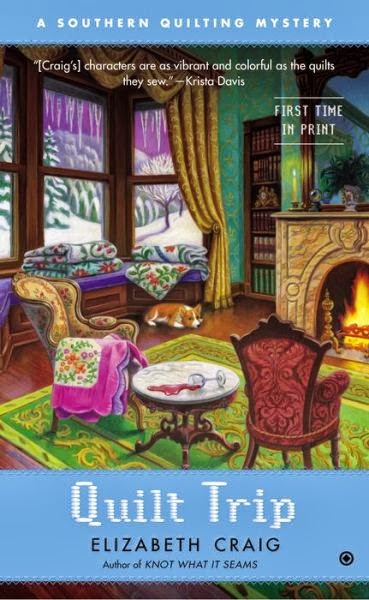
This is a cozy mystery, so there are elements that need to be on the cover for branding both the genre and my series.  It will most definitely have a corgi on the front of it, and I’m sure I would hear from the readers if it didn’t.  It will have a very peaceful, picturesque scene with an element of danger in it—an overturned glass of red wine, a knife to the side, a broken chair.  And, because the series hook involves quilting, there will be quilts.

The title was the first thing the editor asked me about.  She and the copy editors had ideas for titles and she asked for my feedback on them.  This is another area where I appreciate their contacting me, but I know they usually have their own ideas for titles and marketing plays a role. I do come up with ideas for titles…they tend to not use them. :)  But they’re very polite about considering them.

Branding the covers in a series also involves the way the title appears on the cover—font, appearance. It can even go to the level of whether it’s an outdoor scene or an indoor scene.

My editor was going to attend the conference with information off my old outline and I hadn’t updated her with a new outline (oops) that reflected the changes we’d agreed on earlier.  So…I agreed to the changes she suggested, but didn’t correct the outline and send it to her—instead, I scribbled the changes on my hard copy of the outline.  That was clearly not helpful.  Now I’m in a time crunch and don’t actually want to stop to edit the outline and send it her way, especially since I’m halfway through writing the book.  

So she asked for the unedited copy that I’ve written so far so that she could skim it for more ideas for setting the cover using scenes from the book. This is the third time this has happened with different series and now I hardly even blink an eye.  Earlier, it would freak me completely out to send what essentially was a disaster over to my editor.  This time I attached the file with the warning that although the teaser chapter one was in perfect shape but the second and third chapters would be extensively rewritten…since there were two more characters to add to them, and the other chapters should be fairly static in terms of major changes. The text didn’t even have chapter breaks included and had notes to myself included throughout.  At this point, though, it’s more of a trust issue—I know that she knows that I’m not going to turn in something like that in January.  So it’s easier to send it.

 I also sent along, at her request, pictures of quilts that were similar to ones that I was writing into the story.

Honestly, I’ve never had a problem with a cover that either Penguin or Midnight Ink has done—they tend to do beautiful covers.  I’ve heard horror stories from other traditionally published writers about covers they’ve had and how they feel the covers affected the sales of their books.  I’m sure if I’d gone through a horrible experience,  I would be a lot more involved in the process, except…well, I don’t know what I’m doing.  I only know what I like and don’t like.

For both my other Penguin series and the Midnight Ink book, the covers were done and it was more of a fait accompli   and I was asked afterward if I had any changes or if I approved of them.  So I didn’t have the input on those covers…and I will say that I think this is a lot more the case with most of the big publishers…my experience with my editor and this series is more the exception than the rule.

For my own self-pubbed books, I’ve taken a page from my publisher’s book and branded the series as well as I could, especially for using a couple of different cover designers …most recently Scarlett Rugers. I have the sweet scene and the element of danger.  And no images of people on the cover—there’s never been a person on any of my covers so I won’t start now.  Well, there’s been a dead person’s hand.  That’s as close to human as has been on a cover.  I try primarily to make sure that the color scheme used and the setting tell readers that there’s a new book in my series…and that it’s the same series.

The difference with the self-pub is that I think my designers have a sense of relief that I’m not trying to backseat drive with the covers—I’ll throw in what I’m looking for and pick my favorite design…maybe ask for  small changes.   But that’s the thing—I’m no designer and I have no time to try to become one.  I’d rather be writing more books. 

But I do want it to look good in thumbnails.  I do want the thumbnail-sized image to clearly belong to the rest of the series.   And I want both my name and my series name to be obvious on the cover—I need readers to find my books.

This is how I start the cover process for the self-pubbed books:

I ask if they’re backed up. This is important—if they are significantly backed-up, I’ll need to use someone else.

I give them the sales copy/back cover copy that I’ve written for the book.

I give them a paragraph of ideas for setting the cover.  For the book that came out in August, I emailed: “The cover scene could be set in a backyard.  We could consider using a croquet set or croquet mallet as the murder weapon/dangerous object to indicate it’s a mystery. Since the murder occurs during a party, we could show a cocktail or wine glass spilled over on the patio furniture, or a broken high heel…something like that.”

I attach pictures of the other books in the series, if the designer hasn’t worked with me before.

I tell them what precisely I need in terms of format.  These days, I say: “I’m interested in an ebook cover (the book will run on Nook, Kindle, iTunes, Smashwords), a print cover (spine and back cover for CreateSpace), and an audiobook cover for ACX.”

I give the ISBNs and the price to be printed on the cover of the CreateSpace project. 

That’s pretty much it.  Then I field any questions from the designer.

(I do maintain a free database of cover designers and other self-publishing professionals here if you’re looking for a place to start.) 

If you’re published, how involved were you in the process?  Does you genre have a standard “feel” for its covers?  If you’re not yet published, how interested are you in being part of the cover design?


What’s Important in a Story

By Elizabeth S. Craig, @elizabethscraig

I was going through my blog reader recently and came across an interesting post from writer Jeff Cohen: “Stuff Not to Do” on the Hey, There’s a Dead Guy in the Living Room blog.  The whole article was good, but the part that particularly caught my eye was this:

Don’t decide on the crime and then create a character to fit it. Character comes first. The crime is the bait; it’s what Alfred Hitchcock called “the MacGuffin,” something the people in your book are desperate about but the reader should find secondary. Your characters are first. Write characters the reader cares about one way or another, and you’re halfway home. Killing someone with a guillotine in the middle of Indiana isn’t the key to your book.”


I thought Jeff nailed it.

I don’t know how long it took me to figure this out, but it was a while.  I thought, since I was being paid to write mysteries, that my primary focus was that mystery…for you, it might be the magic in your fantasy or the science in your science fiction.  It was very important to me to get my clues, red herrings, motives, murders, and solution perfectly written.  And I think I did a good job with that.  But one day, one of my editors told me, “Elizabeth, your mystery is very sound.  But what your readers particularly care about is the characters.  What’s going on with them?  I’d like to see more of what they’re up to in between the time while they’re working on the case.”

When I was starting out my series,  I thought that the interpersonal relationships of my characters, their problems, what was going on in their non-mystery-solving lives was interesting to me, but I wasn’t sure if my editors were going to perceive it as filler that needed to be edited out.  After all, wasn’t I deviating from the plot—the mystery?  Then I realized that the in-between stuff was the way I was connecting to my readers—the characters were pulling them into my story.  Readers had purchased my book in order to read about my characters…who just happened to be solving a murder mystery while my readers caught up with their lives.  In some ways, the subplots that developed my characters and hooked readers were just as important as the A Plot—the mystery itself.

I can write a 45,000 word book that’s solely the mystery.  That’s as long as it takes to introduce suspects, outline the crime, and focus on an investigation and a puzzle and a solution.  But that’s only the puzzle—straight mystery.  Adding in the subplots, the personal interaction between characters, their conflicts, the way the mystery affects them…this adds in about 30,000 more words.  It’s not fluff, either—it’s character development.  It’s all about hooking the readers with the character personalities.

Why would readers read my mystery, otherwise?  They wouldn’t care about the victim (who is frequently a nasty personality anyway), they wouldn’t have enough information to identify with or pull for the sleuth, and the suspects…well, they’re all suspected of murder.  To hook readers, you have to make them care about all of the characters—even the victim.  The reader has to care enough to want this case to be solved and to solve it alongside the protagonist.  To help out.

This is true with any genre.  As Jeff Cohen put it, the genre functions as the MacGuffin. It’s not all about the romance or paranormal aspects of a story’s creatures, the science fiction or the fantasy.  Those function as just the premise that lures readers of that genre to our books.  Most popular books are popular because of the characters populating them.

As a reader and writer, how important are the characters to you?  How do you enrich the story by revealing more about them while still keeping up your story’s pace and keeping to your genre restrictions?


****Angela Ackerman and Becca Puglisi from the Bookshelf Muse (now at Writers Helping Writers) are holding a special event to celebrate the release of two more books in their  Descriptive Thesaurus Collection: The Positive Trait Thesaurus: A Writer’s Guide to Character Attributes and The Negative Trait Thesaurus: A Writer’s Guide to Character Flaws.  They’re offering a free opportunity for help with pitches/hooks/queries/more. See http://dld.bz/cSHq6 for info or to sign up (I’m one of the ones helping with the event). Thanks! ***


Twitterific

By Elizabeth S. Craig, @elizabethscraig

Twitterific links are fed into the Writer’s Knowledge Base search engine (developed by writer and software engineer Mike Fleming) which has over 23,000 free articles on writing related topics. It’s the search engine for writers.

November 13-14:  Get Read – Marketing Strategies for Writers: Dan Blank’s We Grow Media is a  two-day online conference for authors looking for promotion strategies–and, ultimately, readers.  Speakers include Porter Anderson, Chuck Wendig, Dan Blank, Jane Friedman, Therese Walsh, and many others.  (I’m one of the scheduled speakers and am also am serving on the advisory board.)  More information about the conference and registration information can be found here.


If you use the discount code elizabeth, you receive $20 off the conference price.


There’s a new resource for writers—whether you’re writing your first book, trying to query agents or editors, or whether you’re working on promo.  It’s Alex J. Cavanaugh’s Insecure Writer’s Support Group website.  There you’ll find pages of links to resources—writing tips, publishers, agents, queries, self-publishing, marketing, contests, and publications for writers. Alex is a friend and frequent commenter here and very active in supporting writers. Thanks to Alex and his helpers for compiling the information for the site.


Current WKB newsletter features an interview with @DanBlank: http://bit.ly/169ZsID. Includes discount code for Nov. online con,#GetRead.


A look at what goes into narrating an audiobook: http://dld.bz/cSwgh @authorterryo @CaptPamsVoice @KelleyHazen1

Traditional Publishing: One Reason Not to Choose It: http://dld.bz/cSwpj

Thoughts on changing genres and using pen names: http://dld.bz/cS2tZ @tobywneal @KristineRusch @Porter_Anderson

When readers drift away from series they used to love: http://dld.bz/cS3EX @mkinberg

After the Critique: Sorting the Good Advice from the Bad: http://dld.bz/cS3YU @RMFWriters @Lori_DeBoer

The future of reader engagement and a warning against hurrying through our writing: http://dld.bz/cS8eD @Porter_Anderson

Getting Started With Character Structure: http://dld.bz/cSAmZ @camillelaguire

A free directory of cover designers, formatters, freelance editors, and more: http://bit.ly/nolbXq

Tips To Run The Optimal Goodreads Giveaway: http://dld.bz/cShJb @publishingllc

12 myths to forget in order to become a better writer: http://dld.bz/cShJR @pubcoach

5 Must-Haves For a Successful Writers Conference Experience: http://dld.bz/cShJZ

How Smart Writers Deal With One-Star Reviews: http://dld.bz/cShKd @hughosmith

7 Ways to Develop a Stronger Writing Voice: http://dld.bz/cShKk @ChilaWoychik

Are readers changing and what does that mean to writers? http://dld.bz/cShKt @rchazzchute

Elizabeth Gilbert: What All Writers Can Learn From Her: http://dld.bz/cShKx @danschawbel @forbes

10 Rules for Writing First Drafts: http://dld.bz/cShK2 @copyblogger

The Self-Publishing Myth: Why Most Self-Publishers Don’t Work and What to Do About It: http://dld.bz/cShK9 @GerarddeMarigny

6 Habits of Highly Successful (Screen)writers: http://dld.bz/cShKC @noflimschool

8 Questions To Ask Yourself Before Choosing A Writing Coach: http://dld.bz/cSpWD @KimberleyGraham @SouthrnWritrMag

Poets discuss poetry and writing: http://dld.bz/cSpX4  @Nationalpost

How to win NaNoWriMo: Realistic Goals, determination and a bottomless pot of coffee: http://dld.bz/cSpX9 @EliseVanCise

Learning to Fall: http://dld.bz/cSpXC @ElaineNeilOrr @womenwriters

Do You Have What it Takes to Survive Indie Publishing? http://dld.bz/cSpXZ @susankayequinn @beccajcampbell

A Quick Inspiration Tip: http://dld.bz/cSrpJ

When is a Good Time to Tell Instead of Show? http://dld.bz/cSrpK @ava_jae

Getting Ready For #NaNoWriMo : http://dld.bz/cSrpN @woodwardkaren

Tying theme to each archetypal character: http://dld.bz/cSrpR @glencstrathy

Writing lessons learned from “The Maze Runner” : http://dld.bz/cSrpS @juliemusil

Essential Tools to Organize Your Book Manuscript: http://dld.bz/cPPqE @writeabook

Should You Pitch (and Sign With) a New Literary Agent? The Pros and Cons: http://dld.bz/cSrqf @ChuckSambuchino

5 Cool Places to Find Writing Inspiration Online: http://dld.bz/cSrqu @JodiLMilner

Memory in Fiction and Memoir–“Peeling the Onion”: http://dld.bz/cSrqw @KimsCraftBlog

6 reasons a workshop jolts your writing: http://dld.bz/cSrtp @HCasavant @thewritermag

World Building: Underworlds: http://dld.bz/cSrtq @EllenBooraem

Checking your creative path: http://dld.bz/cSrts @tannerc

The Chemistry Between Writer and Reader: http://dld.bz/cSrtv @TrishaNicholson @FCMalby

Dialogue Do’s and Don’ts: Crafting Lively and Believable Back-and-Forth on the Pages of Your Book: http://dld.bz/cSrtw @writeabook

How Self-Published Authors Can Improve Our Industry: http://dld.bz/cRGHj @mollygreene

What Makes A Good Short Story: http://dld.bz/cSbv5 @BAShortStories

The top ten lies of copywriters: http://dld.bz/cSsZJ @mstibbe

Self-publishing lends flexibility to projects that demand it: http://dld.bz/cSsZU @kristinerusch

Creative Flow: How to Silence Negative Voices and Write: http://dld.bz/cSsZY @sarajevojosh

Don’t Build Worlds on Your Doorstep: http://dld.bz/cStaa @GeoffreyGudgion @civilianreader

Answers to Questions About Plurals: http://dld.bz/cStaj @writing_tips

Advice For Writers From Literary Agents: http://dld.bz/cStak @ChuckSambuchino

6 Ways to Write Better Bad Guys: http://dld.bz/cStav @BrianKlems

10 tips on starting and sustaining an online writer’s group: http://dld.bz/cStay @DeniseCCovey

Writing and the Rule of Three: http://dld.bz/cSta8 @ashkrafton

How Not To Treat Your Editor: http://dld.bz/cPYW4 @edsikov

Agents and Editors on “New Adult”: http://dld.bz/cSwp4 @dpeterfreund

5 Common Networking Mistakes: http://dld.bz/cSwqe @thewritermama

Don’t Kill Your Thrills With Premise Implausibility: http://dld.bz/cSwqk @jamesscottbell

Ten Things to Help Defeat Writing Slumps: http://dld.bz/cSwtc

5 Things You Shouldn’t Say to Authors: http://dld.bz/cSwuT @brandontietz

How Smashwords Authors Can Manage Books in a Series: http://dld.bz/cSwuX @galleycat

Writing as Vocation: http://dld.bz/cSwve @shewrites

Character Analysis–Alpha Dogs: http://dld.bz/cSwvj @camillelaguire

Crime fiction–characters who adopt new personas: http://dld.bz/cSwvv @mkinberg

Writing Toxins: Optimising A Fully Functioning Mind: http://dld.bz/cSwv6 @cateartios

Villains Who Would Make Great Protagonists: http://dld.bz/cSwvX @Marie_Lu

The Fundamental Skills Of Creative Thinking: http://dld.bz/cSwwP

The ‘Magic Trick’ to Selling a Screenplay: http://dld.bz/cSwxf @Scriptmag @jeannevb

Agents aren’t required to sell books: http://dld.bz/cQd6M @deanwesleysmith

Physical Attributes Thesaurus Entry: Voice: http://dld.bz/cSy34 @beccapuglisi

The Reality of Working From Home: http://dld.bz/cSy3Q @FinishedPages

Being trad-published means knowing the market: http://dld.bz/cSy4r @sally_apokedak

5 Ways To Become A Confident Writer: http://dld.bz/cSy47 @chgriffinauthor

50 Things Under $50 Bucks To Promote Your Book: http://dld.bz/cSy4F @bookgal

Comics & Film–More Than Storyboards: Collaboration – The Smartest Person in the Room Isn’t You:  http://dld.bz/cSy5e @tylerweaver

The Value of a Writing / Reading Community: http://dld.bz/cSy5r @jeanoram

Strong Character Is Strong? http://dld.bz/cSy5u @mooderino

The indie publishing option for short fiction: http://dld.bz/cSy5V @smithwritr

3 Writing Rules that Can Derail Your Story: http://dld.bz/cSzb4 @LisaCron

Writing Fiction for Children – Character Believability and Conflict: http://dld.bz/cSzbU

5 Things a Writer Always Overlooks: http://dld.bz/cSzbY @victoriamixon

From Traditional to Self-Publishing: One Editor’s Journey: http://dld.bz/cSzc2

Why do creative people suffer from depression? http://dld.bz/cSzcM @_RobbieBlair_

Screenwriters: Being Solely Identified by Your Scripts Leads to Permanent Identity Crisis: http://dld.bz/cSzcV @NancyNigrosh @akstanwyck

Gothic Intersections: History, Story, Memory: http://dld.bz/cSze4 @GothImagination

11 Most Evil Characters in Books: http://dld.bz/cSzeM @PublishersWkly

Crowdsourcing for editing: http://dld.bz/cSzfa

Tricking yourself into writing more: http://dld.bz/cSzfw

Real Life Diagnostics: Is This Opening Working? http://dld.bz/cSzfF @janice_hardy

Why You Should Self-Publish: http://dld.bz/cSzgj @hughhowey

10 Ways to Goose the Muse: http://dld.bz/cSzgt @jamesscottbell

How to Create a Custom Facebook Cover Image That Gets Noticed (Without Spending a Dime): http://dld.bz/cSzhb @writerplatform

How To Face Your Fears and Write: http://dld.bz/cSzhe

Tips for pitching your book: http://dld.bz/cSzhz @nailyournovel

Creating Unforgettable Heroes: Three Lessons from the Bard: http://dld.bz/cSzhH @scriptmag @JennieEvenson

Author @JAKonrath on quitting: http://dld.bz/cSzkn

A Fine Line Between Love and Death – How to Write Love Scenes: http://dld.bz/cSzpP @mythicscribes

10 best practices for writers: http://dld.bz/cS2BG @rchazzchute

Dialogue: Punctuation: http://dld.bz/cS36d @lynnecantwell

Pinterest as book research: http://dld.bz/cS36j @raquelbyrnes

The Upcoming “Get Read” Online Conference: http://dld.bz/cS36v (discount code: elizabeth) @DanBlank

How To Create Your Screenplay Plot In 5 Steps: http://dld.bz/cS36y @raindance

25 Steps To Edit The Unmerciful Suck Out Of Your Story: http://dld.bz/cS364 @chuckwendig {lang.}

When Life Forces You to Take a Break: http://dld.bz/cS36D @YAOTLBlog @NancyOhlin

Paranormal? Why Do You Write That Stuff? Writing & Being Who You Are: http://dld.bz/cS36V @DeniseAAgnew

3 Ways to Get Out of a Writing Slump: http://dld.bz/cS37j @writeitsideways

On rejection letters: the day Raymond Chandler struck back: http://dld.bz/cS37n @ventgalleries

Philip Hensher stirs debate among authors after refusing to write for free: http://dld.bz/cS37t @guardianbooks

Revision’s Role in the Writing Process: http://dld.bz/cS3Yt @jenkohan

The Blank Spaces in Our Stories: The Messages Writers Send Readers Between The Words: http://dld.bz/cS3Y5 @writeinthethick @RMFWriters

Managing Writing Advice: http://dld.bz/cS3Z6 @ulieEshbaugh  @Porter_Anderson

From Crap to Craft: http://dld.bz/cS3ZQ @fictorians @sjamesnelson

How to Kill the Inner Critic Inside Your Mind: http://dld.bz/cS4ad @kippras @MenwithPens

7 Writing Tips from Ann Patchett: http://dld.bz/cS4aw @robertbruce76

10 tips to bag a writer: http://dld.bz/cS4a6 @npbooks

Book Tour Planning 101: http://dld.bz/cS4bH @midgeraymond

Writing a Book to Discover Your Book: http://dld.bz/cS4bX @martinaaboone

Make a living as a writer by writing for those who will pay you: http://dld.bz/cS4cg @thewritelife @hopeclark

A tip to energize our writing: http://dld.bz/cS4ck @Write_Tomorrow

Why 1 writer chose to write a memoir: http://dld.bz/cS4cr @evelynalauer

Hot Tips For Your First Novel: http://dld.bz/cS4cD @thetoast

Reclaiming Creativity after Infertility: http://dld.bz/cS4dw @LiteraryMama

Scene Soundtracks: http://dld.bz/cS4dK @Fictiffous

10 Rules for Writing First Drafts: http://dld.bz/cShK2 @copyblogger

“The Only Thing I Know About Writing is That I Don’t Know”: http://dld.bz/cS4dZ @NataliaSylv @DebutanteBall

Getting Help With Your Writing: http://dld.bz/cS4eg @leslielehr1

Exploring the world of verbs: http://dld.bz/cS4ey @sinandsyntax

On Being A Professional Writer: The Long Game: http://dld.bz/cS6JS

Writing Paid Guest Posts for Clients: 1 Writer’s Nightmare: http://dld.bz/cS6JU @ticewrites

How to Punctuate with “However”: http://dld.bz/cS6JX @writing_tips

Harnessing the Storm in Brainstorming: http://dld.bz/cS6Kc @livewritethrive

The Blessings of a Do-Over: http://dld.bz/cS6Kf @SouthrnWritrMag

25 Things You Need To Know About Writing Mysteries: http://dld.bz/cS6Kr @SusanSpann

The establishing shot and your novel: http://dld.bz/cS6Qm @ashkrafton

New Adult: No Sex Required: http://dld.bz/cS6Qx @ava_jae

How to Create a Three-Phase Writing Ritual: http://dld.bz/cS6Q2 @DebraEve

Writers & Their Money: http://dld.bz/cS6QC @ollinmorales

10 Reasons NOT to Become a Novelist: http://dld.bz/cS6Uq

Reframing for Writers: http://dld.bz/cS6UD @Dannie_Morin

The Exaggeration of Story: http://dld.bz/cS6UP @mooderino

Don’t respond to negative reviews: http://dld.bz/cS6UT @chuckwendig

Poor word choice can kill a story: http://dld.bz/cS6Vs @NatRusso

Successful books mean hours of practice: http://dld.bz/cS6Vx @kristenlambtx

Focus on one thing when writing descriptions: http://dld.bz/cS6V7

Dystropia: Why The Sassy Gay Friend Isn’t Progressive: http://dld.bz/cS6V9 @filth_filler

Developing Conflict and Character in an Opening Scene: http://dld.bz/cS6VA @Janice_Hardy

The Two Most Powerful Words: What If: http://dld.bz/cS6VD @julie_gray

12 reasons to self-publish: http://dld.bz/cS6VH @RachelintheOC

8 Creativity Lessons from a Pixar Animator: http://dld.bz/cS6VJ @LeoBabauta


Protagonists Should Climb in the Front Seat

By Elizabeth S. Craig, @elizabethscraig

When I speak to book clubs and other groups of readers, I’m frequently asked if my characters are like me.

And they’re really not—the books would be boring if the protagonists were like me.

But I’m not telling the whole truth when I dismiss the question.  Because in some ways, they are.

In particular, I have one protagonist who behaves very much like me during social gatherings.  Beatrice watches instead of participating.


No matter how much I’m aware of this issue, it constantly creeps into my writing.  I know it’s the way this character is.  It’s in keeping with her personality (and no, her personality isn’t like mine).  It means that I’ll rewrite a handful of scenes in each book in this series—either completely rewrite them, or change the dialogue and action around.

Beatrice is content to watch and listen to others.  She’s gathering information and thinking thoughts.  Neither of these things are good for a protagonist to do. 

Unfortunately, her sidekick is a scene stealer.  This doesn’t help.  Meadow makes witty observations and sometimes generates conflict through her plain talking.  These things would be all right—if the protagonist was on center stage with the action.

Fixing the problem isn’t too difficult—it’s mainly just important to be aware of the problem.  Readers, who usually identify closest with the protagonist, aren’t going to be excited about taking the back seat in the story’s action.  Who wants to watch a watcher? 

Fixing it: If there is a scene where the protagonist isn’t really doing anything, or is listening/watching when someone else is doing something, I’ll rewrite the entire scene.

If there are scenes where it’s mostly a dialogue problem—the protagonist is listening as someone else is ruminating about the mystery or asking questions of cops or suspects—I’ll change the dialogue so that the protagonist is spearheading the investigation.

There are people like this.  I’m like this.  But this trait doesn’t fit the protagonist job description.

We should push our introverted protagonist.  They can be curious, adventurous leaders who like to take charge and fix problems and save the world. They’re proactive people. They can and should have flaws…but hanging back to observe and react shouldn’t be one of them.  Not on a regular basis, anyway. They’re the ones who need to actively observe—to take what they see and run with it.

Do you ever have to spur your main characters to get in the front seat?

Image: MorgueFile: Jusben


Scroll to top