Twitterific

 by Elizabeth S. Craig, @elizabethscraig

Twitterific links are fed into the Writer’s Knowledge Base search engine (developed by writer and software engineer Mike Fleming) which has over 23,000 free articles on writing related topics. It’s the search engine for writers.


This week– November 13-14:  Get Read – Marketing Strategies for Writers: Dan Blank’s We Grow Media is a  two-day online conference for authors looking for promotion strategies–and, ultimately, readers.  Speakers include Porter Anderson, Chuck Wendig, Dan Blank, Jane Friedman, Therese Walsh, and many others.  (I’m one of the scheduled speakers and am also am serving on the advisory board.)  More information about the conference and registration information can be found here.


If you use the discount code elizabeth, you receive $20 off the conference price.

Check out the new resource for writers.  It’s Alex J. Cavanaugh’s Insecure Writer’s Support Group website.  There you’ll find pages of links to resources—writing tips, publishers, agents, queries, self-publishing, marketing, contests, and publications for writers.


Friend and fellow mystery writer Margot Kinberg has put together a crime fiction anthology: In a Word–Murder.  The ebook retails for $2.99 and proceeds from its sales benefit Princess Alice Hospice, in memory of Maxine Clarke, a supporter of and good friend to the crime writing community.  One of my stories is in the collection, too…my first attempt at short fiction. :)


The Search Engine for Writers: http://hiveword.com/wkb/search

How to nail NaNoWriMo: http://dld.bz/cT3Ej @nailyournovelContinue reading
Completing Your Novel Plot

Guest Post by Jack Smith

At some point in drafting a novel, you will probably see the need to add more actions or events to complete the plot.  You know the story isn’t complete.  You may need to rethink where your story is going.  Try this process:

  • Write a brief summary of each chapter.  This is time-consuming, but once you have concise summaries, you will be able to see your novel’s overall direction more easily.  Sure, you can read and reread your novel itself, but sometimes you can forget what happened first, second, etc.
  • Brainstorm more conflicts to complete the plot.  I do say “brainstorm” because you can’t be sure these conflicts will work until you get back to the writing itself.   Will they work once you dig back into your characters?  Would your character do this, do that?  Hard to say.  Don’t force it.  But try it out, and maybe your character will end up doing something even more interesting and compelling.
  • Decide where these conflicts go.  Here again, this is tentative.  You might decide to include a given conflict in Chapter Three, but really it will work out better in Chapter Six or Seven, or Ten.   But for now, write down where the conflict might go.   Choose a colored type (red maybe?) so it’s easy to spot these tentative places to include tentative new conflicts.
  • Add your new conflicts to your novel manuscript.  It might be best to re-read your novel up to the point where you intend to add new material—to get back in the swing of the work.  To get a sense for the mood and tone at this point.   Once you’re ready to include new conflict material, let your imagination take over.  Get back into your characters.  See them, hear them speak, let it happen.

Plot usually doesn’t fall out of the sky and arrive fully intact.  It takes doing and redoing.  This is only one process you might follow.  You might need to go through this process one or more times.  Once you’ve done so, re-read your entire novel and see if it’s complete.  Don’t depend entirely on logic.  Does it sound and feel complete?


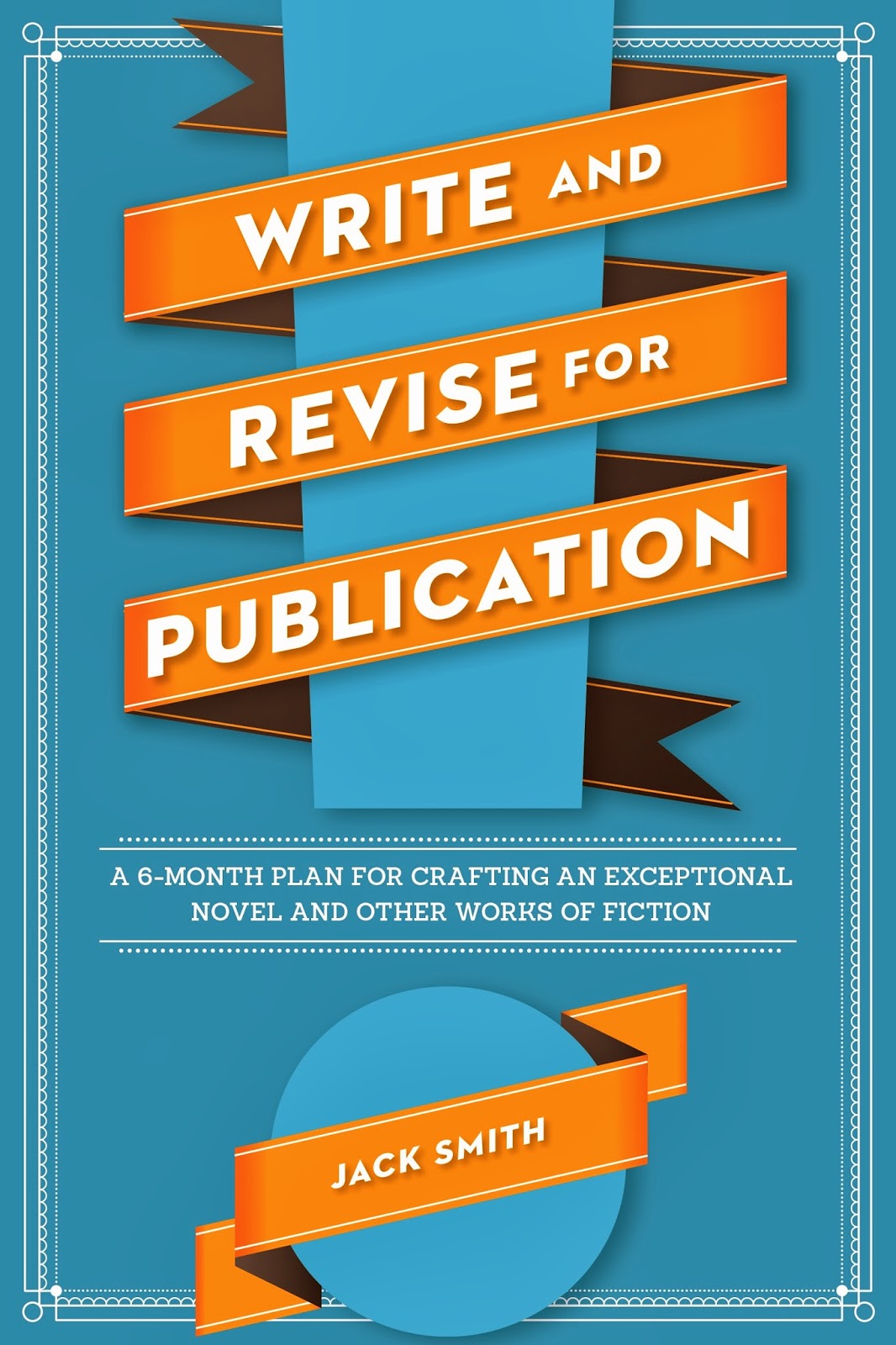
Jack Smith is author of the novel Hog to Hog, which won the George Garrett Fiction Prize (Texas Review Press. 2008), and is also the author of Write and Revise for Publication: A 6-Month Plan for Crafting an Exceptional Novel and Other Works of Fiction, published earlier this year by Writer’s Digest


Over the years, Smith’s short stories have appeared in North American Review, Night Train, Texas Review, and Southern Review, to name a few. He has also written some 20 articles for Novel & Short Story Writer’s Market, as well as a dozen or so pieces for The Writer.


He has published reviews in numerous literary journals, including Ploughshares, Georgia Review, Missouri Review, Prairie Schooner, American Review, Mid-American Review, and the Iowa Review.

Smith taught full-time at North Central Missouri College for some 24 years, and  has also served as Fiction Editor for The Green Hills Literary Lantern, an online literary journal published by Truman State University, for over two decades. Learn more about Jack and his work in the November 1 edition of PIF magazine.


Thoughts on Social Reading and Other Intrusions

by Elizabeth S. Craig, @elizabethscraig

A couple of months ago, I read an interesting post on social reading: Is Social Reading the End of an Intimacy?  Porter Anderson discussed the topic on Jane Friedman’s blog for his Writing on the Ether weekly column there (excellent coverage of publishing industry topics there, if you haven’t checked it out). 

I’ve kept thinking about the post, since this social aspect keeps slipping into ebooks I’ve been reading.  I’ve gotten used to the underlined passages, for instance, although they startled me the first few ebooks I read.  The fact that I’ve gotten used to them is what makes me think about Porter’s post.

The underlined passages may not be such a huge deal, but as Porter put it, it could get more extensive:

“I’m imagining pop-up notes nudging me with other readers’ bright ideas; reviews rolling all over the place; and marginalia marching around the glowy screen of my preferred tablet reading device.”

What does bother me (and this is device intrusion, not specifically social media):

When my Kindle tells me that I have 5 minutes left in my chapter. My device has been timing my reading and applies it to unread text.  This is my device interacting with me.  It makes me feel as if I’m racing the clock…and since I definitely don’t need to be reminded how very little free time I have, it gives me a harried feeling.  Clearly, I need to turn this feature off (now to figure out how to do that).

What doesn’t bother me:

Seeing a request at the end of the book to like a book on Facebook, tweet about it, or buy the next book.  I don’t do any of those things, but I don’t mind seeing the request.  But I read on a survey in the last year (tried to find the survey and can’t, darn it) that readers frequently feel irritated when they get these requests at the end of a book… that reading should be a sanctuary from social media.

Underlined passages don’t bother me. With my Kindle in hand, I’ve been at book club and watched as folks have fumbled through their printed books, looking for just the right passage to illustrate their point.  I’m able to immediately find that passage because the thing has been underlined by 500 people.  Not wanting to be a know-it-all, I just wait for them to find their spots.

Underlined passages are also useful for writers—these underlined spots create helpful research as to favorite scenes and what worked for readers.  You can check out the ones readers underlined on your book’s page on Amazon.

What sometimes bothers me:

Reader comments while I’m reading a book…this bothers me.  And you’d think it wouldn’t, with my background. For the record, I’m the daughter of a now-retired high school English teacher. For my first twenty-two years, I rarely read a book that didn’t have annotations in the margins or underlined passages (unless they were library books).  I do believe it may have warped me because I write in nearly all of my print books.  But Daddy’s notes were a teacher’s notes and I found them insightful.  I don’t have the same interest in other readers’ marginalia.

But!  I don’t mind reading notes after I’m finished with a book, when I’ve already drawn conclusions for myself.  Then I do like to read others’ opinions and analyses. Book club meetings have maybe softened me up for some forms of social reading in my ebooks.  But only on my own terms and only after I’m done with a novel.

What’s probably key with social reading, from a publisher/developer perspective:

Porter hit the nail right on the head here, for me: “And our busy developers gussying up social reading platforms need provide us with an escape. An OFF button. I will use it. Indeed, if I can’t turn off these fine features when I want to, I’ll be as anti-social in reading as I am (some tell me) in life.”

Yes.  I have to be able to turn it all off. I have to turn off highlighters, forget about annotations, and not “share” at the end of the book unless I darn well want to.  I can’t deal with too much clutter in the margins. And I’m with Porter about hearing blather from readers—inconsequential information that has nothing to do with the book.  I’d want more insightful comments…sometimes.  And sometimes maybe I want to just read and be by myself with my thoughts.

As a writer, though, I’ve noticed the fact that I have gotten used to some of this intrusion, as I mentioned earlier in the post.  This makes me think that our future will feature books that are a lot more interactive in a social way.  If I can so easily get used to it in my middle age, my kids accept it as a matter of fact.  Although I feel somewhat divided on this, I have a feeling that it will be one of many ways we keep writing and reading relevant to a new, computer-native generation.

How do you feel about social reading?


Image: MorgueFile: Alvimann
 

Success and Writing—What Keeps Us Going

by Elizabeth S. Craig, @elizabethscraig

In many ways, I’m the biggest lurker out there.  I do try to comment on friends’ blogs, but for the vast majority of the blogs I visit in a week (which is in the hundreds), I skim and share.

Some of what I see and have seen over the years makes me sad.  I’ve seen writers talk about how beaten-down they’ve been from the rejection cycle, from reader reviews, from lack of family support or publisher support. I’ve seen a lot of self-doubt and a lot of people quitting.

Interestingly, though, I’ve seen a lot of writers who blogged that they were quitting writing only to pop back on the scene months later.  They couldn’t stop.

I understand where they’re coming from.  I have over 450 customer reviews on at least two of my books.   I’d say at least one or two out of every four or five is a real stinker.  The worst are the ones that you get absolutely no helpful feedback from whatsoever—hey, at least give me something to correct, y’all. What didn’t you like?  I’m always searching for ways to improve.  Did a character seem flat to you? Ending wasn’t believable?  Protagonist was unsympathetic?  Is there some sort of takeaway, some sort of actionable tip that I can get from this wretched review?  For heaven’s sake…just let me know.

What keeps me going are the three or four out of every five reviews who enjoy the books and take the time to write a customer review to say so. I can totally understand writing a review for something you dislike (you’re angry you wasted your valuable time), but it’s a real gift when readers write a positive review.  Similar to the negative reviews, it’s also helpful if they pick out what they do like so much—so that I can provide more of it next time.

It’s human nature to feel more motivated to complain about something that bothers you than to praise something that you enjoyed or that worked well. This was brought home to me last week.  My son is in the process of researching college review websites where students and alum write in or are videoed talking about their school.  A large number of the hundreds of reviews are negative, no matter what college he looks at.  I reminded him—kids who are unhappy with their school are more likely to put it on the record than someone who’s enjoying a mostly positive experience.

We can’t only focus on our reviews and our sales stats.  Ultimately, many of us write for ourselves.  Even if all my readers abandoned me tomorrow, I’d still be writing.  Writing isn’t only a habit, it’s a way of looking at the world.  That lens is always there.  I write about the things I see, the things I don’t see, the things I wish I saw, the things I’m glad I don’t see.  I’m sure if I weren’t writing these things down, I’d end up talking to myself, spilling over with all the ideas that rattle around in my head and all the different character voices that chirp up.  Yes, writing is much better than simply being a flaky woman muttering to herself.

Although I’d write if I had no readers…the main reason I write is for my readers.  I love hearing about things I’ve done right so that I can duplicate it in future books.  I came across an interesting post (in my lurking) recently—“Dear Writers: Success Is Mattering to Somebody” by Kyran Pittman.  Her takeaway point (the whole post was inspiring, I thought):

You don’t have to be the next big thing to be a success in writing, or in anything else. You just have to make the next thing that matters to someone and go on to make the next thing after that. One thing that matters after the other, for as long as you can. That’s work anyone can be proud of.

She summed it up well.  The reader emails, the positive reviews, the encouraging notes on Facebook—those are what keep me writing in the public area (I’d never stop writing, privately).  And they also function as quality control…I hate disappointing readers.  That’s the reason I keep plowing ahead, trying to get better, sucking it up during the days when I know I’ve written some really awful passages.  I’ll fix the story, I’ll improve, I’ll deliver something for readers to enjoy…and if some don’t enjoy it, I can try to pull out the constructive criticism to build with next time.

What keeps you going?


Twitterific

by Elizabeth S. Craig, @elizabethscraig

Twitterific links are fed into the Writer’s Knowledge Base search engine (developed by writer and software engineer Mike Fleming) which has over 23,000 free articles on writing related topics. It’s the search engine for writers.


November 13-14:  Get Read – Marketing Strategies for Writers: Dan Blank’s We Grow Media is a  two-day online conference for authors looking for promotion strategies–and, ultimately, readers.  Speakers include Porter Anderson, Chuck Wendig, Dan Blank, Jane Friedman, Therese Walsh, and many others.  (I’m one of the scheduled speakers and am also am serving on the advisory board.)  More information about the conference and registration information can be found here.


If you use the discount code elizabeth, you receive $20 off the conference price.

Check out the new resource for writers.  It’s Alex J. Cavanaugh’s Insecure Writer’s Support Group website.  There you’ll find pages of links to resources—writing tips, publishers, agents, queries, self-publishing, marketing, contests, and publications for writers.


20 questions to ask when creating your setting: http://dld.bz/cTcAm @daycathy @jtdutton


Believable Characters: Applying Personality Types: http://dld.bz/cTcAv @JuliaReffner


Free writing sprint/virtual retreat from @DIYMFA Nov. 16-17 offers motivation and tips for finishing your book: http://bit.ly/1hkZYv8

What Do Your Characters Falsely Believe? http://dld.bz/cTf8g @jamigold

A test of standing desks–more proof they make you productive: http://dld.bz/cTf8j

Reasons why horror is important as a genre: http://dld.bz/cTf8r @kevinlucia

Writers & Inspiration: 5 Things to Consider: http://dld.bz/cTf8z @YAmuses

The Key to an Unforgettable Opening Line: http://dld.bz/cTf85 @paperblanks

Looking at control as a theme in books: http://dld.bz/cTf8A @CuriosityQuills

The Value of Planning Your Ebook: http://dld.bz/cTf8C @ninaamir

Write Your Book: A Guide to Getting Started and Staying Productive: http://dld.bz/cTf8K @KDillabough

Writers: Break The Rules—Run With Scissors: http://dld.bz/cTf8U

The Heightened Sensitivity of Romance Readers: http://dld.bz/cTf8W @PacificStand

Middle-grade novels for girls vs boys: http://dld.bz/cTf9c @glencstrathy

Breaking Into the Comic Book Industry: http://dld.bz/cTf9h @jasonboog

A site for getting ideas: http://dld.bz/cTf92

It’s time to kill the idea that Amazon is killing independent bookstores: http://dld.bz/cTf98 @qz @passivevoiceblg

What Drives a Book Reviewer to Drink: http://dld.bz/cTf9C @stefanvucak

Are We Too Concerned That Characters Be ‘Likable’? http://dld.bz/cTf9J @mohsin_hamid

Mining Your Manuscript for Modifiers: http://dld.bz/cTf9N @AimeeLSalter

Is Pinterest Right for You? http://dld.bz/cTf9R @authormedia

Why Authors Should Believe in Their Websites: http://dld.bz/cTjRf @fictionnotes

How to handle receiving an addendum to your contract: http://dld.bz/cTjRr @kristinerusch

12 Facebook Groups for Writers: http://dld.bz/cTjRC @thewritelife

3 Ways to Find Better-Paying Freelance Writing Jobs: http://dld.bz/cTjRV @ticewrites

Writing and the Creative Life: Mind Wandering: http://dld.bz/cTjSf @gointothestory

10 Characters That Turned to the Dark Side: http://dld.bz/cTjSh @rajanyk

Anticipating Reader Wants: http://dld.bz/cTjRx @Kid_Lit

Tag the Trait: The Game of Character Description: http://dld.bz/cTcAF @WyattGBessing

5 ways to see if your novel is ready to face the world: http://dld.bz/cTkZb @rxena77

What Do You Do When Your Muse Is On Vacation? http://dld.bz/cTkZc @write_practice

The Tension (and Relationship) Between Creating and Consuming: http://dld.bz/cTkZd @thatguyKC

Dealing With Telling and Backstory in an Opening Scene: http://dld.bz/cTkZf @janice_hardy

Be sure, as a writer, to listen to yourself: http://dld.bz/cTkZg @hughhowey

Want to Be Successful? Beware of End-of-the-Rainbow Thinking: http://dld.bz/cTkZj @kristenlambtx

Story structure in Harry Potter:  How Rowling became a billionaire by following the rules: http://dld.bz/cTkZ3

World-building Tip: 15 Details to Remember: http://dld.bz/cTkZT @ava_jae

Getting Real About Writer’s Burn Out and Social Media Demands: http://dld.bz/cTkZV @cateartios

Write More Easily: Understanding, Embracing and Moving Beyond Resistance: http://dld.bz/cTmab @aliventures

Why Don’t Publishers Believe in Author Websites? http://dld.bz/cTmaR @janefriedman

Exploiting Your Rights: http://dld.bz/cTmaY @susankayequinn

Emotional Barrier in Fiction: Why is it so important for you to learn how to cross it? http://dld.bz/cTmba @NakedEditor

Branding 101: What Is Your Brand? http://dld.bz/cTmbw @jamigold

A Warp Speed Analysis on the Influence of SF: http://dld.bz/cTmb4 @SmartBear

Writing the Opening Scene: http://dld.bz/cTmb6 @janice_hardy

Rowling’s outline and The Book Architecture Method: How they both can push your writing to a new level: http://dld.bz/cTmbA

The Slow Release—Not the End of the World: http://dld.bz/cTpFM

Punctuation with Conjunctions: http://dld.bz/cTpFS @writing_tips

5 Ways to Pace Your Story: http://dld.bz/cTpFY

Writing the High ROI Screenplay: http://dld.bz/cTpGp @joeteevee

Write What You Love: http://dld.bz/cTpGr @jamesscottbell

Handling showing vs. telling: http://dld.bz/cTpGQ @Margo_L_Dill

How long should it take to write a novel? http://dld.bz/cTpKr

Write YA When You Don’t Read YA? http://dld.bz/cTpK7 @KaitGetsLit @womenwriters

4 Reasons Your Concept Counts Above All Else: http://dld.bz/cTpKT @Bang2write

The Ultimate Story Checklist: http://dld.bz/cTpMc @cockeyedcaravan

Are you an author or a publisher? How indies are making their own rules: http://dld.bz/cTpMK @nailyournovel

Your Non-Fiction Self-Publishing To Do List: http://dld.bz/cTpMQ @theprexpert

Why Your Book Pitch Matters (Even If You’re Self-Published): http://dld.bz/cTqVy @JFBookman

4 Ways To Reach The Right Audience For Your Book: http://dld.bz/cTqVD @ebooksandkids

20 Literary Tumblrs: http://dld.bz/cTqVP @BuzzFeeders

How to Use Free Public Domain Art: http://dld.bz/cTrPD @Louise_Myers

17 Problems Only Book Lovers Will Understand: http://dld.bz/cTrQh @BuzzFeeders

10 Ways to Use Audio to Sell More Books: http://dld.bz/cTrQj @bookgal

4 Ways to Sell eBooks Directly to Readers: http://dld.bz/cTrRS @PaulaatAME

Discovery: Another Buzzword We’re Wrestling to Understand: http://dld.bz/cTrSg @bookgal

How to Get Your Book Reviewed On Amazon: http://dld.bz/cTrSy @CathyStucker

5 Profitable Places To Sell Your Books: http://dld.bz/cTrS4 @FutureofInk

Authors and book clubs: http://dld.bz/cTrSQ

How to Choose Keywords and Categories for Your Kindle eBook: http://dld.bz/cTrTe @FreelanceSw

Video Marketing – Trick or Treat? http://dld.bz/cTrUz

12 novelists tell their scariest bite-size stories: http://dld.bz/cTtYY @salon

Why You Should Be Blogging Your Origin Story: http://dld.bz/cTum8 @JFBookman

Expose the inner thoughts of your protagonist: http://dld.bz/cTumF

What Terrifies Teens In Today’s Young Adult Novels? The Economy: http://dld.bz/cTuqh @valdesmarcela @nprbooks

Writing Secrets from Cheesy Halloween Movies: http://dld.bz/cTu8R @jeffgoins

Writers’ Halloween Fear List: http://dld.bz/cTu9n @RMFWriters

NaNoWriMo: Should You Participate?Plus NaNoWriMo Comics, Musicals and Songs: http://dld.bz/cTvv5 @inkyelbows

Literature’s haunted houses: http://dld.bz/cTweQ @guardianbooks

Don’t rush to publish: http://dld.bz/cTwj2 @Porter_Anderson

Using Villains to Shape Your Hero: http://dld.bz/cTwNa

Killing the Top 10 Sacred Cows of Publishing:Book as Event: http://dld.bz/cRE6D @deanwesleysmith

The View From Book Six: http://dld.bz/cTwNA @megrosoff

Tips on Upping The Stakes: http://dld.bz/cTwNS @JHBogran @angelaackerman

7 fulfilling writing careers: http://dld.bz/cTwPj @thewritelife

50 Cliched Dialogues to Ban From Your Script: http://dld.bz/cTwPG @Mentorless

17 Struggles Of Getting Ready For NaNoWriMo: http://dld.bz/cTwt9

7 Haunted Libraries From Around the World: http://dld.bz/cTund @paperblanks

How to Avoid the Self-Published Look: http://dld.bz/cTum6 @PaulaatAME

5 Tips for Creating an Urban Fantasy World: http://dld.bz/cQGnW @cairnswrites

The 7 Most Common Misconceptions About Science Fiction Publishing: http://dld.bz/cN5FJ @io9

What to know about writing memoir: http://dld.bz/cTzTV @MacGregorLit

Reinventing your book: Reinventing the Length: http://dld.bz/cTzUm @TheresaStevens

Ten Things an Author Should (or Shouldn’t) Do: http://dld.bz/cTzUv @Martinthewriter

What to Expect From Working With A Book Publicist: http://dld.bz/cTzUx @theprexpert

Adding mystery into a story: http://dld.bz/cTmQ3 @PAShortt

Those who stick with print books just want to show off: http://dld.bz/cTnb4 @AndrewCouts @Porter_Anderson

Reasons to write for free: http://dld.bz/cTtcC @alexisgrant

As Amazon faces disappointment in its publishing arm, is the company really in retreat? http://dld.bz/cTpnt @Porter_Anderson

Keeping readers interested in a mystery when they know the culprit from the start: http://dld.bz/cTsBX @mkinberg

What Makes NaNoWriMoNoGo for Two Writers: http://dld.bz/cTu8J @Porter_Anderson @ChuckWendig

Character types in romantic suspense: http://dld.bz/cTxNj @camillelaguire

All about National Novel Writing Month: http://dld.bz/cTtZm @fantasyfaction


Scroll to top